11 Useful Savings Challenge Planner Templates for Clearer Progress
A savings challenge planner turns a chosen target into a record you can update. Some designs focus on a weekly habit, others on a single goal, and others on understanding purchasing patterns. The useful part is seeing what you actually recorded, rather than simply decorating a page with an ambitious target.
These eleven Creative Fabrica options include broad workbooks, dated 2027 planners, a hyperlinked PDF kit, small Canva templates, and simple printable trackers. Their formats and scope differ. The comparisons use published product descriptions and identify conditional or missing specifications.
This guide compares planning files, not accounts or investment products. A printed challenge does not establish that its amounts fit your circumstances. Choose a layout that supports the record you want to maintain, and keep completed progress tied to actual contributions.
In this guide
How to choose a savings challenge planner
Choose a tracking rhythm you can maintain. A weekly sheet is useful for a recurring review, while a goal-specific page keeps one target visible. A no-spend workbook tracks behavior and reflections, which is different from recording deposits.
Inspect the challenge amounts in the preview before committing to a sequence. The words 52-week or envelope challenge do not identify one universal set of deposits. A dated 2027 workbook and an undated tracker also serve different planning horizons.
Decide whether editing matters. Canva templates can adapt headings and labels, while a ready-made PDF is quicker to print. Hyperlinks help move between sections but do not import financial data. Keep the planner separate from any assumptions about automatic balances or guaranteed outcomes.
1. Premium Savings Challenge Planner
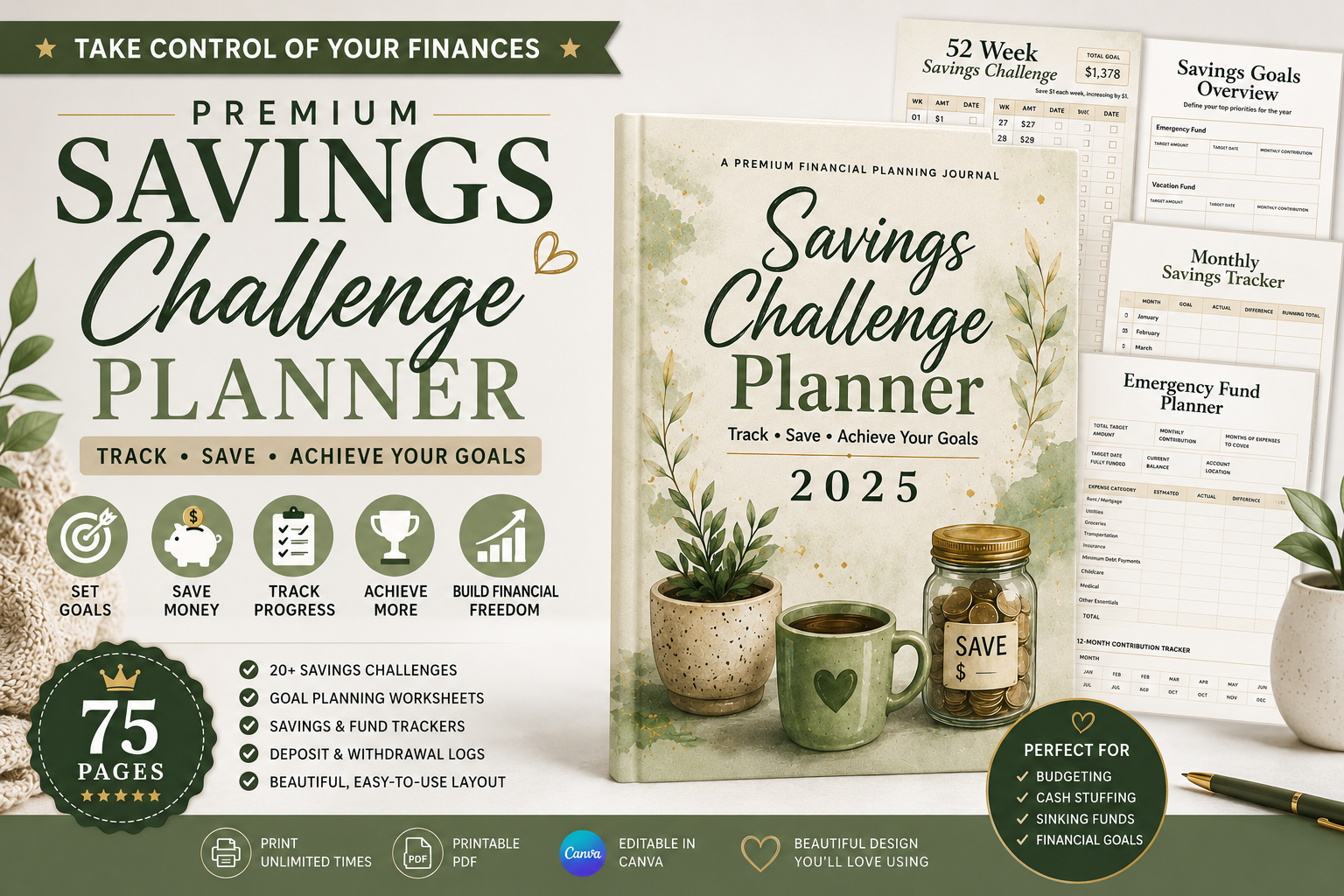
Azhir’s Premium Savings Challenge Planner offers the widest mix of challenges here. The listing specifies 75 A4 pages, PDF output at 300 DPI, and numerous weekly, daily, envelope, no-spend, and goal-specific trackers. It also includes deposits, withdrawals, fund allocation, milestones, and goal breakdowns.
Use the goal overview to choose one challenge that fits the amount and timing you want to record. Keep the deposit and withdrawal logs alongside the visual progress page so coloring a box remains connected to money actually set aside. The many challenge types are alternatives, not a reason to run every one simultaneously.
The strength is breadth and room to change your tracking method. The limitation is a long workbook and inconsistent Canva wording: the listing mentions a template link but also makes an editable version conditional. Confirm what your download includes if customization is essential. The planner does not move money, verify balances, or guarantee that a target is achievable.
2. 2027 Savings Challenge Planner with Weekly and Daily Options
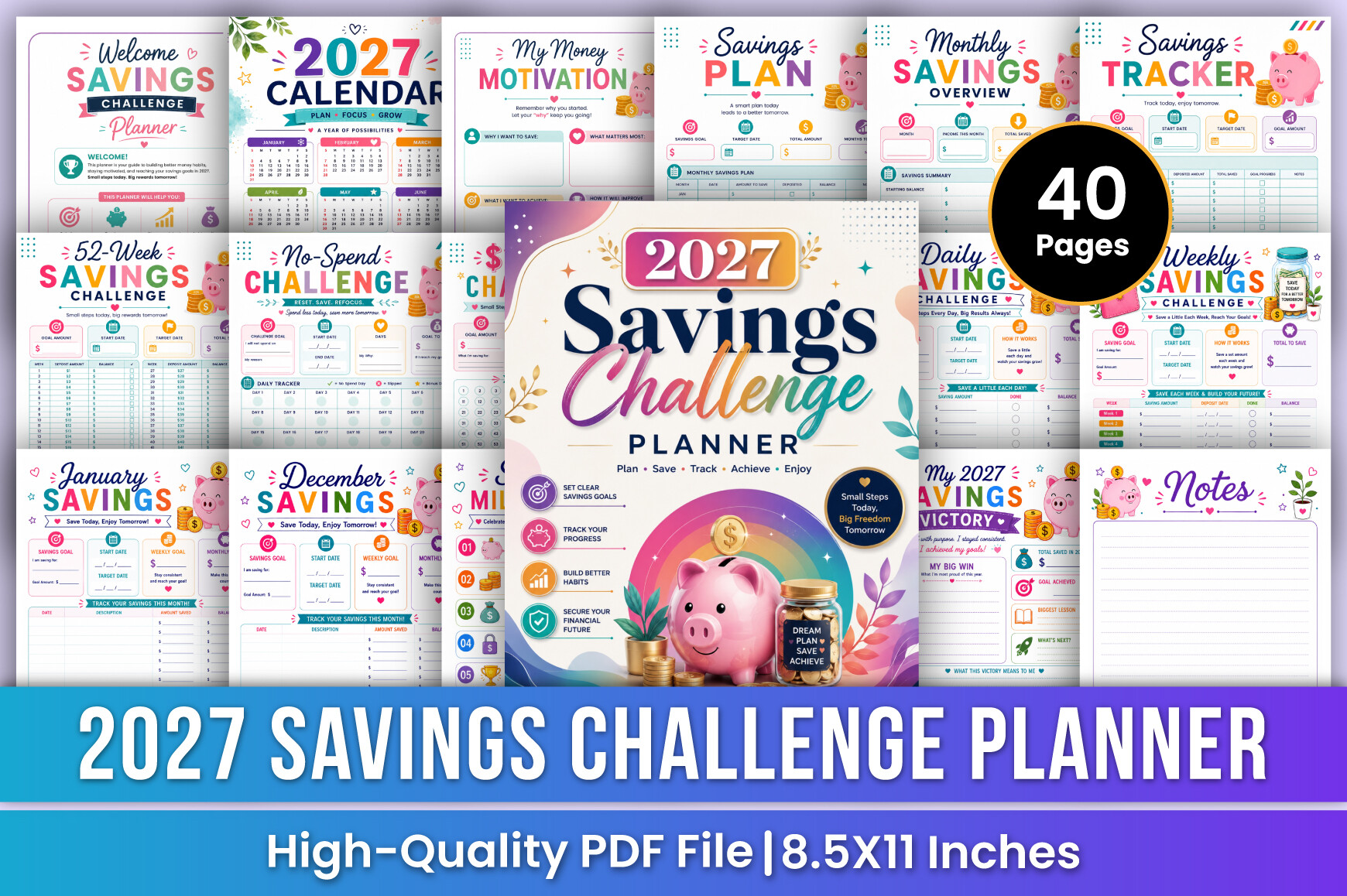
Mustafiz’s 2027 Savings Challenge Planner is a 40-page US Letter PDF, CMYK, without bleed. Advertised sections include annual and monthly goals, deposit records, 52-week challenges, fixed weekly amounts, envelopes, spare change, daily saving, no-spend tracking, milestones, and review.
This suits someone who wants several tracking rhythms in one manageable workbook. Choose the weekly or daily method you will actually update, then use the monthly review to reconcile the tracker with your own records. Keep challenge progress separate from ordinary expenses so you can see whether the money is still available for its intended purpose.
The advantage is a range of challenge types without a very large page count. The limitation is its 2027 positioning and PDF-only stated delivery. Do not assume source editing, linked navigation, or a bank connection. The challenge names also do not establish that every suggested deposit sequence fits your circumstances; inspect the amounts before choosing a page.
3. Editable 2027 Money Savings Challenge
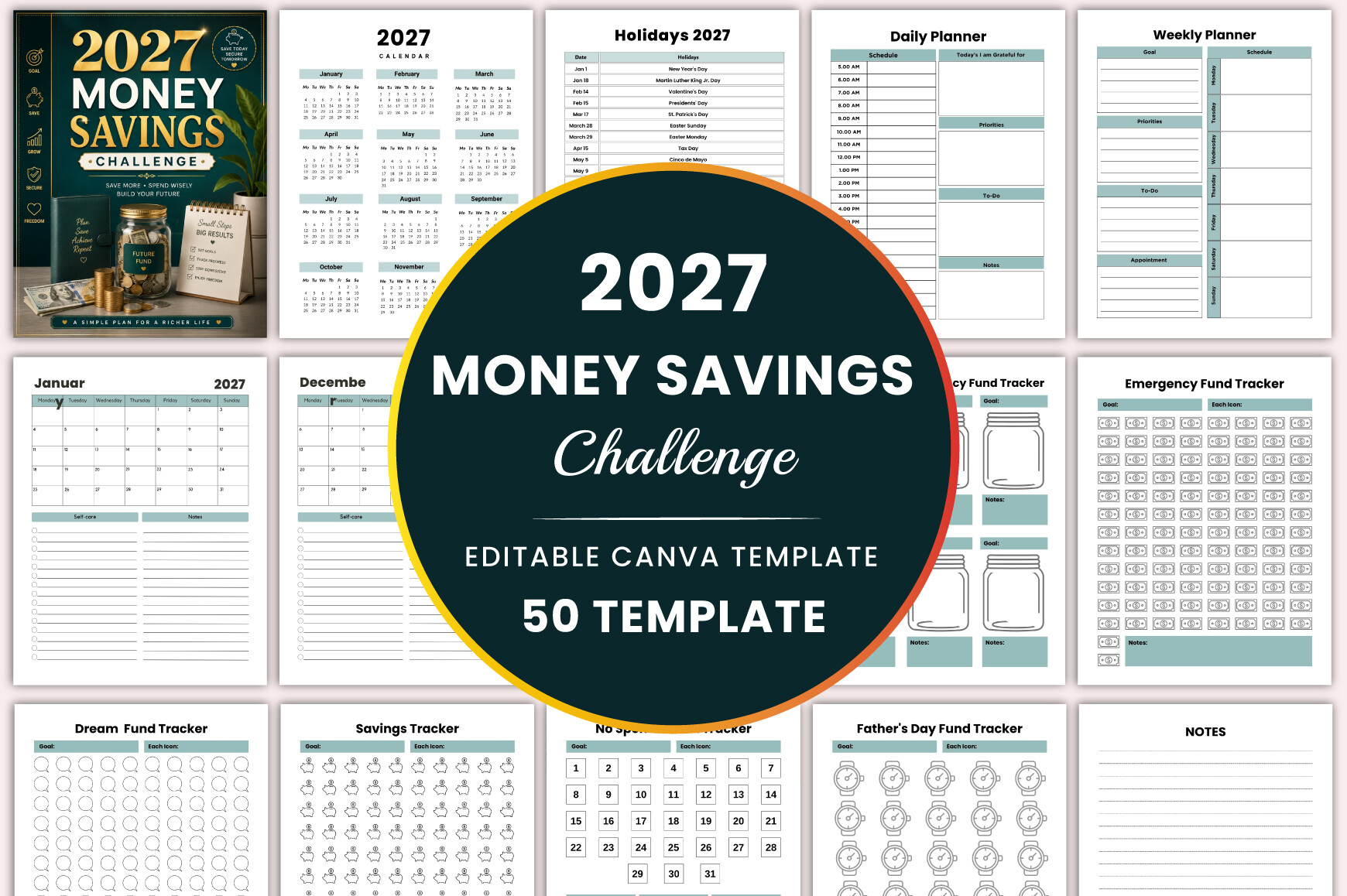
Shumaya’s 2027 Money Savings Challenge emphasizes separate goals and funds. The listing specifies 50 US Letter pages, an editable Canva link, PDF, JPG, and PNG files. Its sections include a 2027 calendar, monthly planning, no-spend tracking, general savings, numerical target trackers, and funds for purchases, travel, holidays, education, and other goals.
Use the Canva version to keep only the fund labels that match your priorities. A smaller set of clearly named goals can be easier to maintain than many partially filled trackers. Record contributions consistently and use the calendar only if dates are relevant to when you intend to review or complete a goal.
The strength is editable labels and a wide set of goal categories. The limitation is the 2027 dated structure and the risk of fragmenting your records across too many pages. A tracker heading does not decide how much you should set aside. These are manual planning files, not separate financial accounts or an automatic budgeting service.
4. 2027 Savings Challenge Planner by designmela01
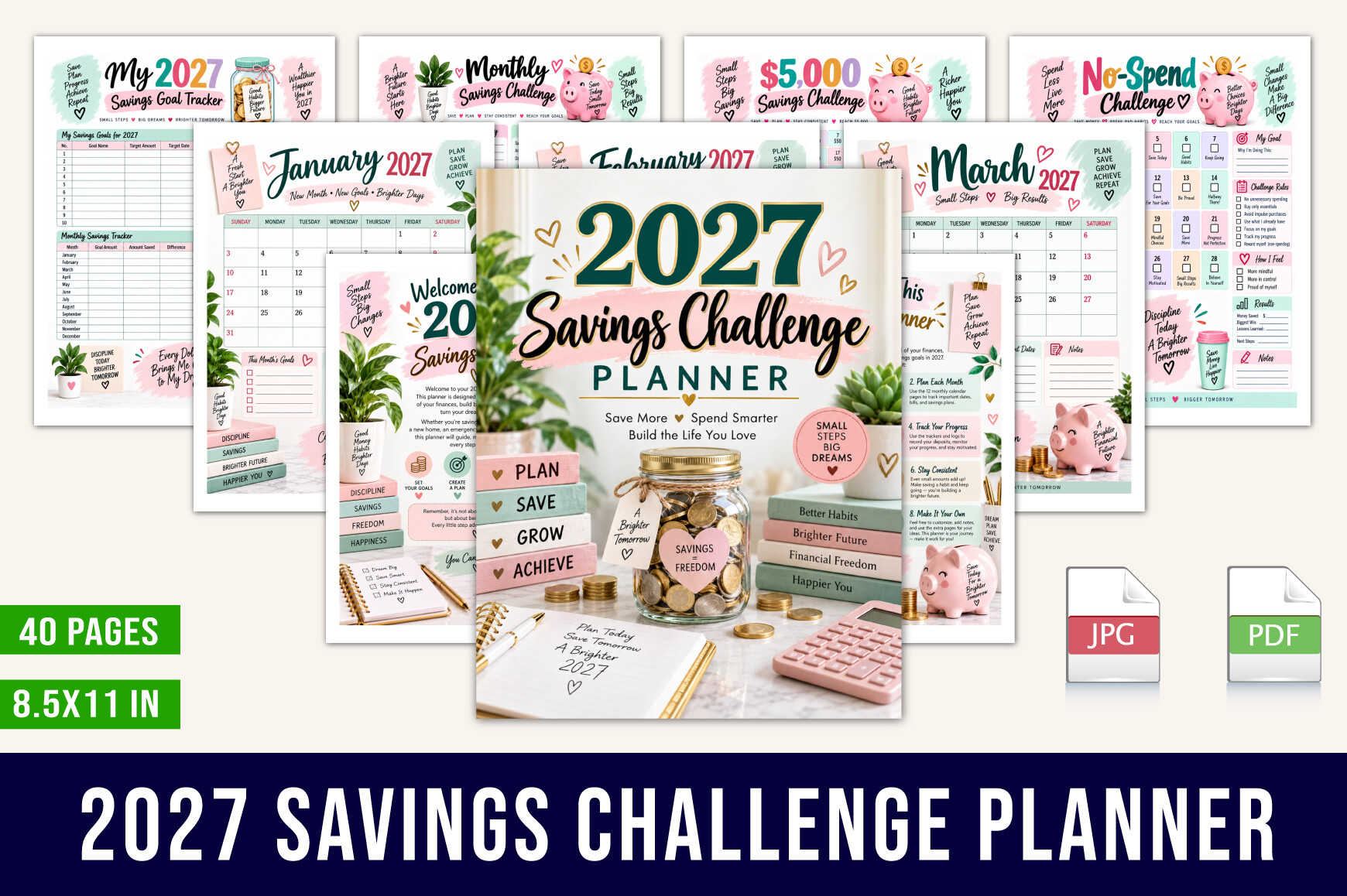
designmela01’s 2027 Savings Challenge Planner contains 40 US Letter pages in a print-ready PDF. The description lists monthly calendars, goals, 52-week tracking, numerical target challenges, no-spend and spare-change pages, deposits, expenses, milestones, and monthly and year-end reviews.
This is a good choice when reviewing progress matters as much as checking off deposits. Use the monthly review to note what changed, what you actually recorded, and which challenge you want to continue. A goal page can preserve the reason behind a target so the tracker is more than a row of completed amounts.
The benefit is a dated yearly structure with reflection pages. The limitation is that the delivered-file list does not establish an editable Canva link, despite the designer offering Canva products elsewhere. Choose it as a PDF unless the seller confirms another format. It is a manual record and does not calculate or verify your financial position automatically.
5. Compact Money Saving Challenge Workbook
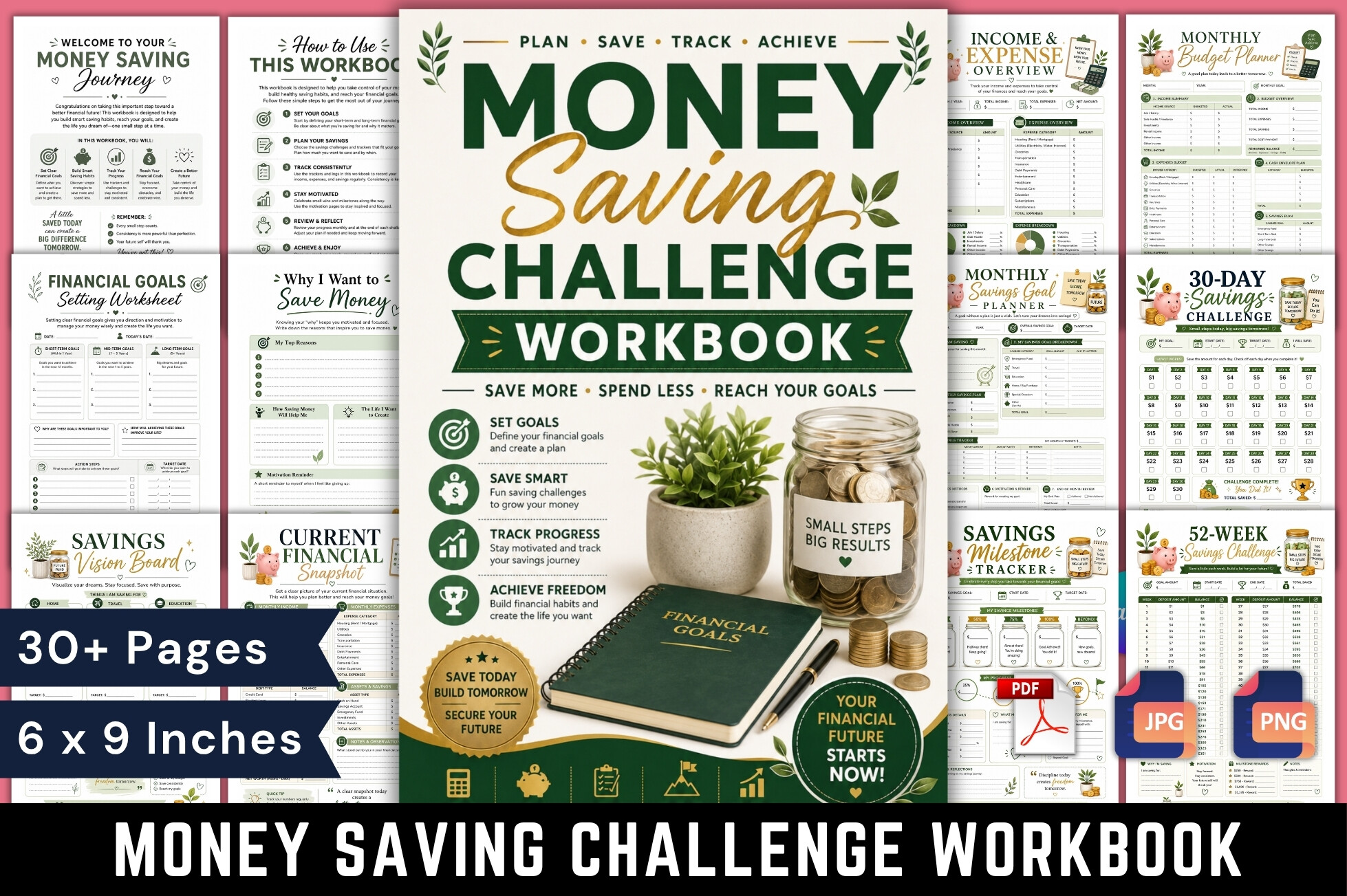
Mahira Pro’s Money Saving Challenge Workbook is a 31-page full-color PDF in 6 × 9-inch format. The listing describes goals, a financial snapshot, income and expenses, monthly savings, 30-day, 52-week, 100-day and reverse challenges, no-spend pages, milestones, habits, and end-of-challenge reflection.
Choose it if you want a compact guided workbook rather than a large collection of full-size inserts. Start with one goal and one challenge, then use the short reflection pages to record what made the routine easier or harder. A small notebook can be convenient for reviewing the plan without spreading a binder across the desk.
The strength is variety in a portable format. The limitation is less writing room and a broad mix of budgeting and savings pages that may overlap your existing monthly budget planner. Select a clear role for each tool. The worksheets do not provide personalized financial advice or promise a particular saving result.
6. No-Spend Challenge Planner
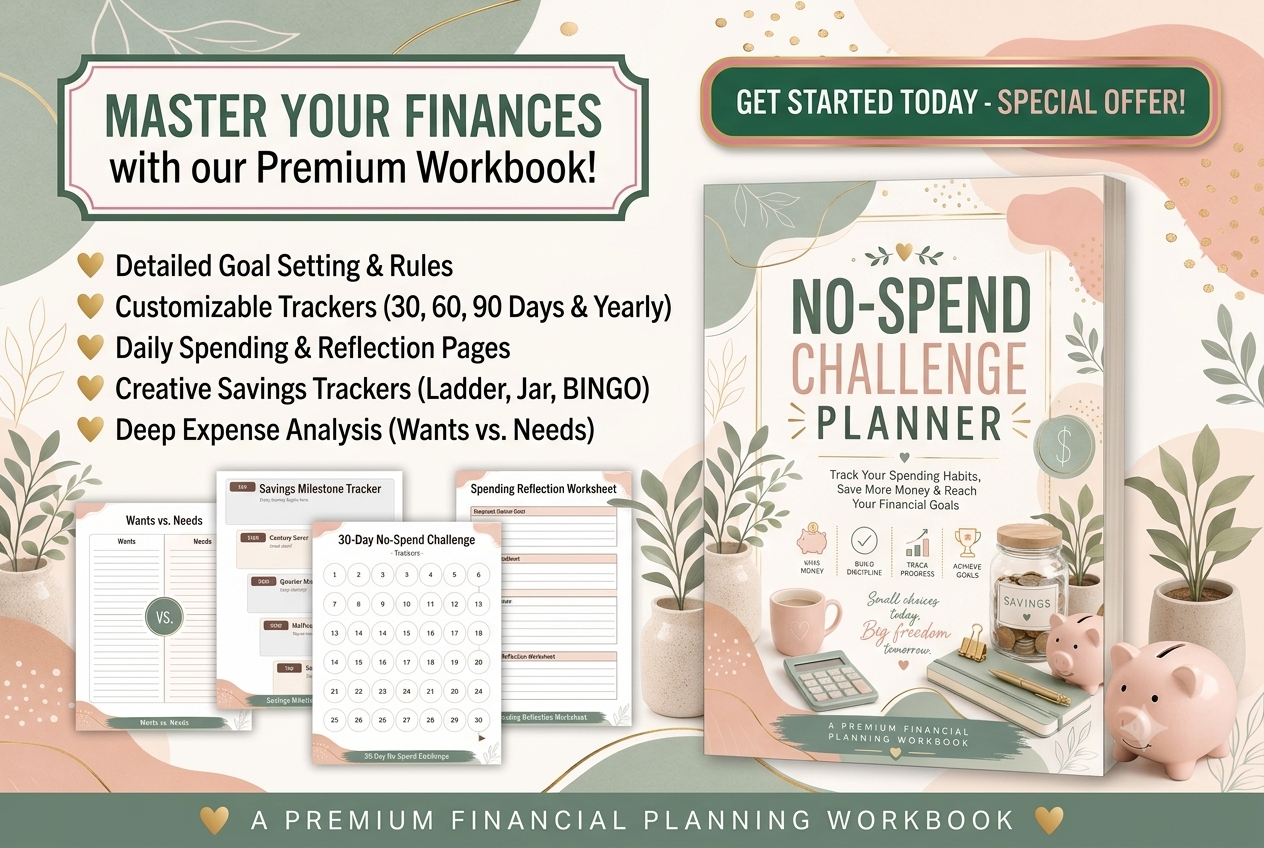
Azhir’s No-Spend Challenge Planner focuses on tracking purchasing habits rather than only deposit amounts. The listing identifies 61 A4 PDF pages at 300 DPI, with personal rules, spending triggers, 30-, 60-, and 90-day trackers, daily records, weekly and monthly reviews, a wishlist, unexpected expenses, and progress pages.
Use the rules page to define exactly what you are tracking before counting a day as complete. Record exceptions and unexpected purchases honestly rather than treating the tracker as a perfect streak. The wishlist and review sections are useful for remembering what you postponed and why, without automatically turning every delayed purchase into a later reward.
The advantage is detailed reflection around a defined challenge. The limitation is that no-spend tracking is different from a savings deposit log: not buying something does not automatically establish money saved. Keep your actual amounts in a separate record where needed. The stated package is a printable PDF, not an app that monitors transactions.
7. Hyperlinked 52-Week Savings Challenge Kit
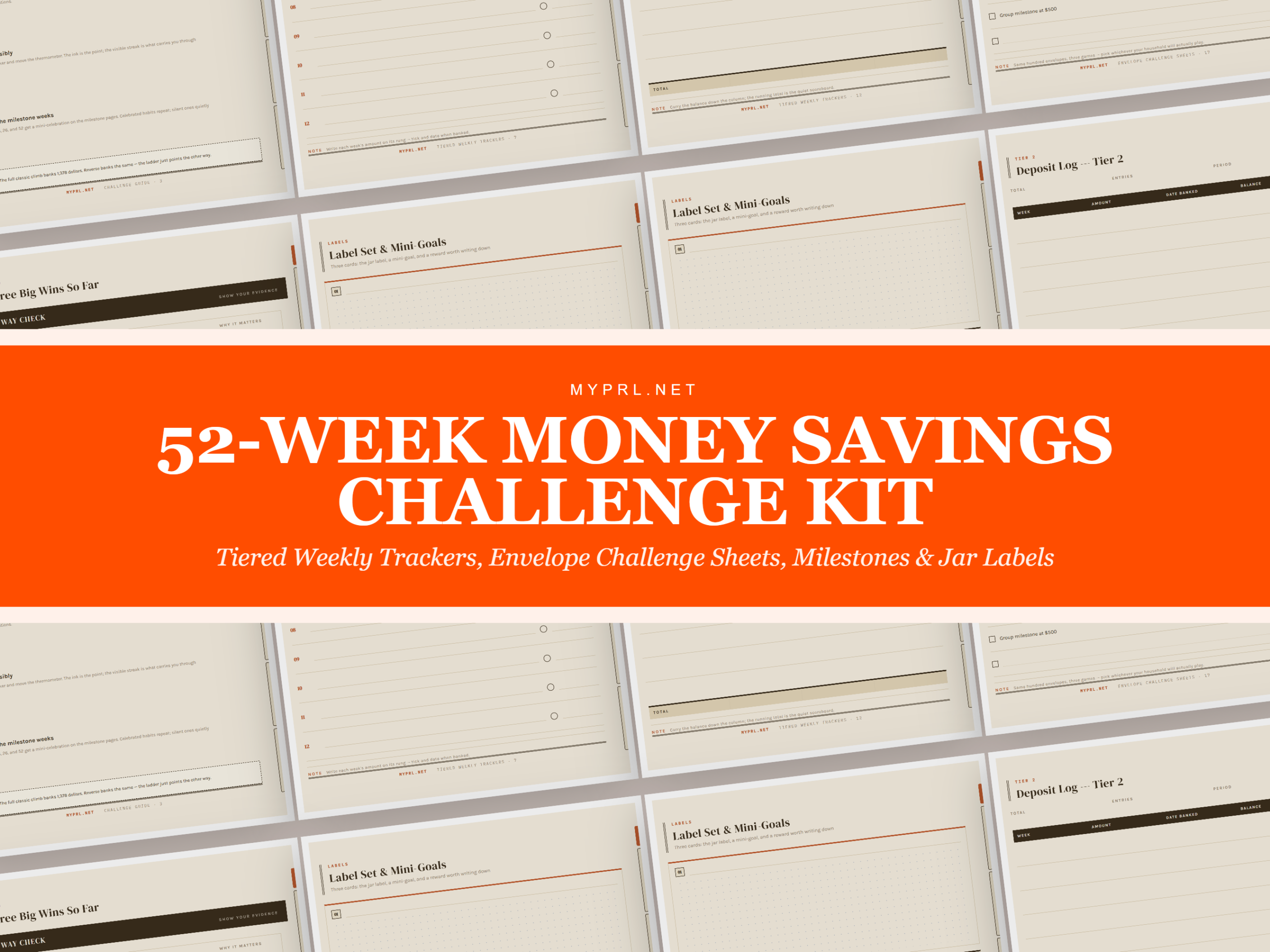
Healers Hub co’s 52-Week Money Savings Challenge Kit is described as a 20-page US Letter PDF with linked navigation. It includes tiered weekly trackers, envelope variants and a banking log, progress milestones, a thermometer, and jar labels, with an index and side tabs for compatible annotation apps.
Use the tiered pages to choose a single tracking pattern, then keep the banking log current when recorded cash is moved elsewhere. The thermometer gives a quick visual overview, while milestones can preserve a short note about progress. Printed pages are also an option if a visible tracker is easier to maintain.
The strength is navigable PDF organization rather than an assumed digital feature. The limitation is that the listed section counts do not fully explain the headline total, so inspect the preview. The seller states personal use. Hyperlinks move between pages; they do not transfer funds, import transactions, or verify a balance.
8. Mini Savings Challenges Canva Templates
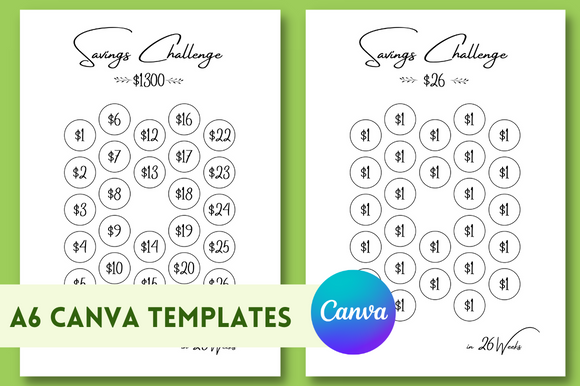
This Mini Savings Challenges set contains 12 editable A6 Canva templates organized around a 26-week planning period. The short description presents different small and larger saving amounts, but does not provide a detailed exported-file inventory or every challenge’s deposit sequence.
Choose it if you want a compact card-sized tracker you can adapt to a small binder. Before editing, inspect the amounts and decide which pattern you want to record. Use one template at a time and keep a separate total where needed, especially if several small trackers refer to the same pool of money.
The advantage is a smaller format and editable layout instead of a book-length system. The limitation is limited writing space and sparse specifications beyond the 12 templates. Confirm how you will export and print the files. A 26-week layout is a tracking horizon, not evidence of a fixed return or a guaranteed final savings amount.
9. Five-Color 52-Week Savings Challenge
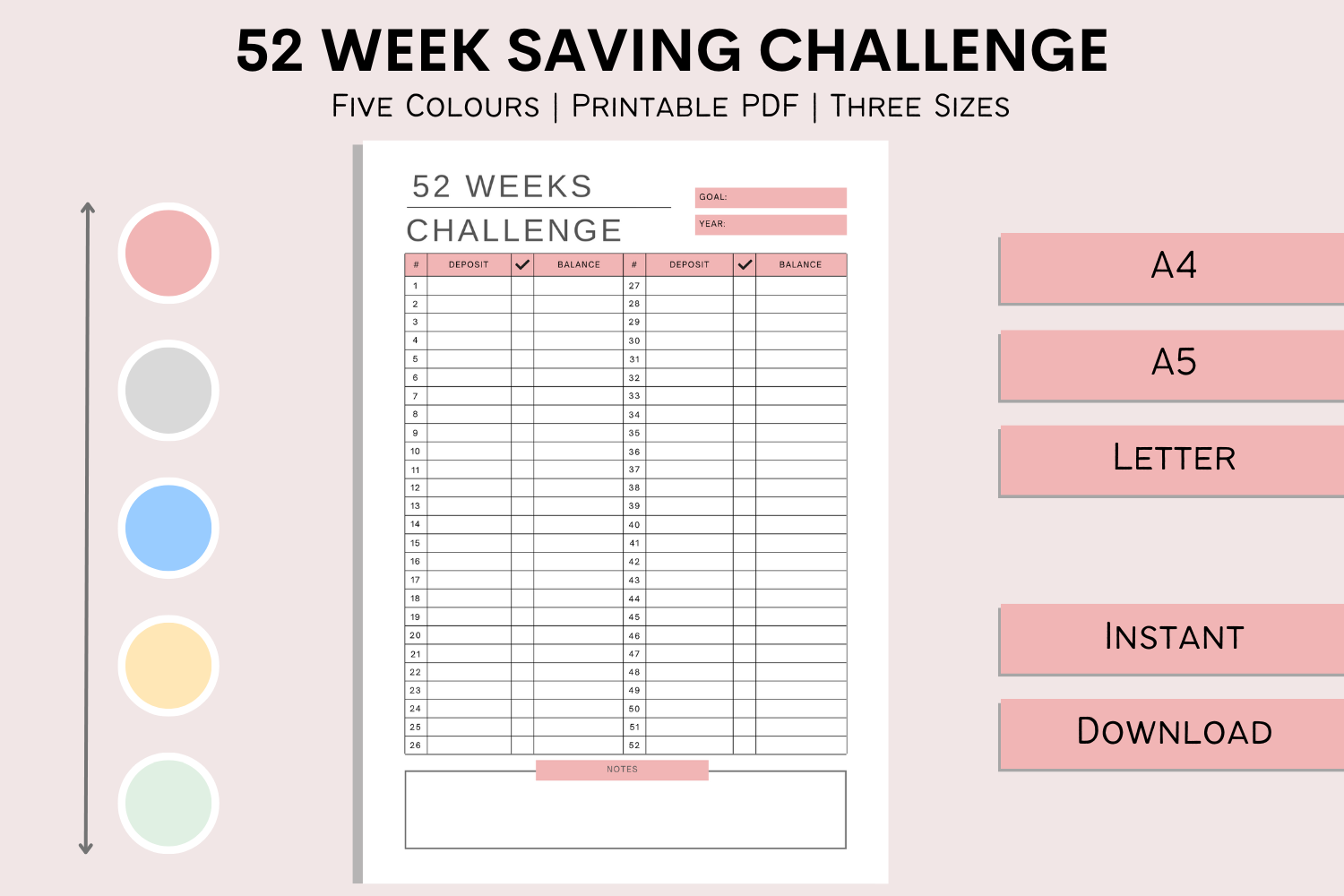
This printable 52 Week Savings Challenge Money Planner is a focused yearly tracker rather than a broad budget workbook. The listing specifies PDFs in A4, A5, and US Letter sizes, with five color choices. It does not clearly list the exact weekly deposit amounts or a detailed worksheet inventory.
Use it when the goal is a single visible weekly habit. Keep the chosen page somewhere you will check it and mark progress after recording the actual contribution. Before starting, read the entire sequence in the preview; a challenge with increasing amounts may feel very different near the end from a fixed weekly contribution.
The benefit is simple printing and format choice. The limitation is the absence of editing sources and confirmed deposit details in the description. Do not assume a particular final total merely from the words “52 week.” Pick it for a straightforward tracker and keep your own record if deposits or withdrawals differ from the printed pattern.
10. 1,000-Target Savings Challenge
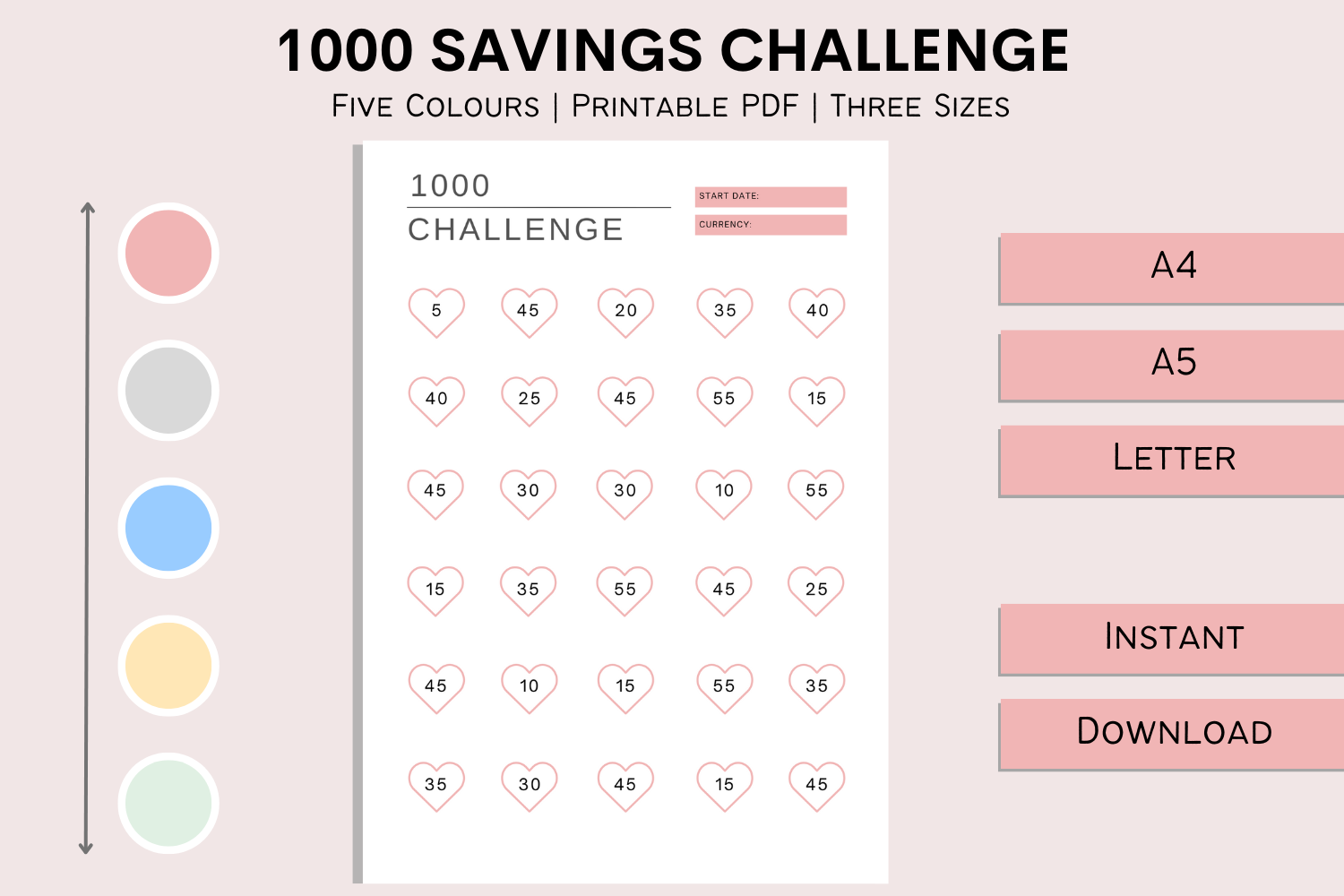
The 1000 Savings Challenge Money Planner gives a smaller goal-specific alternative to a full-year workbook. The designer lists PDF files in A4, A5, and Letter, with five color versions. Its title identifies a 1,000 target, but the description does not establish a currency or every increment on the sheet.
Use it for a clearly named purchase or goal where a visual endpoint matters. Write your chosen unit and purpose in your own notes so the number remains meaningful. Mark progress against actual contributions, rather than counting an intended deposit before you have set it aside.
The strength is focus and an easy choice of print sizes. The limitation is its narrow target and the lack of editable sources or detailed deposit specifications. Check the preview to see whether the amounts fit your intended use. It is a recording tool, not a guarantee that you can or should reach the target on a particular schedule.
11. Simple Savings Challenge PDF Tracker
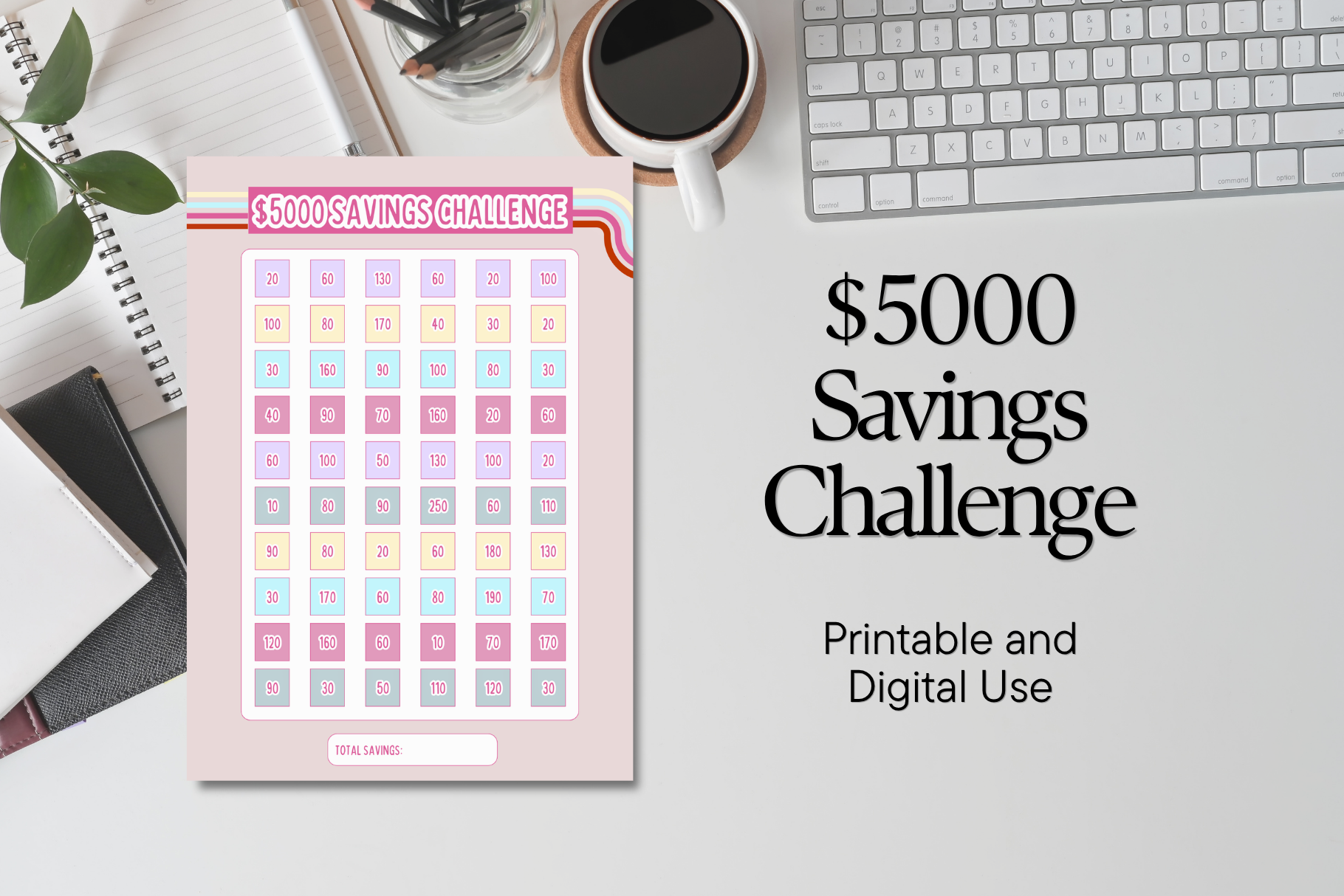
Anny’s Money Saving Challenge Budget Planner is described as a printable savings tracker supplied in PDF format. The published description emphasizes a visual record of savings goals, but does not clearly identify paper size, total pages, editable sources, or specific challenge amounts.
Consider it when you want a simple progress page rather than many financial worksheets. Check the preview first, then choose one goal and a consistent way to record contributions. Pair the visual page with your existing transaction notes so you can understand any change to the total.
The advantage is low complexity. The limitation is the incomplete specification, which makes preview inspection especially important before printing or selecting a tablet workflow. A PDF can be viewed or annotated with suitable software, but that alone does not establish hyperlinks, fillable fields, automatic calculations, or a bank integration. Choose the page for the layout shown, not for features implied by a broad planner title.
Give each tracker a clear purpose
Name the goal, the unit you are recording, and what counts as a completed contribution. Use the same convention throughout a challenge so the visual progress page remains understandable later.
If you use several funds, avoid recording the same money as progress toward several targets at once. Keep a clear note of where the amount belongs, and update the record when money is moved or used.
Review the challenge rather than protecting a perfect streak
A skipped week or changed goal is information to record. Note what changed and adjust the next planned step rather than completing boxes that no longer represent reality.
For paycheck timing and ordinary expense planning, a biweekly budget planner can hold the wider schedule. Let the challenge tracker focus on the specific progress it was chosen to show.
Which savings challenge planner should you choose first?
Choose the premium workbook for a large range of challenge types, or a dated 2027 planner for an annual review structure. The compact workbook suits a smaller notebook, while the linked 52-week kit offers clearer on-screen navigation.
Pick the mini Canva set or a single printable tracker if maintaining a large workbook would be the main obstacle. Start with one method and add another only when it answers a different question. A smaller record kept accurately is more useful than a large collection of unfinished challenges.