10 Great Habit Tracker Ideas to Build Better Routines
A habit tracker can turn an intention into something you can actually see. Instead of simply telling yourself to drink more water, read every day, exercise, or practice a new routine, a tracker gives you a simple place to record whether you followed through. That visual record can make patterns easier to notice and give you a clearer picture of your consistency.
The best habit tracker is not necessarily the one with the most pages. Some people only need a single monthly grid, while others prefer a collection of trackers for water, reading, sleep, gratitude, or specific challenges. Digital users may want a GoodNotes-friendly PDF, while others prefer printable pages in A4, A5, or US Letter size.
Below are 10 habit tracker options with different formats and approaches. You’ll find simple free printables, multi-design sets, planner inserts, customizable templates, and a digital option for tablet-based planning. The goal is to help you choose a tracker that fits the habits you actually want to monitor.
What Is a Habit Tracker?
A habit tracker is a simple planning tool used to record how consistently you complete recurring habits or routines. Most trackers use a daily grid, checklist, or similar visual system where you mark each day that you complete a habit.
The simplicity is part of the appeal. You don’t need to write a detailed journal entry every day. A checkmark, dot, color, or other small mark can be enough to create a record of your behavior over time.
Habit trackers can be used for many different routines, including exercise, reading, hydration, self-care, studying, cleaning, meditation, sleep routines, or personal projects. The most useful setup is usually the one that makes your chosen habits easy to see without making tracking itself feel like another chore.
10 Habit Tracker Options for Different Routines
The products below vary considerably in format and complexity. Some are designed around a single monthly page, while others provide multiple layouts or support digital planning. They are presented according to the type of tracking experience they offer rather than as an overall ranking.
1. Monthly Habit Tracker Printable
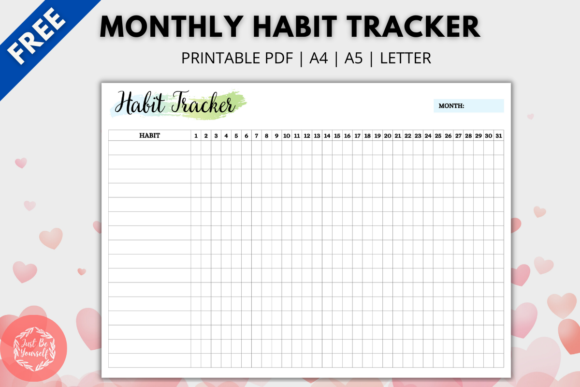
If you want to start with something extremely simple, the FREE Monthly Habit Tracker Printable is a straightforward option. It is an undated monthly tracker with space to track habits across 31 days, making it suitable for routines that you want to monitor throughout a complete month.
The download includes three PDF files in A4, A5, and US Letter sizes. That makes it easy to choose a page size that works with your existing planner, binder, or home printer.
Its biggest advantage is the focused format. There are no large collections of additional planning pages to work through. You can simply identify the habits you want to monitor and use the monthly grid consistently. If you’re new to habit tracking or prefer a minimal setup, a single-page tracker can be enough to get started.
2. Habit Tracker
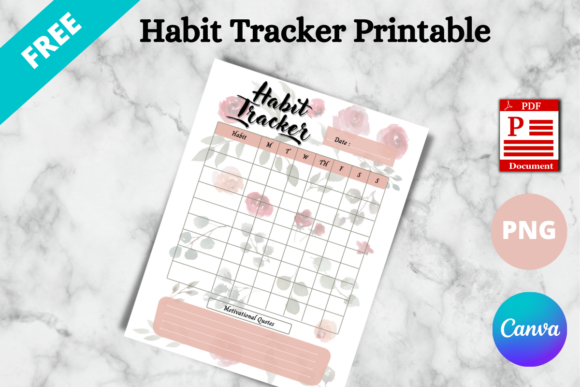
This Free Habit Tracker offers another compact printable approach, but with a little more flexibility in how you use the design. The product is described as both printable and editable and includes a Canva template link alongside PNG and PDF files in US Letter size.
The Canva option is particularly useful if you want to make small visual adjustments before using the tracker. Rather than accepting a fixed page exactly as provided, you can work with the editable template and adapt it to your preferred planning style.
Because the product is a single habit-tracking concept rather than a large planner system, it can work well as a standalone page or as an insert inside a larger planner. It’s a practical starting point for someone who wants to experiment with habit tracking without committing to a complicated system.
3. Editable Habit Tracker Template Bundle
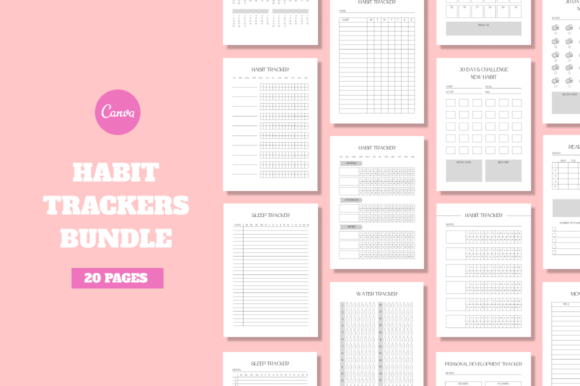
The Editable Habit Tracker Template Bundle is designed for people who want more variety than one standard monthly grid. The bundle includes different types of trackers, including water, reading, and sleep tracking, along with challenge-oriented pages such as a no-sweets challenge, steps challenge, and gratitude challenge.
It also contains several versions of monthly trackers, giving you more than one way to organize recurring habits. That variety can be useful when you’re tracking different kinds of routines because a hydration habit doesn’t necessarily need to be recorded in exactly the same way as a reading goal or a challenge.
This option is therefore better suited to someone who wants to build a broader tracking system. Instead of using one page for everything, you can choose individual trackers according to the habits you are currently working on and incorporate them into your existing planner.
4. Habit Tracker Printable
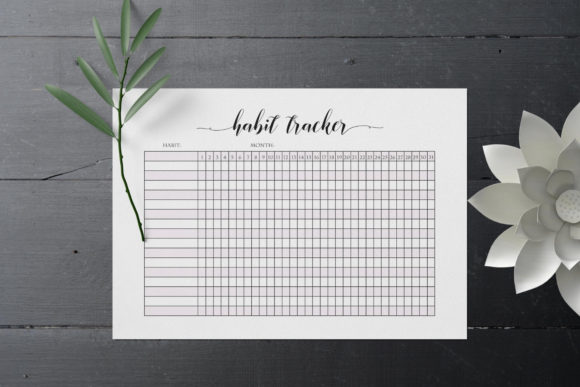
This Habit Tracker Printable is a compact digital download specifically identified by its creator as a room habit tracker. It comes in A4, A5, and US Letter versions, with both PNG and PDF files supplied. The A5 version includes cut lines, which can be useful if you’re preparing it as a smaller planner insert.
The three available paper sizes make this a flexible choice for physical planning. A5 works naturally with smaller planners, while A4 and US Letter provide more space on the page.
What makes this option different from the broader tracker bundles is its focused, single-page format. If you want a straightforward tracker that can be printed and added to an existing planning system rather than replacing it, this approach keeps the setup simple.
5. Habit Tracker | Printable Planner A5
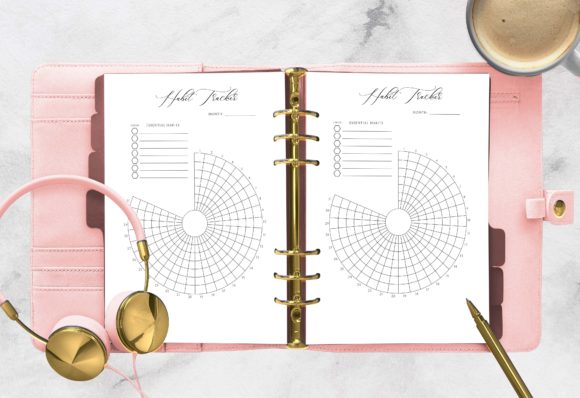
The Habit Tracker | Printable Planner A5 is specifically designed as a single-page A5 planner insert. The product listing describes it as a one-page habit tracker intended to be combined with other printables to create a larger planner.
Its A5 trim size measures 5.8 × 8.3 inches, and the page is supplied without bleed with crop marks for trimming. The product is particularly oriented toward people creating low-content or no-content planner interiors, but the simple page can also be useful as an individual habit-tracking insert.
The compact size is the main distinction here. If you already use an A5 ring-bound or similar planner and want to add habit tracking without introducing a large standalone system, a dedicated one-page insert can be a convenient solution.
6. Digital Habit Tracker for GoodNotes
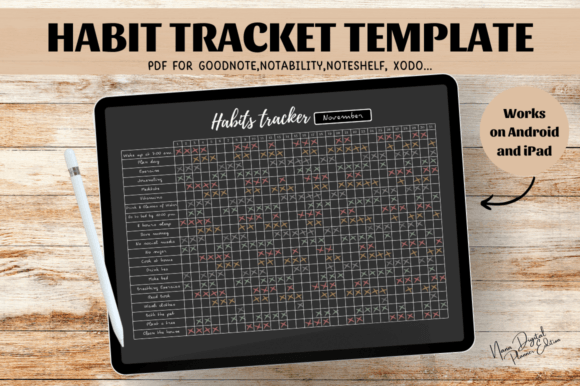
If you prefer tracking habits on a tablet, this Digital Habit Tracker is designed for digital use in GoodNotes, Notability, Noteshelf, Xodo, and other PDF annotation apps. The product includes a habit tracker PDF in A4 landscape format.
The digital format removes the need to print a new page every month and allows you to keep your habit tracking alongside other digital notes and planning pages. That can be especially convenient if your existing organization system already lives on an iPad, Android tablet, or another device that supports PDF annotation.
Compared with the printable options above, this is primarily about workflow rather than paper size. If you enjoy handwriting with a stylus and want your habit tracking to stay inside your digital planning environment, this type of PDF can fit more naturally into that routine.
7. Habit Tracker Printable Planner Set
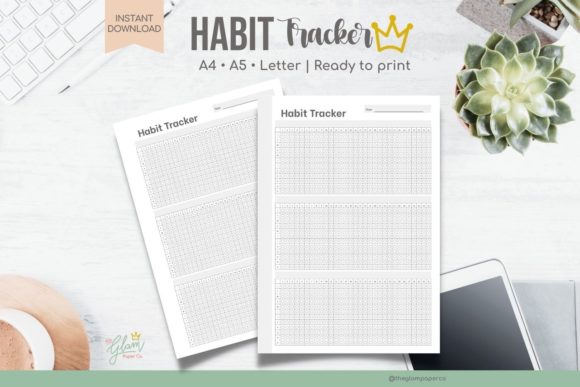
This Habit Tracker Printable Planner Set keeps the format simple while giving you several paper-size and layout choices. It includes one-page habit tracker PDFs in A5, A4, and Letter sizes, with both bordered and borderless versions.
The files are ready-to-print, high-quality PDFs in CMYK, with no watermarks. They are explicitly described as non-editable printable files, so this option is better suited to someone who wants a finished page rather than a template that needs customization.
The bordered and borderless versions provide a small but useful distinction. You can choose the presentation that works better with the rest of your planner without having to edit the file yourself. For someone who wants a clean printable insert and values simplicity, that straightforward approach may be preferable to a more elaborate tracker bundle.
8. Printable Habit Tracker Set – 6 Designs
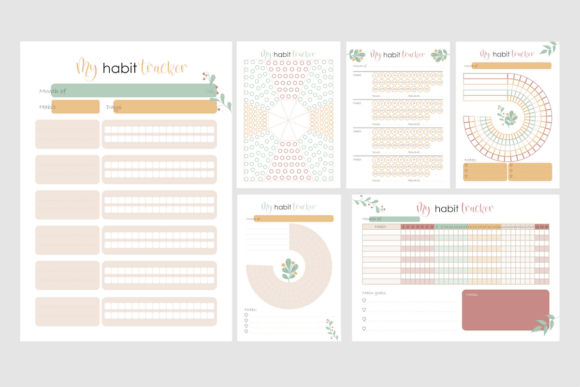
When visual variety matters, the Printable Habit Tracker Set – 6 Designs provides six different tracker designs rather than one fixed layout. The set is described as having a clean and minimalist style and is intended for use in planners, journals, or personal productivity routines.
Each design is supplied in PDF, PNG, JPEG, and EPS formats. That gives you more flexibility than a basic PDF-only printable, particularly if you want to work with the files digitally or use them in different design workflows.
The six designs can also be useful if you tend to lose interest when using the exact same page repeatedly. You can switch between layouts while keeping the basic habit-tracking routine intact. If your priority is having choices without moving into a large multi-page planner, this set occupies a useful middle ground.
9. Monthly Habit Tracker Printable
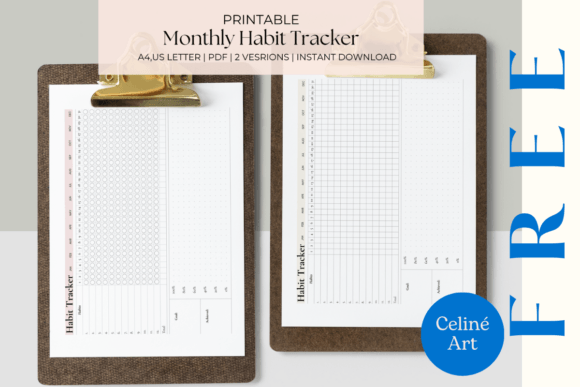
This Monthly Habit Tracker Printable focuses on giving you multiple visual versions of a monthly tracker. The product includes 20 printables in five different colors, two sizes, and two versions, with A4 and US Letter formats represented.
That makes it more flexible than a single fixed monthly page. You can choose between the available color and layout variations depending on your preference, while keeping the same basic monthly habit-tracking concept.
The tracker can be used digitally or printed, so it can fit into either a paper-based or device-based workflow. If you like the simplicity of monthly habit tracking but don’t want every page of your planner to look exactly the same, the combination of multiple colors, sizes, and versions gives you more room to personalize your routine.
10. Habit Tracker Checklist PDF
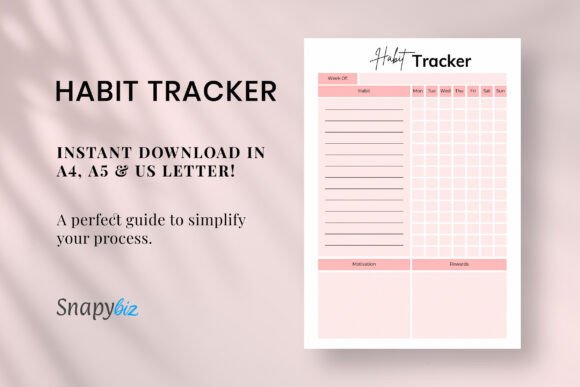
The Free Habit Tracker Checklist PDF takes a slightly more flexible approach to the basic habit log. It is described as a customizable habit-tracking chart that can be edited and printed as needed, with the supplied files available in A4, A5, and US Letter sizes.
The product is designed around a single-page habit tracker and is intended for daily and weekly habit logging. Its stated audience is broad, including planners and organizers, teachers, fitness enthusiasts, DIY creators, and others who want a simple way to keep goals visible.
This could be useful if you don’t want to commit to a fixed visual system and would rather customize your tracking sheet around your own routine. The multiple paper sizes also make it easier to integrate into different physical planning setups.
How to Choose a Habit Tracker
With several simple options available, choosing a habit tracker is mostly about matching the format to the way you naturally organize information.
Decide whether you want digital or printable tracking
If you already use a tablet for planning, a digital PDF can keep habit tracking in the same place as your notes and other planning pages. The GoodNotes-compatible option above is specifically designed for this type of workflow.
Printable trackers are a better fit if you like handwriting on paper, use a physical planner, or want a page that can sit somewhere visible. Consider your existing routine rather than choosing a format simply because it looks convenient.
Choose between one page and a tracker bundle
A single-page tracker is often enough for a handful of habits. If you’re monitoring several areas at once, a bundle can give you more flexibility. For example, the editable bundle includes dedicated trackers for water, reading, sleep, and various challenges.
The important question is not how many tracker pages you can collect, but how many you will realistically use.
Think about the time period
Monthly tracking is popular because it provides a manageable window. Thirty or 31 days is long enough to observe consistency while still giving you a clear reset point at the beginning of the next month.
Undated pages can be particularly useful because they don’t force you to start at a specific point in the year. You can print a fresh page whenever you decide to work on a new routine.
Consider the size of your planner
A5 pages are convenient if you already use a compact planner or ring-bound system. A4 and US Letter pages provide more room and may be easier to read or write on when the tracker contains several habits.
Before printing, check the actual dimensions of your existing planner or binder so that the tracker doesn’t end up being awkwardly sized.
How to Use a Habit Tracker Without Making It Complicated
A habit tracker works best when tracking takes only a few seconds. Start by choosing a small number of habits that genuinely matter to you. If you put twenty different routines on the first page, the tracker can quickly become another task that needs managing.
Make each habit specific enough to record consistently. Instead of a vague goal such as “be healthier,” you might track a concrete behavior such as drinking a planned amount of water, taking a walk, or completing a particular exercise routine.
Then decide what counts as completion before you begin. This prevents you from changing the rules halfway through the month. Some habits may be daily, while others may only make sense a few times per week.
Finally, review the tracker periodically. The goal isn’t to create a perfect row of marks. The useful information is in the pattern: which habits are easy to maintain, which ones regularly get skipped, and whether your current routine is realistic.
Habit Tracker vs. Habit Planner
A habit tracker and a habit planner can look similar, but they serve different purposes.
A habit tracker is primarily about recording behavior. It answers a simple question: “Did I do this today?” A monthly grid or checklist is often enough.
A habit planner usually goes further. It may include goal-setting pages, habit ideas, reflection prompts, planning pages, or other tools for thinking about why you’re building a habit and how you want to approach it.
If your main need is accountability and visibility, a simple tracker may be all you need. If you’re trying to redesign several routines at once, a more comprehensive planning system may provide more useful context.
Final Thoughts
The most effective habit tracker is the one you will actually use. A single monthly grid can be enough if you want a quick visual record of a few routines. A multi-design set makes more sense if you want variety, while a digital PDF can fit naturally into a tablet-based planning system.
There are also practical differences worth considering: paper size, editable versus fixed files, number of designs, and whether you want one habit tracker or a collection of specialized pages.
Start small, choose habits that are specific enough to track, and keep the daily process simple. A tracker should make consistency easier to see—not turn habit building into another complicated project.
You may also like:
12 GoodNotes Planner Templates for iPad & Digital Planning