12 Practical Music Practice Journal Templates for Daily Records
A music practice journal is most useful when it tells you what to work on next. These twelve downloadable journals, assignment sheets and trackers give you different ways to keep lesson notes, record sessions and notice what needs another attempt. Some have detailed weekly reflections; others keep the record short.
This selection covers printable PDF interiors and several editable source formats. It does not include physical notebooks, notation software or guided music lessons. The distinctions below come from the current file descriptions and product previews, so you can choose a format before committing to a whole book.
In this guide
Choose a Journal That Fits Your Practice
For detailed weekly review, begin with the 52-week journal. For a compact notebook, compare the 6×9-inch options; for more writing space, look at US Letter. A practice tracker can be enough when you mainly need a consistent record, while an assignment sheet gives teacher instructions more prominence.
PDF is the simplest route to a printed copy. PPT and Canva workflows offer different editing options; AI source files require compatible vector software. Page totals often include repeated forms. If you only want to record whether you practiced, a simpler habit tracker may be sufficient.
1. 52-Week Journal with Detailed Practice Spreads
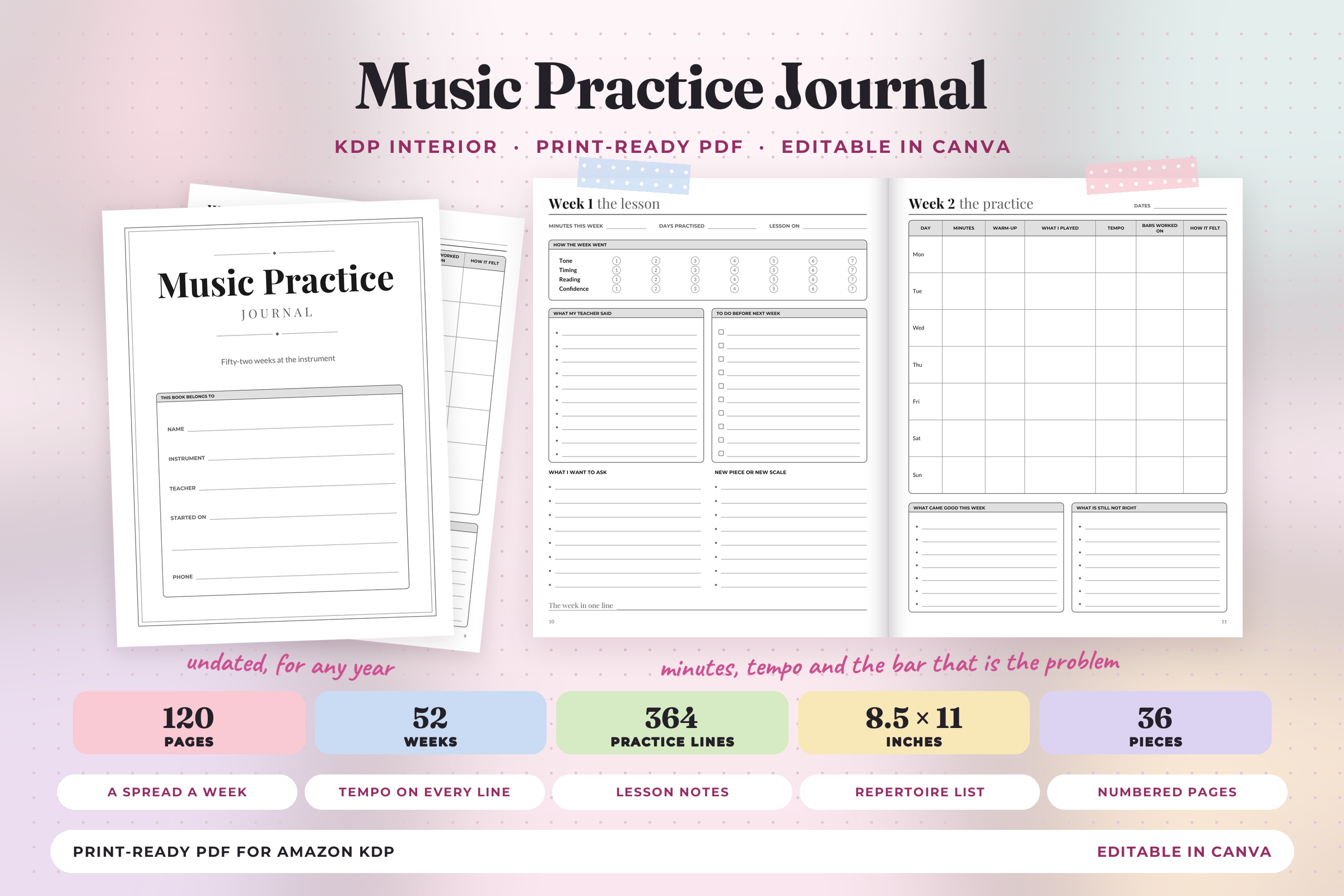
This is the most deliberately structured music practice journal in the selection. Its undated, 120-page US Letter interior pairs a seven-day practice record with a weekly reflection page. You can record minutes, material, tempo and difficult bars, then carry teacher feedback into the next week. Repertoire and performance records give individual sessions a longer view.
I would choose it when loose notes are already becoming difficult to follow. The complete PDF is accompanied by three smaller PDFs for importing into Canva Free; those parts must be assembled in the right order after editing. It is a print interior without hyperlinks, rather than a ready-made tablet navigation system.
2. Compact Music Journal with Illustrator Source
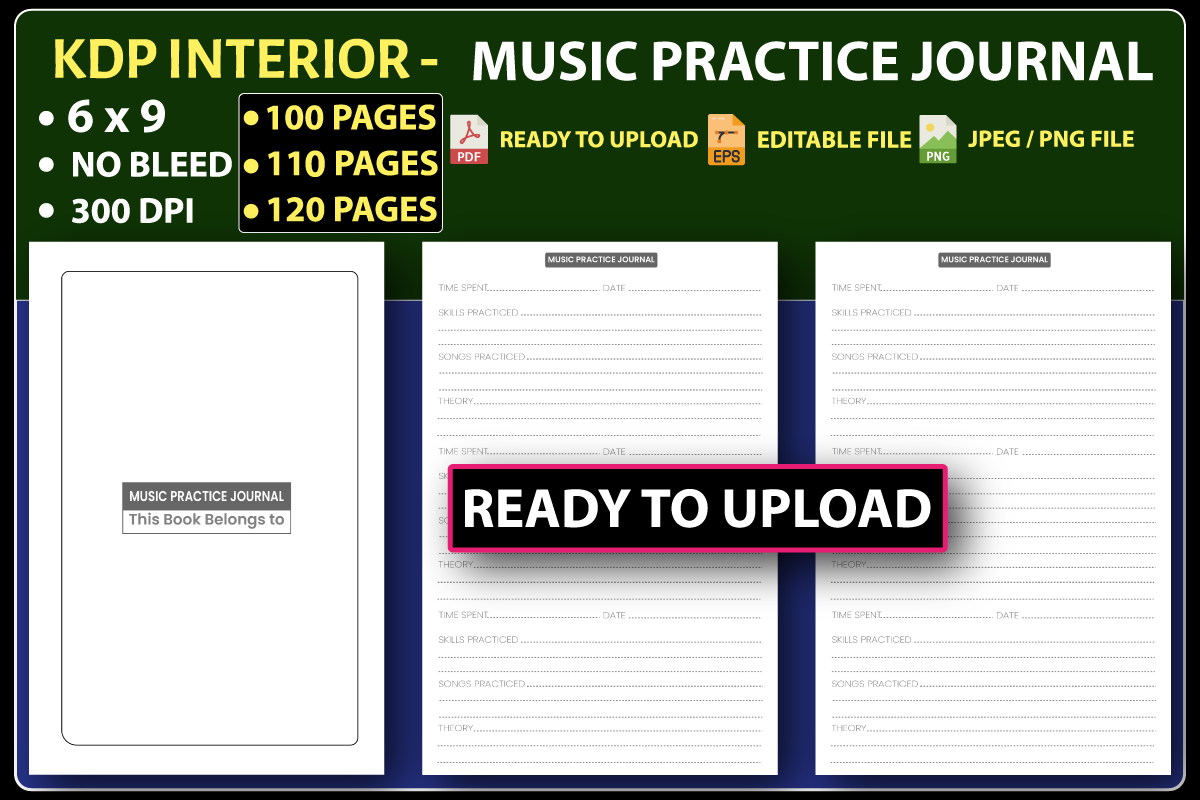
My Design Hut’s compact music journal offers 100-, 110- and 120-page versions at 6×9 inches. The documented files are PDF, JPEG and editable Illustrator artwork, with no bleed. Its preview shows music practice forms, although one sentence in the description refers to an unrelated dream logbook; check the downloaded file if that inconsistency matters to your project.
I would compare this with the larger My Design Hut version when portability is the deciding factor. A smaller notebook is easier to carry, but a sample page will show whether its writing spaces suit your notes. The listed page counts are alternatives, not a promise of hundreds of unique prompts, and the AI extension means Adobe Illustrator source.
3. Two-Size Music Practice Tracker
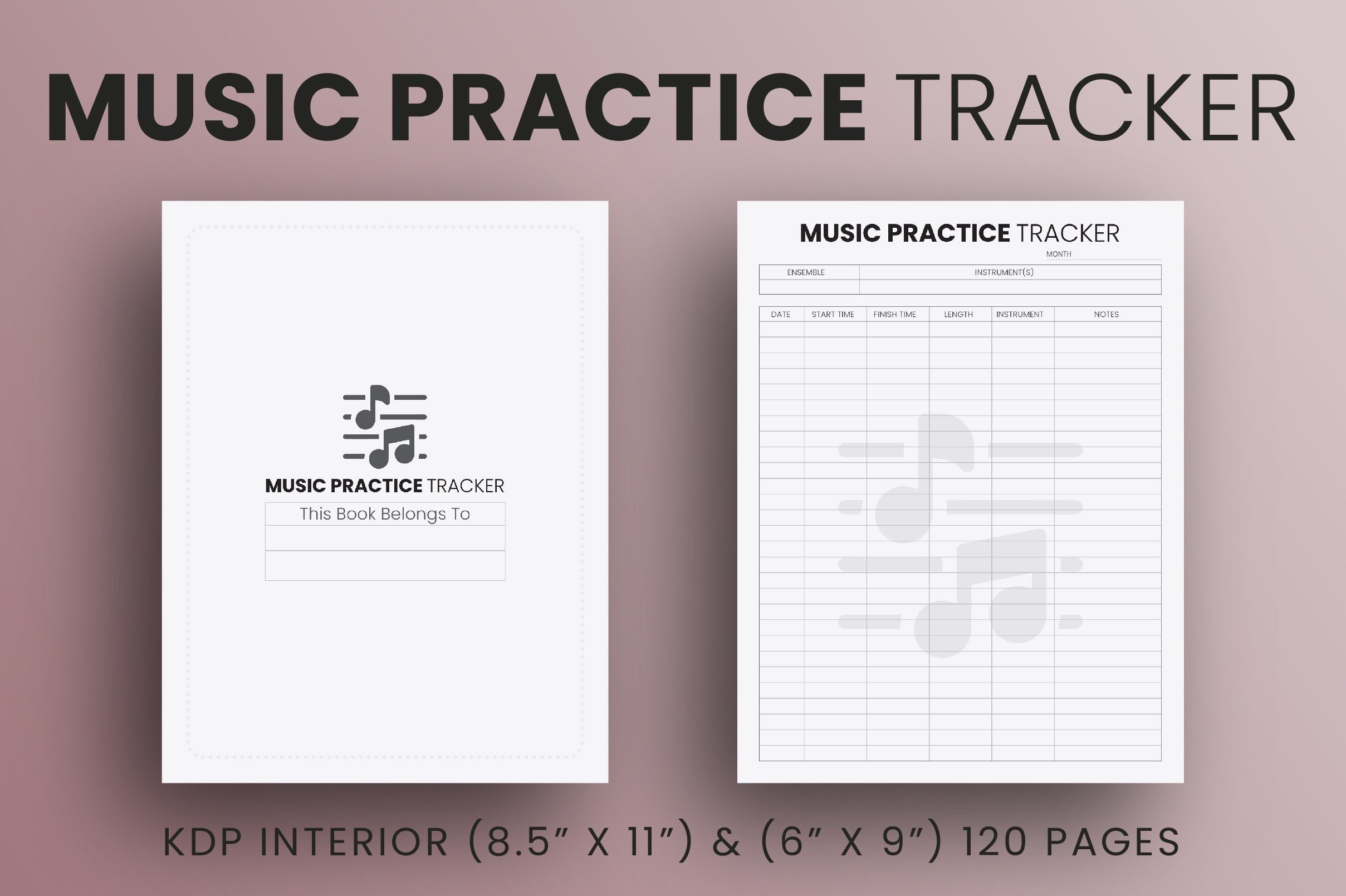
Vector Cafe supplies a 120-page tracker in 6×9 and US Letter sizes, with PDF, JPEG and editable Illustrator files. This listing specifies bleed, so it is important to select the correct file and print settings rather than assuming that every music journal uses the same margins.
This would suit someone who wants a consistent practice record and the option to adapt the artwork later. Illustrator source files are useful if you already work in that software, but they are not required simply to print the PDF. The stated page total is the interior length; it does not mean 120 different tracking layouts.
4. Music Assignment Sheets for Lesson Follow-Through
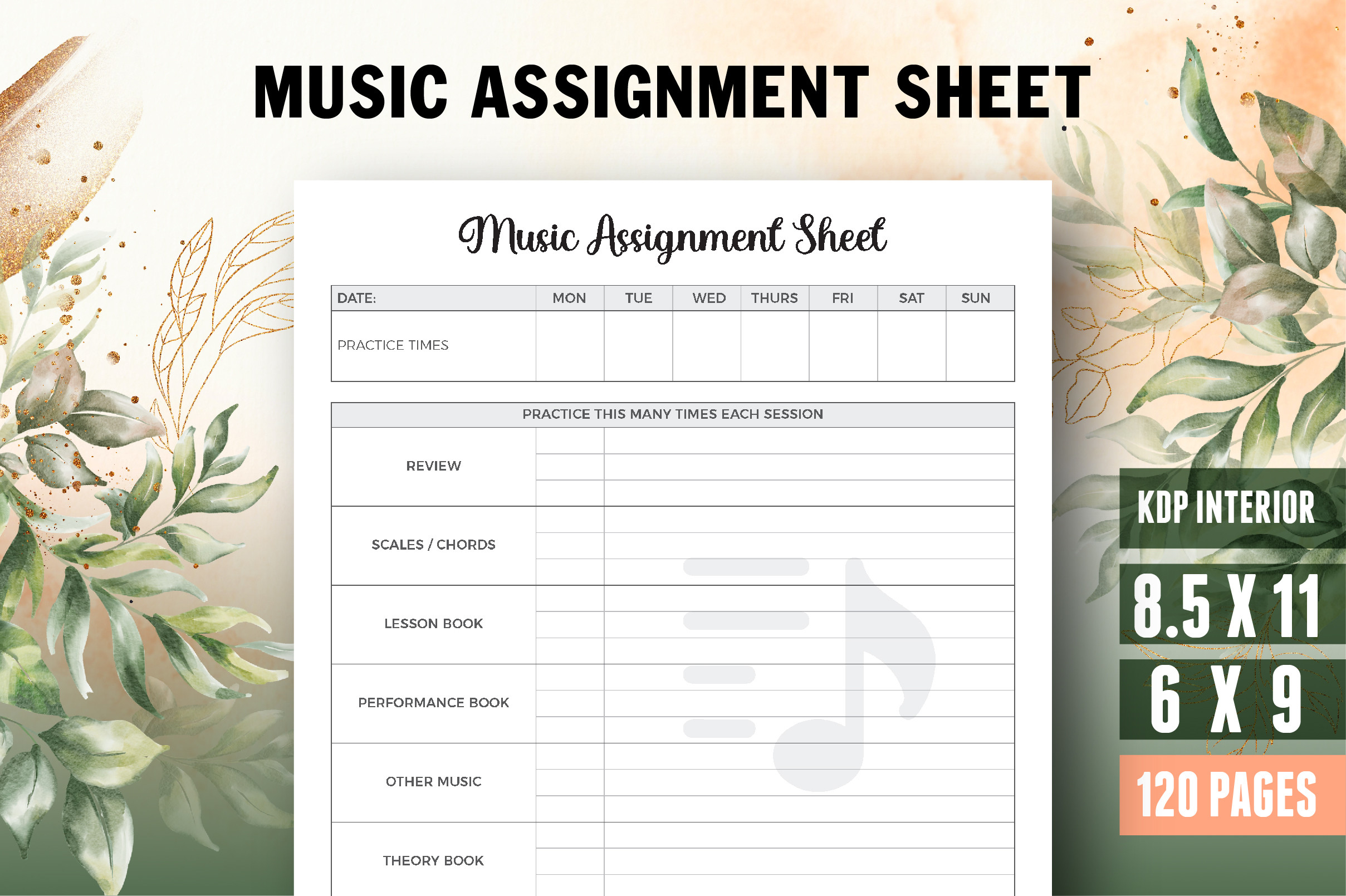
An assignment sheet shifts the emphasis from recording time to remembering what the next lesson requires. This Vector Cafe resource includes a 120-page interior, PDF and JPEG exports, and editable AI files in two sizes: 6×9 and 8.5×11 inches. The listing describes a bleed layout.
I would use this alongside a teacher’s instructions rather than filling a page with unrelated practice targets. Write one passage or skill to revisit, then leave a brief observation after trying it. It is a useful alternative when a broad journal feels excessive, although the preview should still be checked for the exact fields you need.
5. Compact Monthly Music Practice Tracker
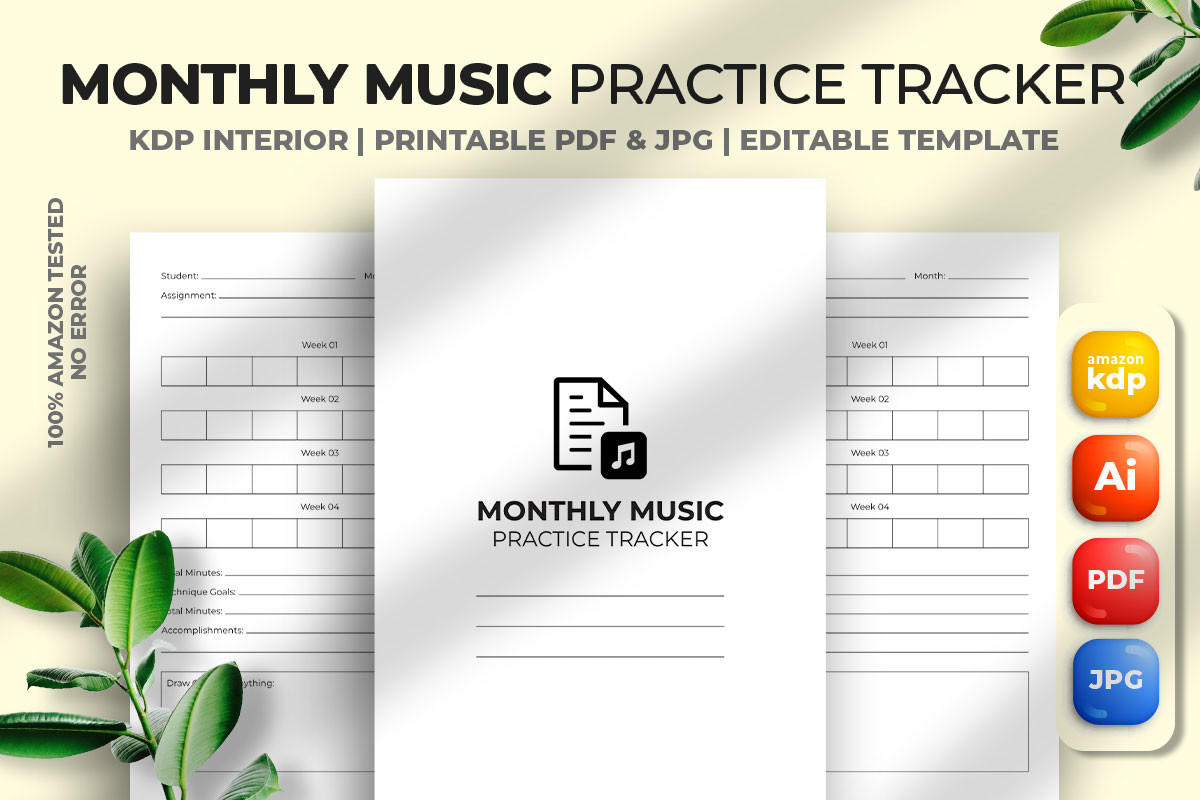
M9 Design’s monthly tracker is a 120-page, 6×9-inch interior supplied as PDF and high-resolution JPG. The listing specifically describes its PDF as vector artwork that can be opened in Adobe Illustrator for editing. No bleed is specified for this version.
I would consider this for a small practice notebook that is easy to keep beside an instrument. A monthly record helps reveal missed sessions without demanding a long written reflection every day. It does not establish why a session was missed, so add a short note when context matters. Editing vector artwork also requires appropriate software; an ordinary PDF reader does not provide the same controls.
6. Large-Format Journal with Illustrator Source
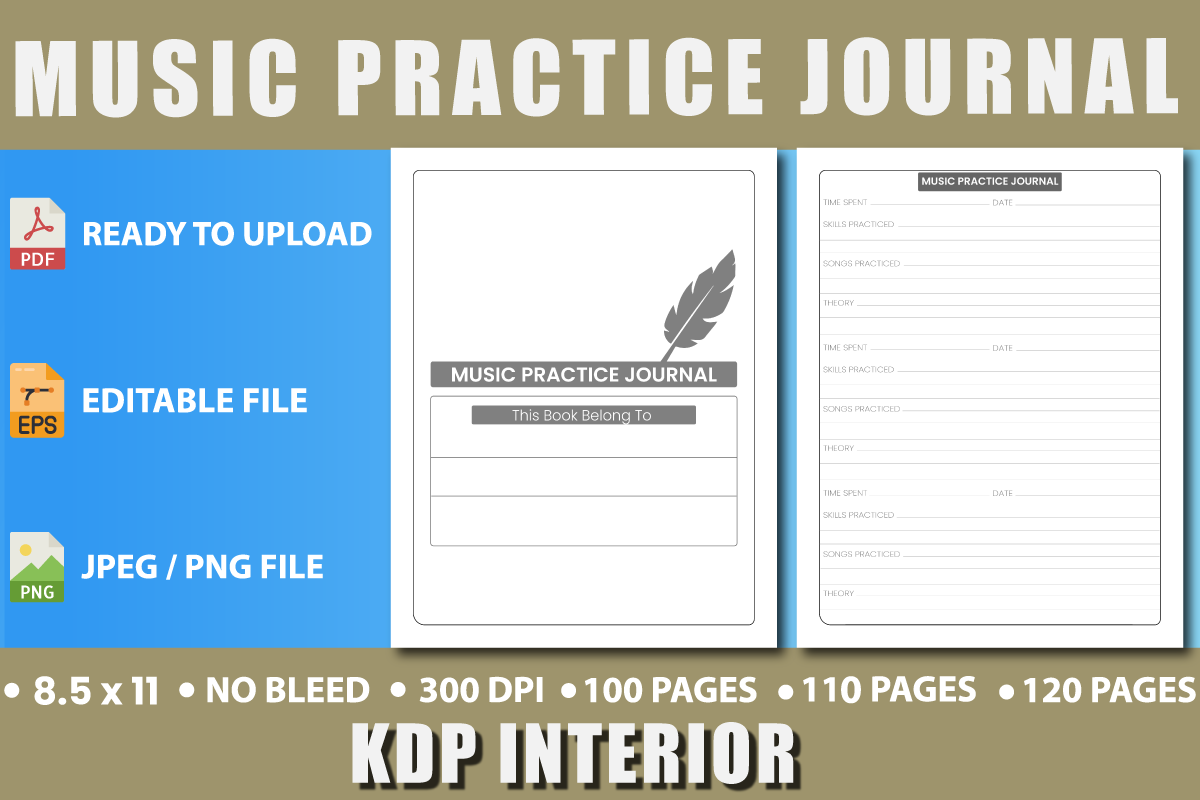
My Design Hut’s large music journal uses US Letter pages and offers 100-, 110- and 120-page versions. PDF and JPEG files are accompanied by AI source files, with a no-bleed layout. That makes it a more spacious alternative to the compact interiors elsewhere in this list.
The wider writing area is attractive if lesson notes include several pieces or longer observations. I would compare the sample pages before choosing a page count, since a longer interior may repeat the same core form. It is a printable resource rather than a music tuition course, and the AI file extension here refers to Adobe Illustrator.
7. Compact Journal with Editable Presentation Files
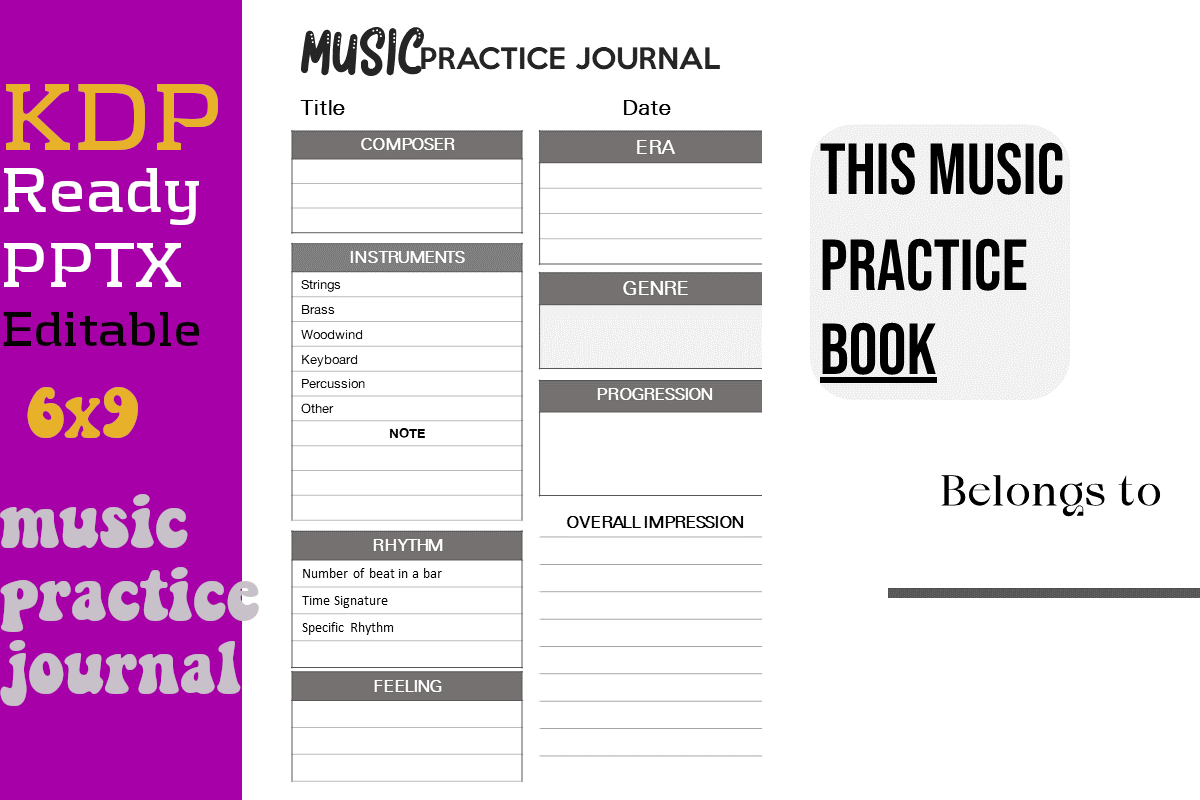
This creativdesignz interior keeps the specification simple: 100 pages at 6×9 inches, with a PDF and editable presentation files listed as PPTS. The smaller format is suitable for a portable practice notebook, particularly when you want a short record rather than a full lesson binder.
Its appeal is the possibility of adapting the layout without starting in a vector design program. Check that your presentation software opens the supplied source before relying on that workflow, because the listing’s format wording is brief. I would print one sample at actual size to see whether the writing spaces remain comfortable for everyday handwriting.
8. US Letter Journal with PNG and Vector Options
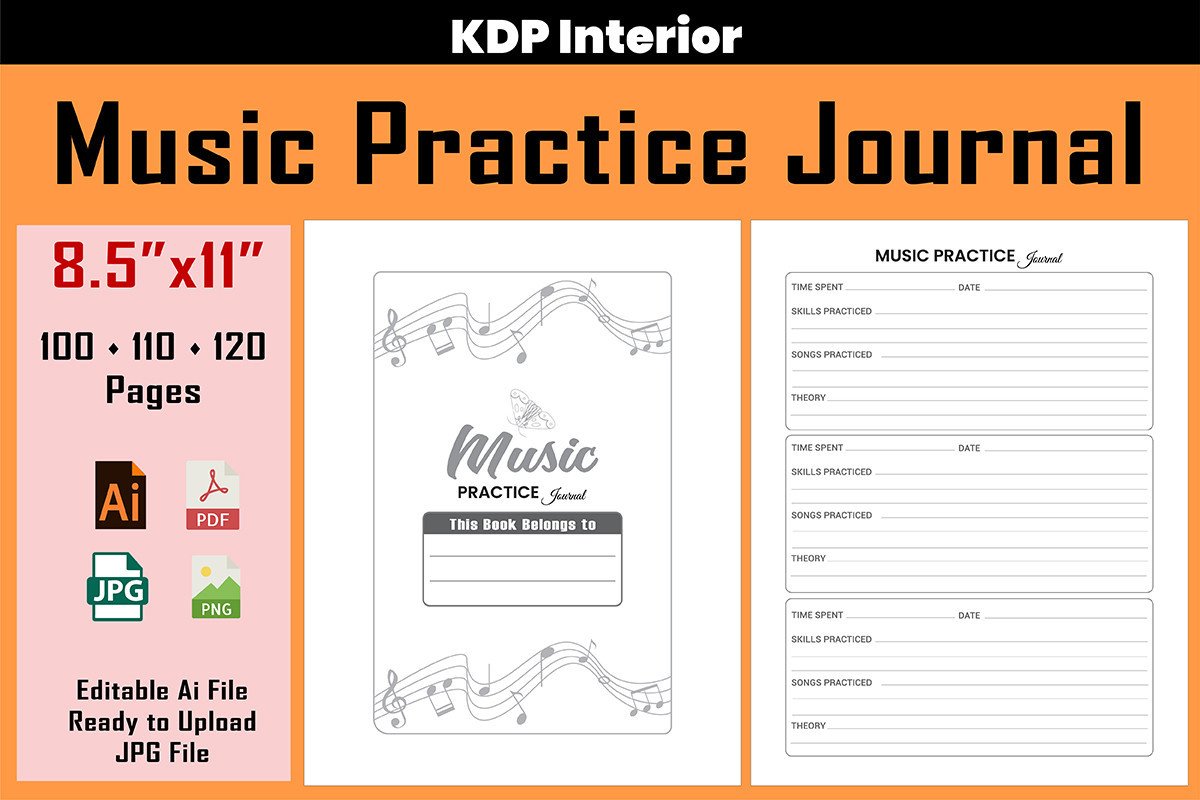
Cristycomm’s large version provides 100-, 110- and 120-page interiors at 8.5×11 inches. The file list includes PDF, JPEG, PNG and editable AI artwork, and specifies no bleed. The extra image formats can be convenient when arranging pages in a larger personal practice binder.
I would choose this over a pocket-size book when legibility and writing room matter more than portability. Image exports are useful for placement, but they do not automatically become editable text forms. Look at the actual sample layout and choose the page count that fits your intended binding rather than treating the largest version as inherently better.
9. Small Journal with Bleed and No-Bleed Versions
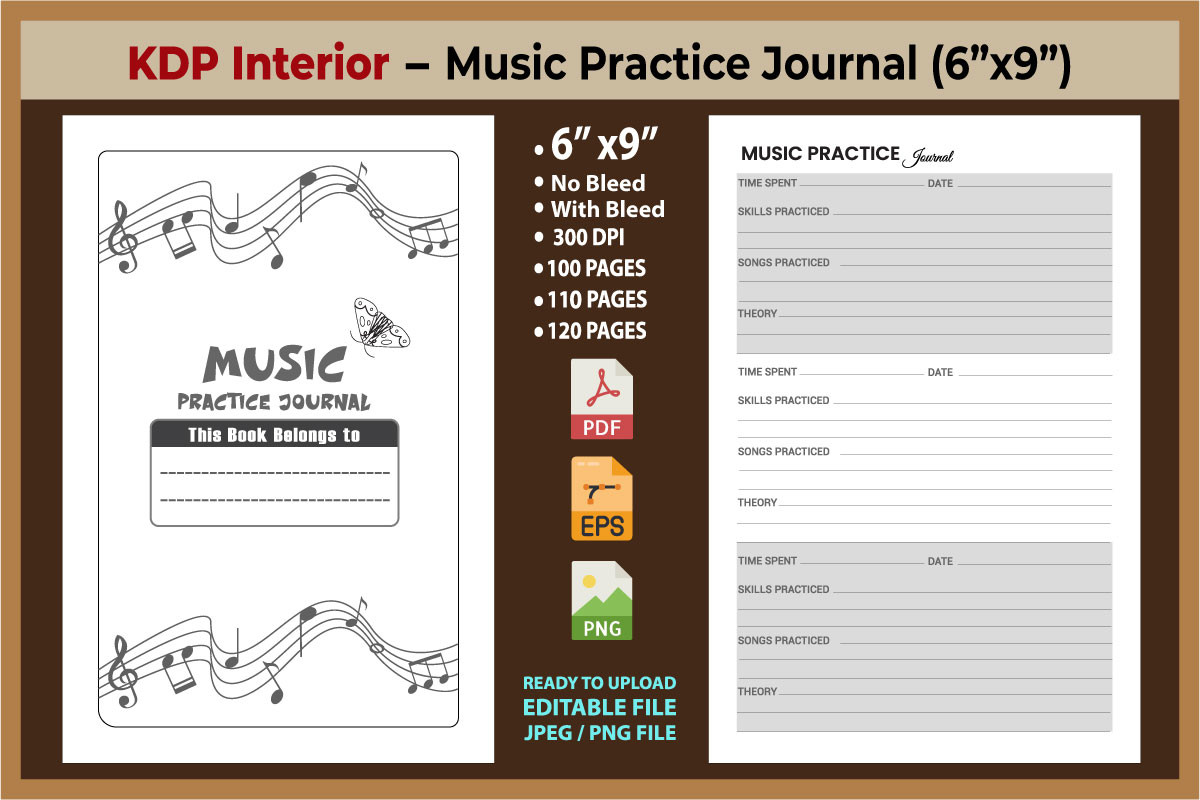
This compact cristycomm resource offers 6×9-inch interiors in 100-, 110- and 120-page versions. PDF, JPEG, PNG, AI and EPS files are listed, with both bleed and no-bleed options. It is one of the more flexible file packages for someone preparing a custom printed notebook.
The important choice is which production layout matches your use. For a home practice copy, test margins and writing space before committing to a full print run. For a bound book, follow the printer’s current specifications. The source files provide design flexibility; they do not add automatic practice analysis or a pre-cropped digital sticker collection.
10. Simple 100-Page PDF Practice Interior
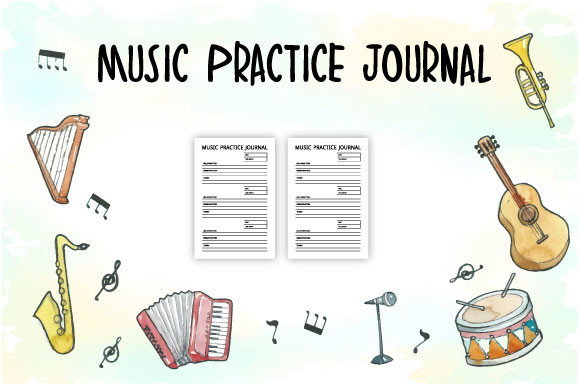
Gfx Studio’s Music Practice Journal is a straightforward 6×9-inch, 100-page PDF interior with no bleed. Its file description does not promise editable Canva or presentation sources. That narrower specification can be helpful if your goal is simply to print a consistent notebook and begin using it.
I would compare its preview with the other Gfx Studio version below rather than buying several similarly named resources without checking the layouts. A finished PDF is often enough for personal note-taking, but substantial design changes may need additional software. Keep expectations focused on the supplied interior, not a physical cover, binding or shipped journal.
11. Large Practice Journal from Graphic & KDP Interior Shop
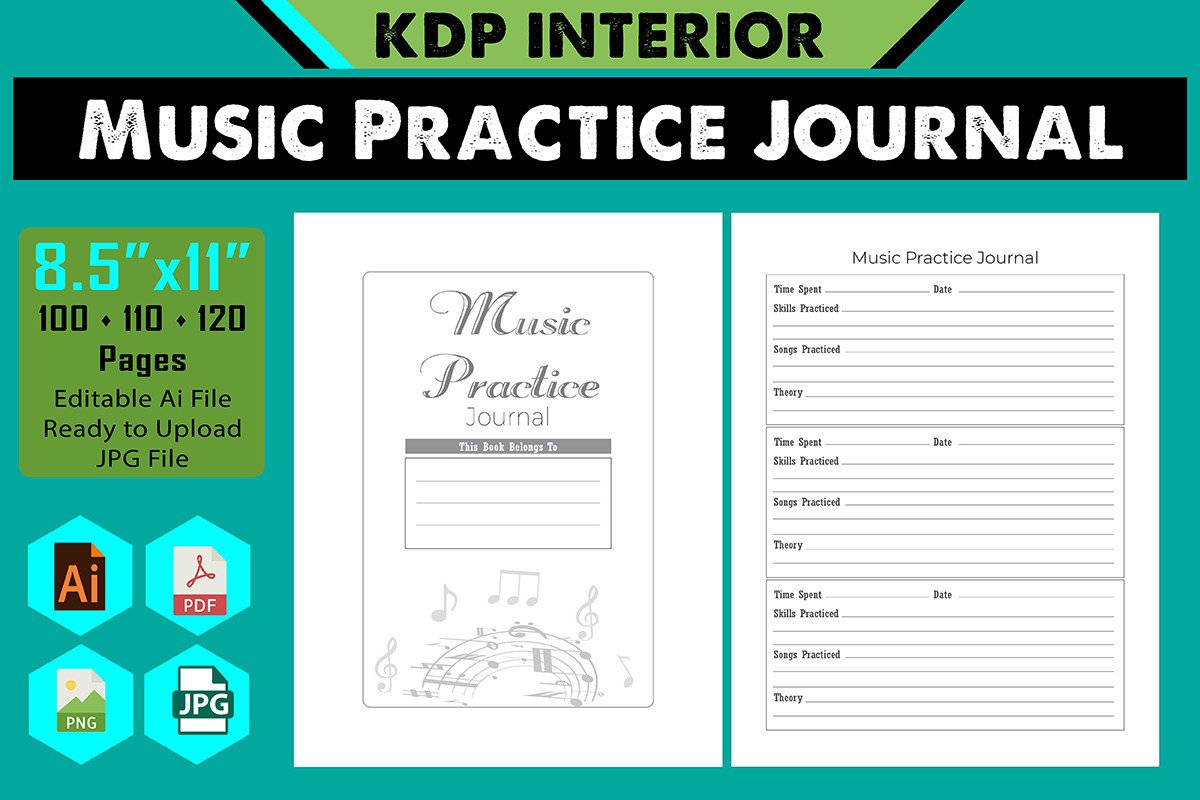
This US Letter interior offers 100-, 110- and 120-page alternatives, with PDF, JPEG, PNG and AI files. The listing specifies a no-bleed layout. The larger format offers a practical starting point for someone compiling a desk-based practice record or a custom lesson notebook.
I would judge this one on its page design rather than on the broad publishing language used in the listing. Check that the visible fields match your way of recording lessons, pieces and next steps. Files advertised for KDP still need your own production checks; the download does not guarantee publishing acceptance or provide a finished music-learning program.
12. Compact Practice Journal for a Printed Notebook
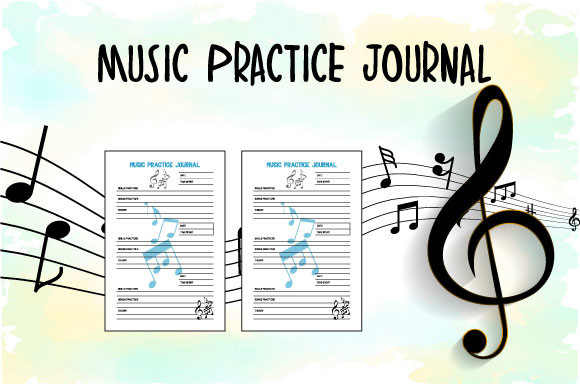
The Music Practice Journal for KDP from Gfx Studio is another 100-page, 6×9-inch PDF interior without bleed. It is a separate listing, so compare its preview carefully with the similarly titled journal above. The documented package is a printable interior, with no editable source format confirmed.
This is worth considering when the layout itself suits your handwriting and you want to avoid a complicated setup. Use a sample page for one real session before printing the whole file. A good journal earns its place by making the next practice easier to start, not by creating another lengthy administrative task after every lesson.
Use the Record Without Making Practice Administrative
Before a session, write one clear task from your lesson or previous notes. Afterward, record what you attempted, what felt unresolved and the next small step. Minutes provide context, but a longer session is not automatically a more useful one. Let your teacher guide technique and repertoire decisions.
At the end of the week, review recurring difficulties and take one specific question to the next lesson. If practice competes with other commitments, use a separate time tracker to understand your available time; keep the music journal focused on the work itself.
Print a Test Before Building the Whole Notebook
Check actual page size, margins and whether the file is intended for bleed or no bleed. Print one representative page and try writing on it. For duplex printing, inspect the reverse side before producing the entire interior. A file advertised for publishing still needs your own printer or platform checks.
Keep an untouched original when editing, and export a small test before a full book. For a broader creative workflow, a craft project planner can hold project milestones while this journal keeps the practice record. Choose the layout you will return to consistently, then use the Download button to inspect its current files.