11 Practical Garden Planner Templates for Seeds, Beds and Harvests
A Garden Planner turns a growing season into a record you can learn from. Bed maps, seed inventories, sowing dates and harvest notes answer different questions, but together they reveal what was planted, what happened and what deserves another try next year.
This selection compares 11 Creative Fabrica products: printable record books, editable Canva collections, 2027 journals and a Notion template. The reviews distinguish complete garden systems from a specialist seed-collection companion. File and feature details come from the listings, not from independent testing of every download.
Your own site conditions matter more than the number of pages. Look for comfortable writing space, a useful way to identify beds or plants, and records you will update during the busy season. A planner organizes observations; it does not guarantee yields or supply local planting advice automatically.
In this guide
Choose a Garden Planner Around Your Growing Space
For containers, plant profiles and watering notes may matter more than a large bed map. For vegetable plots, seed-starting dates, crop locations and harvest records can be more useful. An indoor seed-starting setup may need tray maps and grow-light records as well.
Use consistent bed and plant names from the first entry. The same identifier on a layout, sowing record and harvest sheet makes comparisons possible later. A simple record updated frequently is usually more informative than a large collection of mostly empty forms.
Choose dated 2027 pages for next year’s schedule or an undated book for continuity across seasons. Canva adds layout editing, while Notion offers a typed workspace. Neither format alone establishes automated weather data, irrigation control or crop-specific timing calculations.
1. 100-Page Editable Garden Workbook
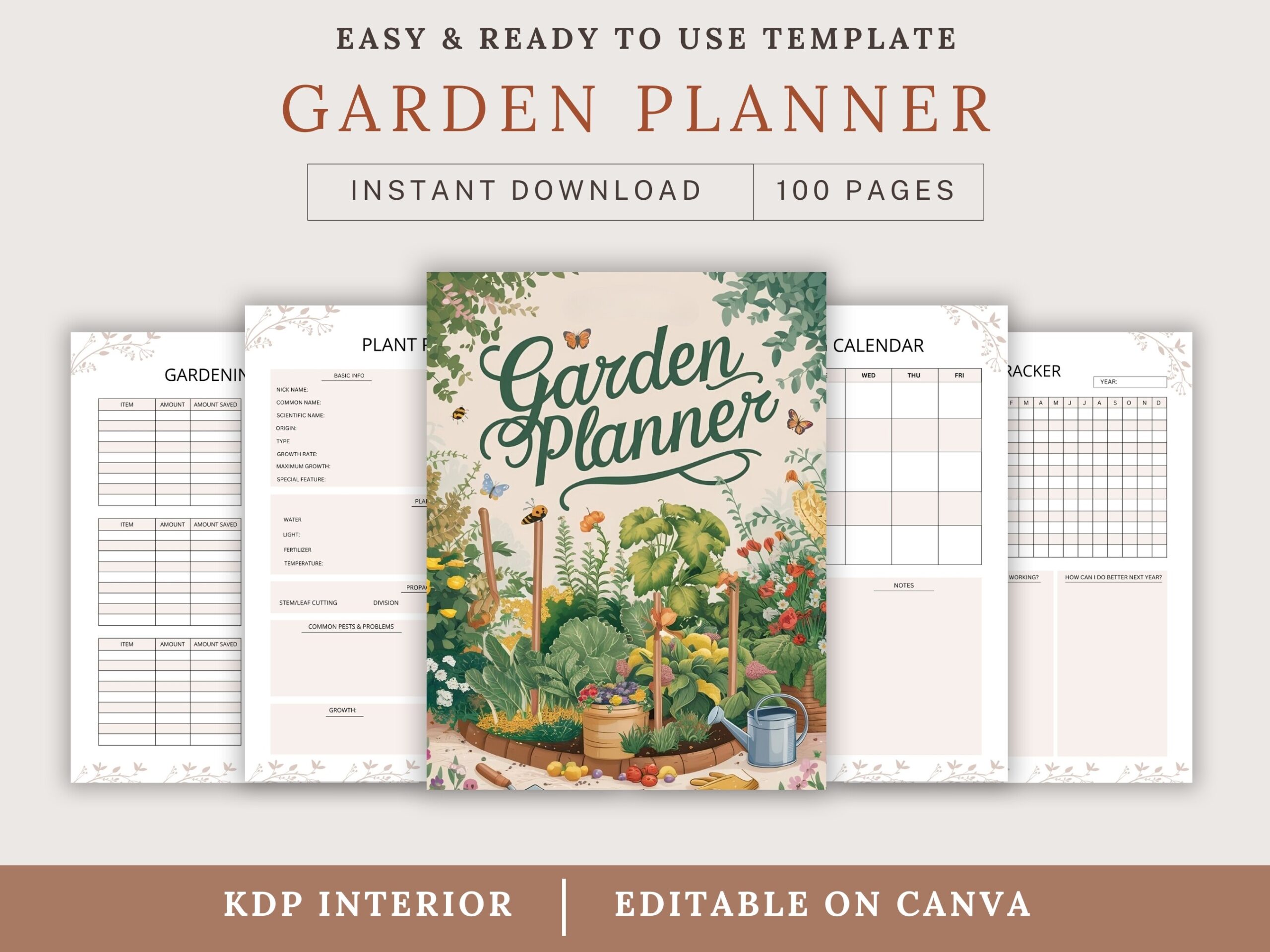
Rakib Chowdhury’s garden workbook lists a 100-page US Letter PDF and Canva templates, with bleed. It provides a substantial editable starting point for someone who wants a customized garden binder rather than an off-the-shelf gardening app.
Before printing, choose the pages that match the scale of your growing space. A small container garden benefits from a short working section that can be updated quickly, while a larger plot may justify separate records for individual beds.
The description is less specific about the complete field inventory than some other options here. Inspect the preview carefully and do not assume built-in planting calculations, automated reminders or local growing advice from the page count alone.
2. Notion Garden Planner
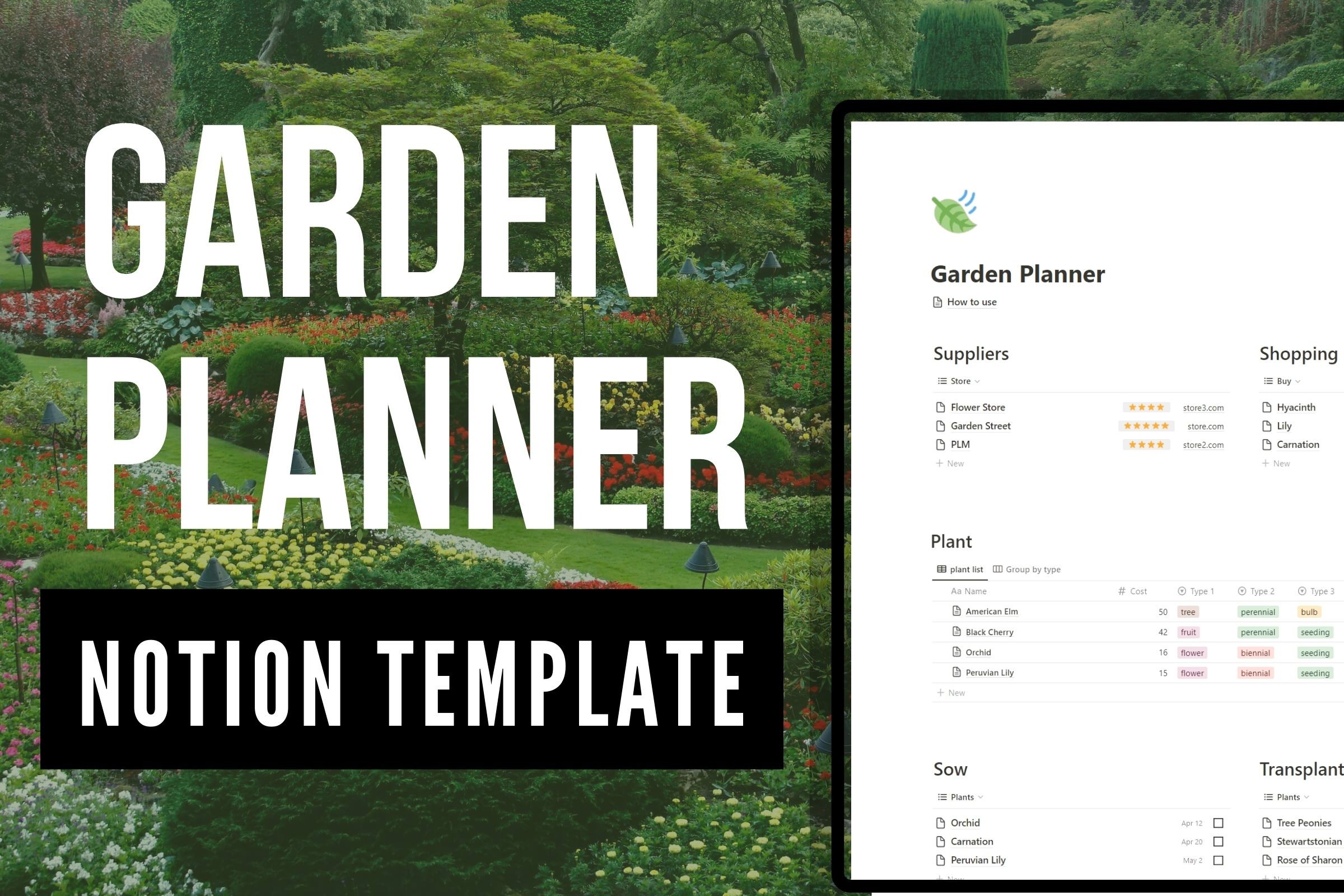
Bazion’s Notion template organizes plants, planting dates, watering, fertilizing and harvest records within a digital workspace. Access is delivered through a PDF link, and the listing describes duplicating the template into a free Notion account.
This is useful if you prefer typed records that can be revisited while ordering seeds or reviewing the season. Give each plant a consistent name and record observations close to the time they happen, rather than reconstructing a whole month later.
It is a Notion template, not a printable PDF workbook or a sensor-connected garden system. The listing does not establish automatic weather feeds or plant-specific care calculations; your own garden information and judgment remain necessary.
3. SR KDP 2027 Garden Planner
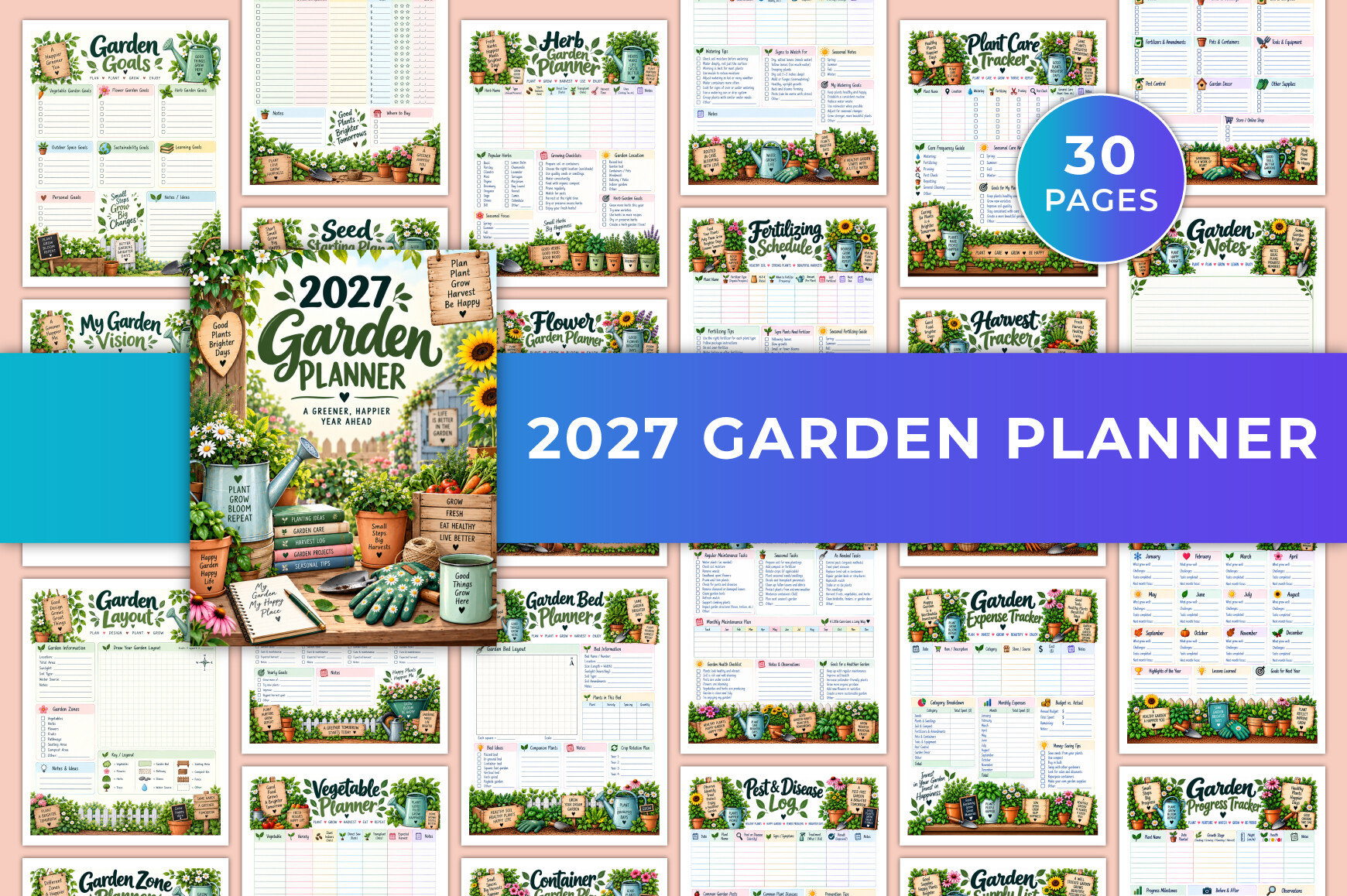
SR KDP’s 31-page 2027 planner covers bed and container layouts, seeds, vegetables, herbs, flowers, watering, fertilizing, harvests and expenses. It offers a relatively compact selection of planning and recordkeeping pages compared with larger journals.
Begin with the garden-zone plan and seed inventory, then move into the planting calendar. At harvest time, record quantities and preservation notes so the following year’s decisions draw on what your garden actually produced.
The listing gives a page count and detailed section names but does not clearly specify the complete file formats or paper size. Confirm those download details before printing, and use local planting guidance rather than assuming the calendar calculates your sowing dates.
4. Garden and Seed-Starting Canva Bundle
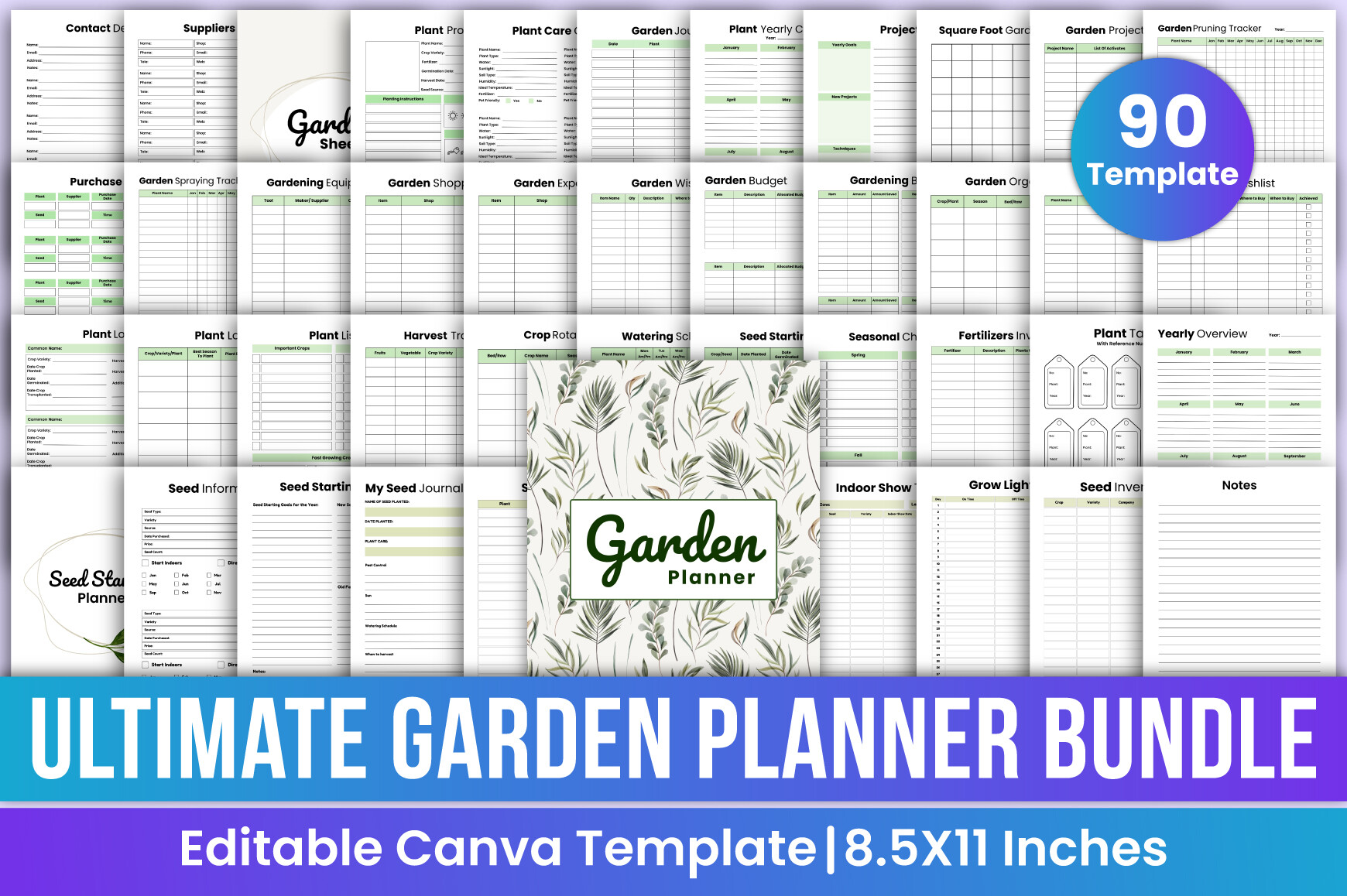
Mustafiz combines general gardening records with a dedicated seed-starting section in a 90-template US Letter Canva bundle. PDF, JPG and PNG files are listed, and the seed section includes grow-light logs, tray layouts, supply records and seedling watering schedules.
This is a particularly useful choice for gardeners raising plants indoors before transplanting. Map the seed tray, record the variety in each cell group, and keep the sowing and planting-out notes together so labels do not lose their meaning.
The large selection can be more than a casual gardener needs. Print a focused seed-starting packet first; its layouts organize your own dates and observations, rather than providing a guaranteed schedule for every crop or growing region.
5. 55-Template Garden Care Collection
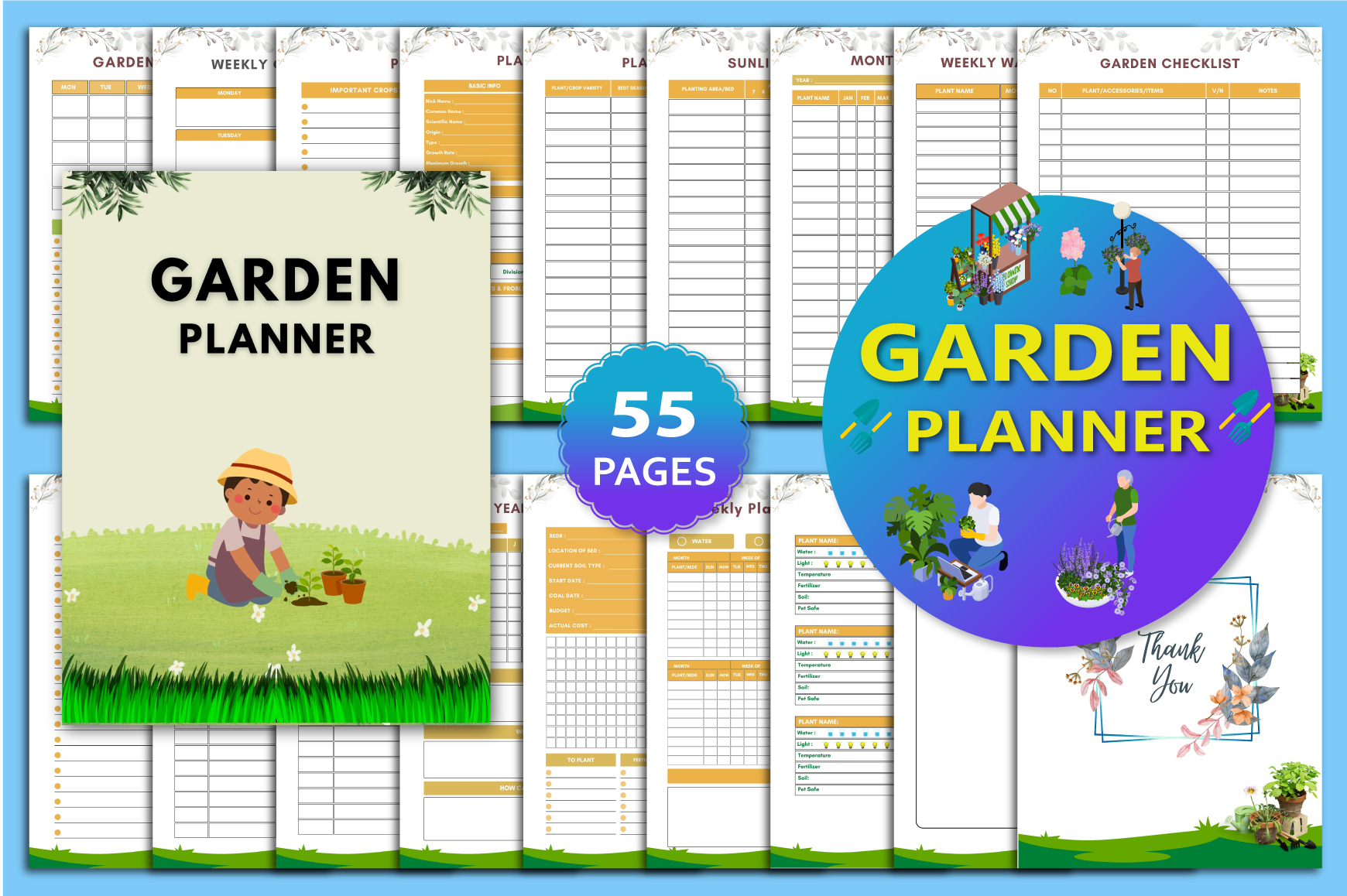
designmela01 supplies 55 US Letter Canva templates with PDF and JPG files. The listed pages include sunlight, watering, fertilizer, compost, soil pH, propagation, pests, harvests and garden equipment, making this a broad care-record collection.
It suits a garden where you want to compare changes over time. Record the location and date alongside sunlight or soil observations, then use the plant-care change log to note what you adjusted and what happened afterward.
A large inventory of forms does not make the download a gardening reference authority. The pages record measurements and actions; they do not measure soil pH, diagnose plant disease or automatically decide which treatment your plants need.
6. ModernAstic Editable Garden Journal
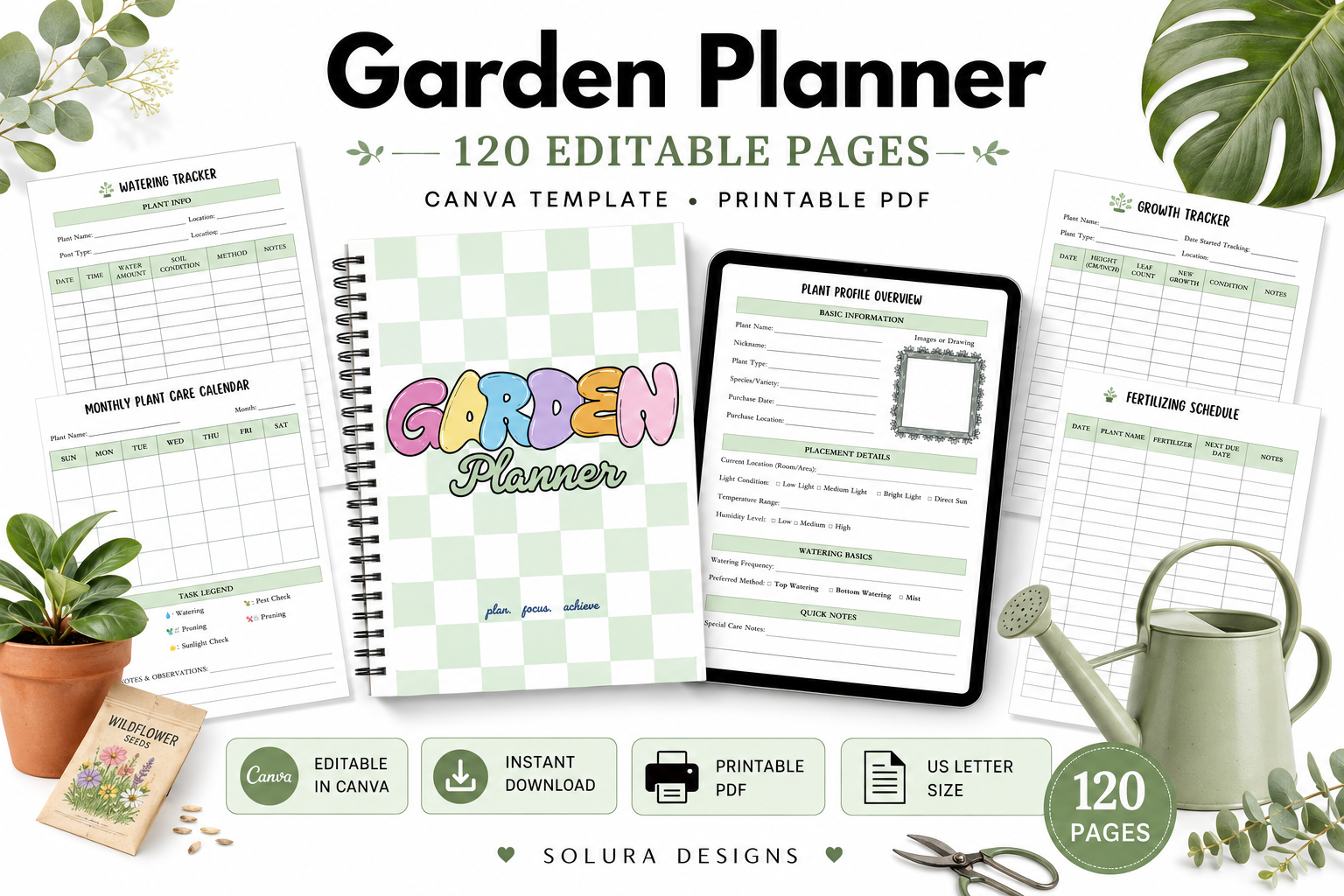
ModernAstic’s 120-page US Letter Canva journal includes plant profiles, growth and repotting logs, watering, fertilizing, pruning, pest observations and sunlight records. Its attention to individual plants makes it useful for mixed indoor and outdoor collections.
Create a profile for each important plant and use the same identifier in the care records. For a small collection, duplicate only the pages you regularly use instead of maintaining a large binder whose empty sections discourage updates.
The listing describes 120 total editable pages, not necessarily 120 distinct layouts. Canva editing is confirmed, but automatic notifications and plant-health analysis are not; use the journal to document care, then consult reliable guidance when a problem needs diagnosis.
7. Undated 12-Month Garden Record Book
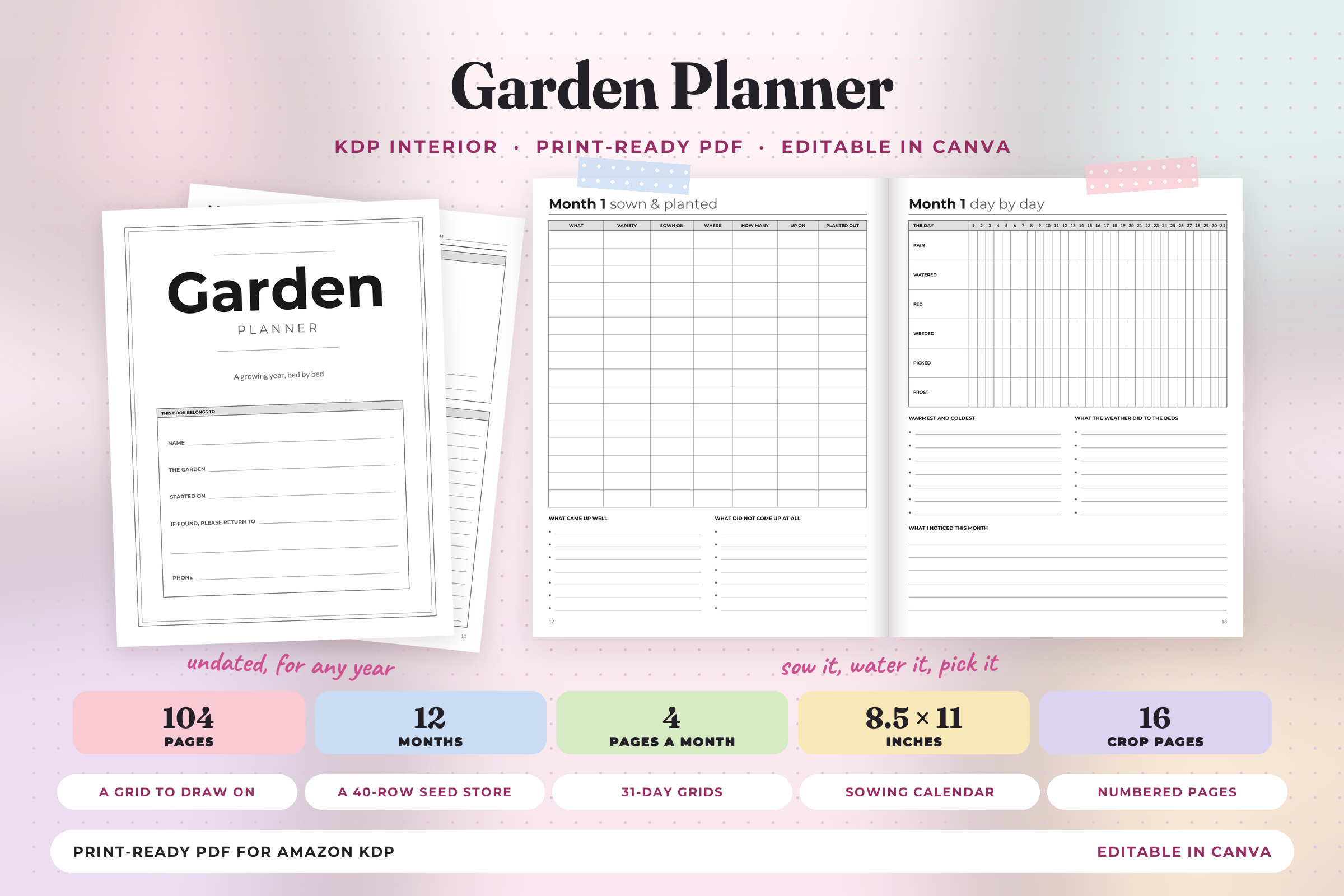
Print Magic StudioX provides a 104-page black-and-white US Letter garden book with an undated monthly structure. Its records cover seed storage, monthly tasks, weather, watering, harvests, crop rotation, pests, propagation and garden spending.
It is a useful option when continuity matters more than a particular calendar year. Keep the same monthly format across seasons so you can compare sowing dates, harvest results and weather notes without changing your recordkeeping system each January.
The full PDF is accompanied by two smaller Canva-ready PDFs for import, rather than a direct Canva template link. It is not hyperlinked, and its compact printed fields deserve a test page before committing to the entire book.
8. KDP GALLERY 2027 Garden Planner
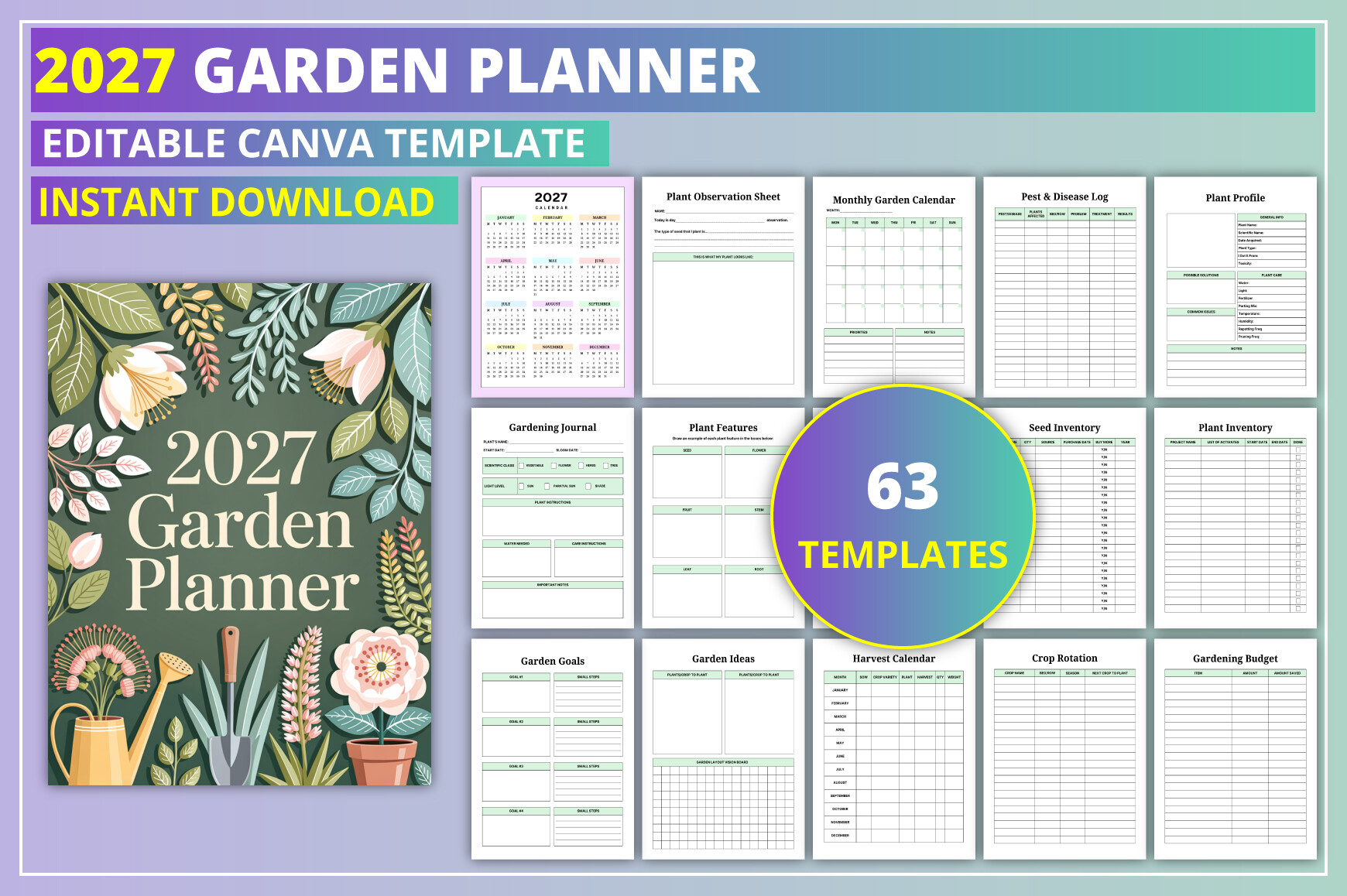
KDP GALLERY lists 63 US Letter Canva templates with PDF, JPG and PNG files. The 2027 edition includes garden layouts, crop rotation, compost and soil observations, seed starting, watering, plant profiles and project records.
Choose it when you want next year’s calendar and garden-specific records in one editable set. Start with a realistic list of growing projects, then connect each one with the required seeds, supplies and monthly tasks.
The listing warns about Canva Pro elements. Check the template’s export requirements before relying on a free account, and remember that the calendar is dated for 2027 even though many of the record sheets may be reusable.
9. KDP Studio 2027 Garden Journal
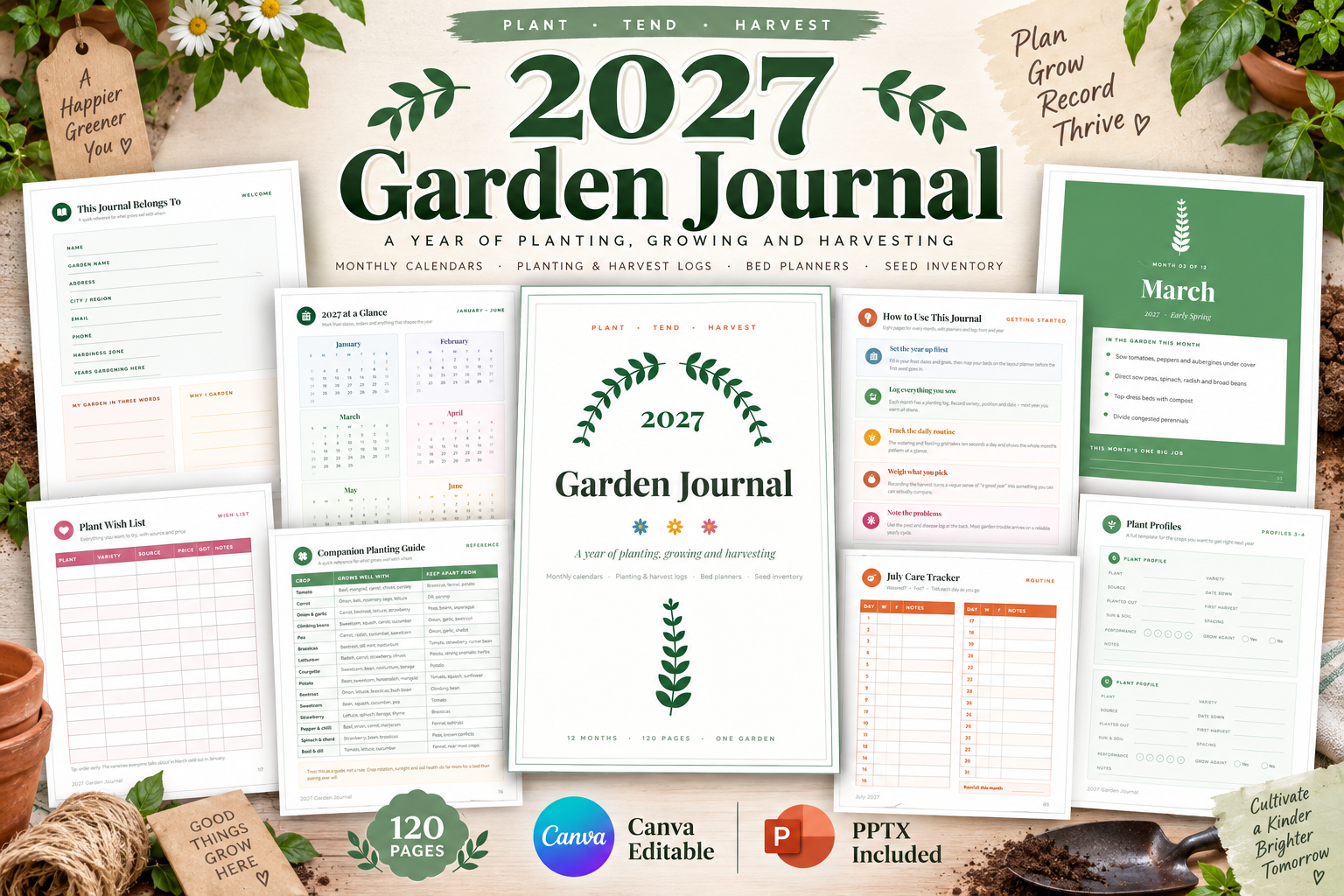
KDP Studio’s 120-page 2027 journal is especially detailed about its site-profile and seasonal records. It includes frost-date notes, sunlight and soil information, bed layouts, seed inventories, monthly care and harvest logs, weather observations and a year-end review.
This is a good fit for gardeners trying to learn from their own plot. Record your site’s conditions first, then compare planting dates and harvest results with the weather notes instead of relying only on memories of a successful season.
The listing provides extensive section descriptions but does not clearly establish every technical download specification. Check the supplied file format and print dimensions, and verify the companion-planting reference against dependable local gardening advice.
10. 2027 Seed Collection Planner
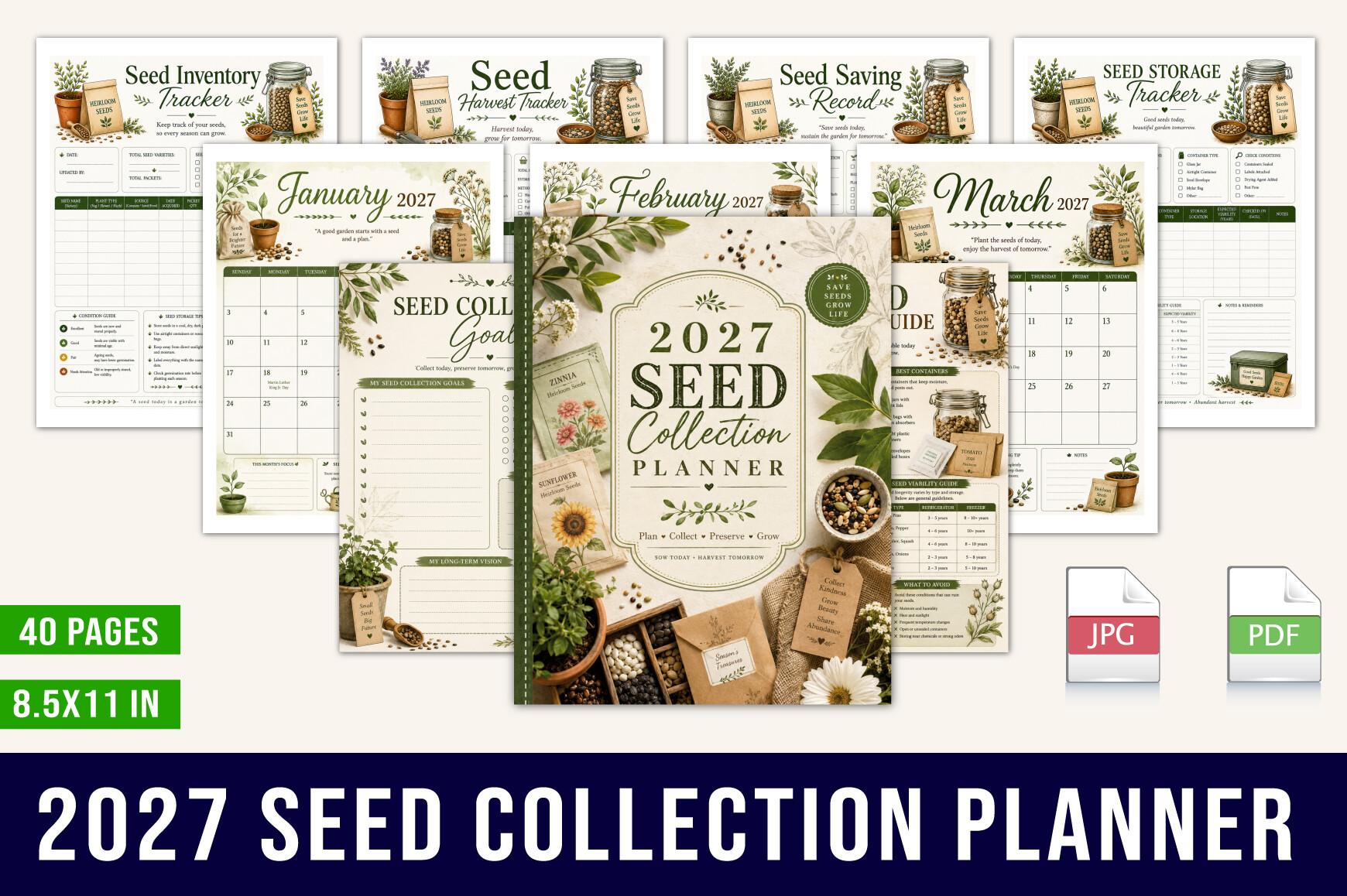
designmela01’s 40-page US Letter PDF focuses on seed ownership and organization. It records varieties, sources, dates, storage, quantities and supplies alongside 2027 planning and weather or goal records.
Use it as a companion when the main issue is buying seeds you already own or losing the details from an opened packet. Inventory the collection before ordering, and keep storage locations consistent with the labels you write in the planner.
Its emphasis is seed collection rather than a complete garden-maintenance system. You may still want a separate bed map or harvest journal, and a storage record cannot guarantee germination or replace the sow-by information on the actual packet.
11. Compact Backyard Gardening Planner
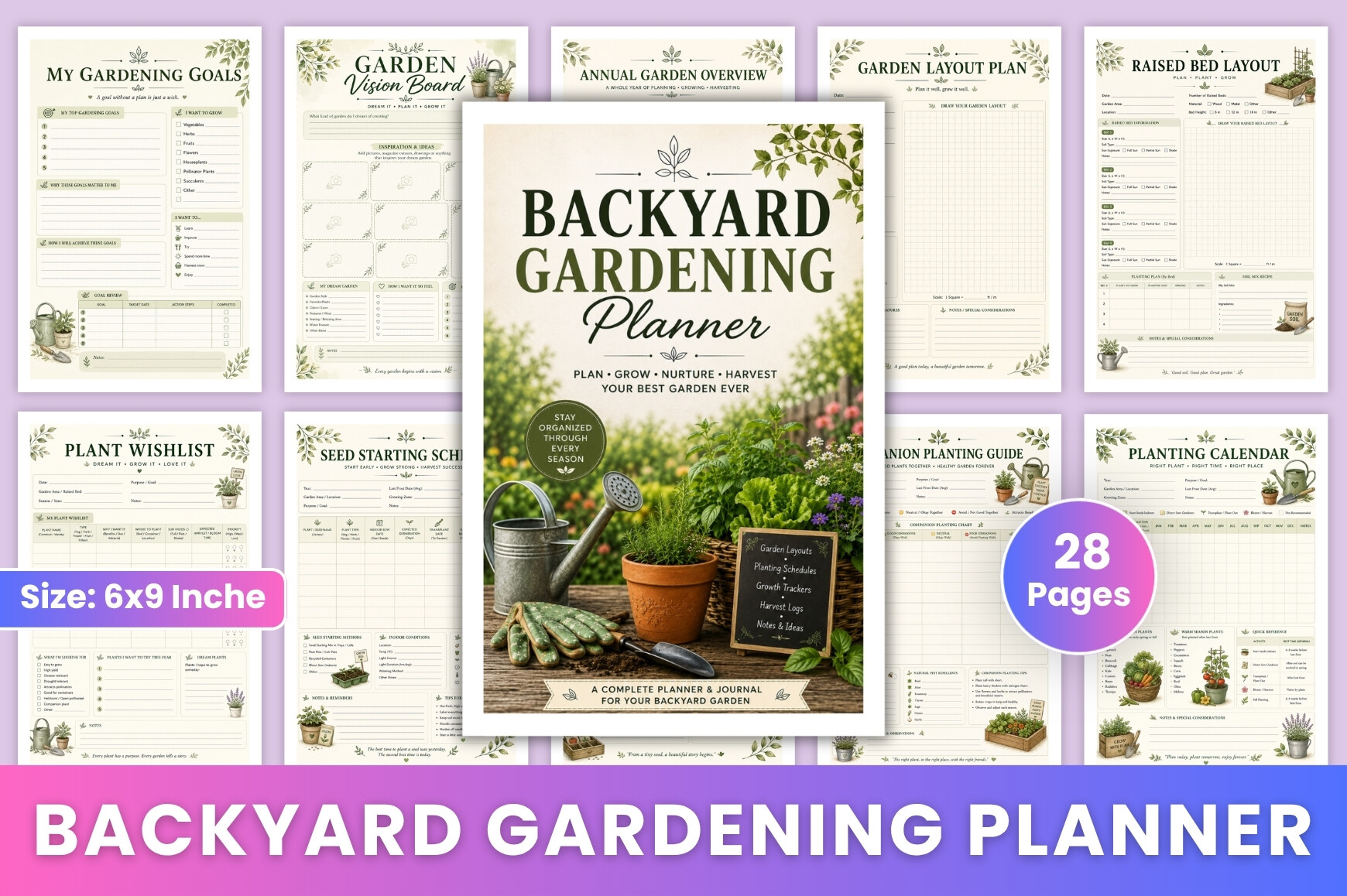
KDPMart offers a 28-page 6 × 9-inch PDF for backyard gardening, with no bleed. Its listed sections include a garden profile, goals, raised beds, layouts, seed inventory, seed-starting calendar, watering, feeding and harvest records.
The smaller format is appealing if you want a notebook that can travel with you between the house and the garden. Use short entries and consistent bed names so the limited writing space remains useful throughout the season.
This is a compact printable planner rather than a large customizable system. Check the preview for legibility at actual size, and add any missing specialist records separately instead of assuming a short interior includes every possible growing task.
Make the First Entries Before Buying Seeds
Map the available growing space and inventory the seeds already on hand. Record varieties, packet dates and storage locations, then identify genuine gaps before ordering. Keep your garden goals realistic for the time and space you can maintain.
Use local frost-date and planting information when deciding dates. Write the source or reason beside a planned sowing date so that later comparisons make sense. If a plant performs poorly, record the conditions and observations rather than only a vague success-or-failure label.
Review Harvests and Lessons at Season End
Record harvest quantities consistently, along with the variety and location. Add brief notes about flavor, timing and how the produce was used. Those details make next year’s crop choices more useful than a total yield alone.
Compare your harvest record with weather, watering and planting notes. Choose one or two changes for the next season and put them on your goal planner. Treat the records as evidence from your own garden, not a guarantee that the same result will repeat.
Garden Planner Questions
Does a template calculate when to plant? Only if the listing explicitly describes that function; these paper and document-based options do not establish a location-aware planting engine. Can a care log diagnose disease? No. It helps preserve observations for further research or advice.
Do you need a 100-page journal for a small garden? Not necessarily. Print the useful layouts and keep them together. A short seed inventory, bed map and seasonal record can be a better fit than a large binder you rarely open.


One Comment