9 Best Digital Budget Planner Templates to Organize Your Money and Spending
Managing money feels much easier when you can actually see where it’s going. A good digital budget planner can bring your income, expenses, savings goals, and bills together in one place without relying on piles of paper or complicated budgeting apps.
For this collection, I picked a variety of digital budget planners for different planning styles. Some are simple spreadsheets for Google Sheets or Excel, while others offer a more complete financial planning experience with trackers, dashboards, and hyperlinked pages. Whether you’re trying to build a monthly budget, save more consistently, or simply get a clearer picture of your spending, there’s a useful option here.
1. Budget Planner Excel – Rainbow Theme
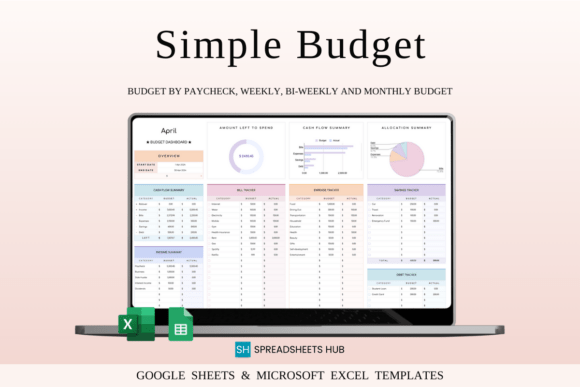
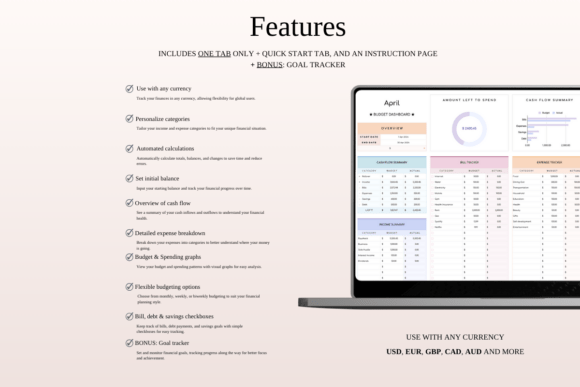
Budgeting doesn’t have to mean staring at a dull spreadsheet. This Rainbow Theme Budget Planner adds a more colorful and approachable feel to financial planning while keeping the familiar structure of a spreadsheet.
Designed for use with Excel and Google Sheets, it gives you the flexibility to choose the platform that already fits your workflow. That makes it a convenient option for people who like the practicality of spreadsheets but still want their planning space to feel visually enjoyable.
I think this digital budget planner is especially appealing for anyone who finds that a bit of color makes routine tasks easier to stick with. A planner you’re happy to open regularly is much more likely to become part of your financial routine.
2. Monthly Budget Planner for Google Sheets
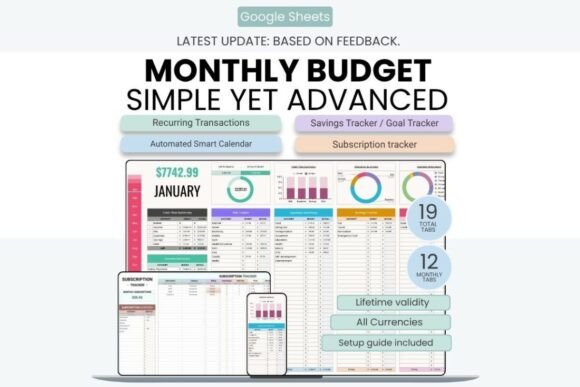
If you want to keep most of your financial information inside one spreadsheet, this Monthly Budget Planner for Google Sheets offers a particularly detailed setup. It brings together income, expenses, bills, savings, subscriptions, sinking funds, and financial goals in one connected system.
One feature that stands out is the broader overview. Along with monthly planning, the template includes dashboards, annual summaries, transaction tracking, and an automated calendar for scheduled transactions. That makes it useful for someone who wants to look beyond a single month’s numbers.
Because it works in Google Sheets, your budget can also stay accessible across your devices. For me, this is a strong choice for anyone who wants a feature-rich digital budget planner without switching between multiple financial tools.
3. Pink Budget Tracker Excel Template
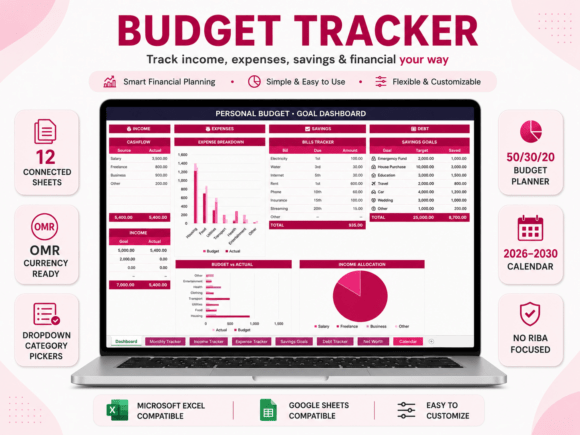
This Pink Budget Tracker combines a soft visual style with a surprisingly comprehensive financial setup. Built for Excel and Google Sheets, it includes connected sheets designed to give you a clearer view of income, expenses, savings, debt, and overall financial progress.
What I like about this template is that it goes beyond basic expense tracking. It also includes areas for savings goals, debt tracking, net worth calculations, and a 50/30/20 budgeting approach with adjustable percentages. The connected structure and automatic calculations can save time if you don’t want to build formulas yourself.
This is a great option for someone who wants a digital budget planner that feels organized from the start but still offers enough detail to grow with their financial goals.
4. 50/30/20 Budget Planner Template – Light
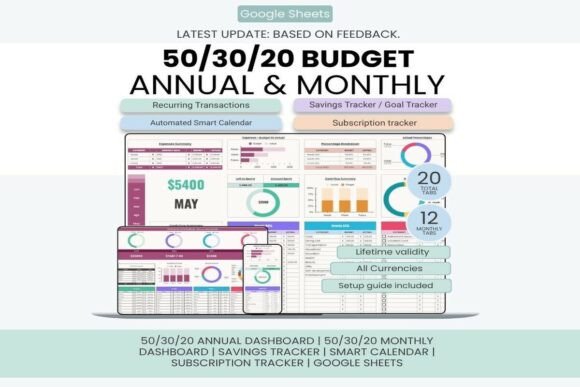
The 50/30/20 budgeting method is popular because it gives spending a simple framework: separating money into needs, wants, and savings or financial goals. This planner is built around that approach, making it a good choice for anyone who prefers a clear system rather than starting with a blank spreadsheet.
The light design keeps the visual side simple and easy to read. Instead of overwhelming you with too many sections, a focused budgeting template can help you understand how your money is being divided and where adjustments might be needed.
I would recommend this option to beginners or anyone looking to simplify their current budgeting routine. Sometimes having a straightforward framework makes it easier to stay consistent than using an overly complicated financial planner.
5. Budget Planner for Google Sheets
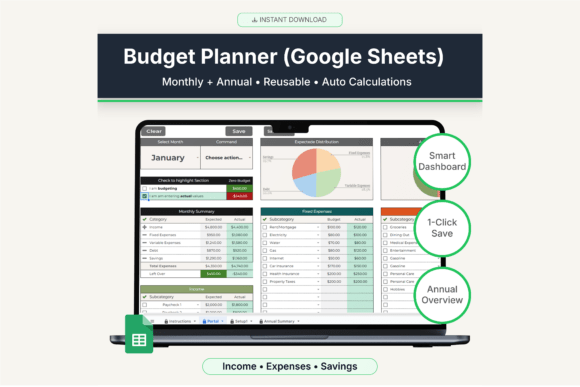
Not everyone needs dozens of financial tabs to manage a budget. This Google Sheets planner takes a more streamlined approach, with a main portal where you can enter and update your monthly numbers while the information is stored across the planner’s monthly sections.
The setup includes monthly planning pages, an annual summary dashboard, category customization, and automatic calculations. I particularly like the idea of having one central place to work from instead of constantly moving between different sheets.
6. Premium Family Budget Planner
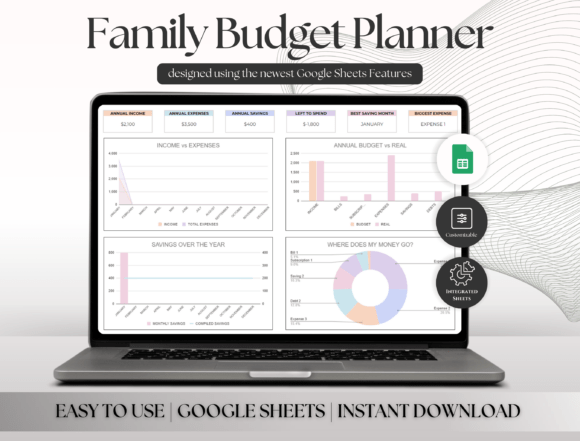
Managing a household budget often involves more than tracking a few personal expenses. This Premium Family Budget Planner is designed for a broader financial picture, with sections for bank accounts, annual finances, income and expense distribution, sinking funds, debt, net worth, and investment forecasting.
The family-focused approach is what makes this template stand out in the collection. Instead of treating budgeting as a single monthly task, it provides tools for looking at different areas of household finances together.
I would consider this one for families or couples who want to build a more complete financial planning system. The automated annual dashboard and summary features can also be helpful when you want to step back from individual transactions and see the bigger picture.
7. Editable Digital Budget Planner Template
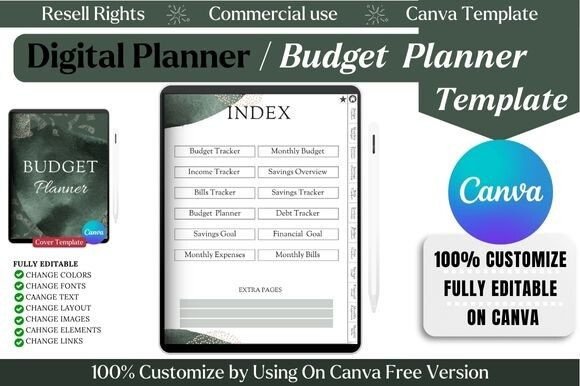
One of the biggest advantages of using a template instead of a ready-made planner is the ability to make it your own. This Editable Digital Budget Planner Template is designed in Canva and can be customized using the free version of the platform.
You can change elements such as colors, fonts, text, and layouts, making it a flexible choice for people who have a specific idea of how they want their financial planner to look. The template includes pages for budgeting, income, bills, savings, debt, financial goals, and monthly expenses.
Another useful detail is the inclusion of hyperlinked elements for easier navigation. If you enjoy digital planning but don’t want to design an entire planner from scratch, this template gives you a starting point that you can personalize.
8. Digital Budget Planner & Financial Planner
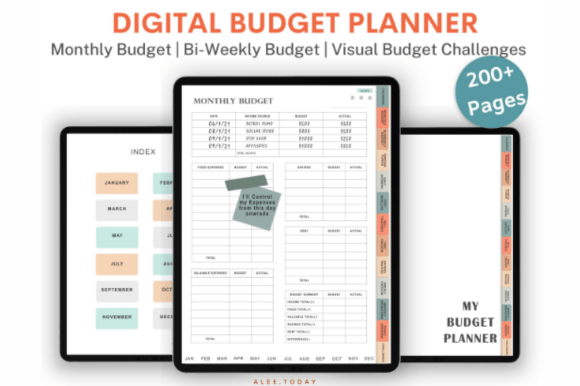
For anyone who enjoys planning on a tablet, this Digital Budget Planner offers a much more interactive experience than a traditional spreadsheet. It includes more than 200 pages and uses extensive hyperlinks to make moving between months and financial sections easier.
The planner covers a wide range of budgeting activities, including monthly and bi-weekly budgets, spending logs, sinking funds, bills, debt, savings, and expense check-ins. It also includes a yearly overview and several financial trackers and challenges.
What caught my attention is the way it combines detailed planning with navigation designed specifically for digital use. The planner is intended for apps such as GoodNotes, Noteshelf, and Notability, making it a strong choice for people who prefer writing and planning directly on a tablet.
9. To Do List Ultimate Digital Planner – Mini
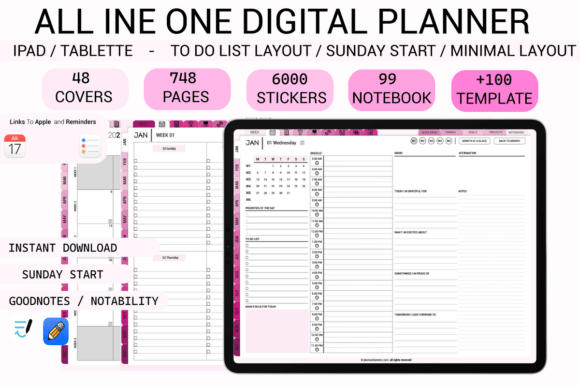
A digital budget planner doesn’t have to focus exclusively on numbers. Staying organized with tasks can also make it easier to keep up with financial responsibilities such as paying bills, reviewing subscriptions, or working toward savings goals.
This To Do List Ultimate Digital Planner – Mini takes a productivity-focused approach and can work as a useful companion to a dedicated budget planner. Its compact format is centered around organizing tasks rather than building a full financial dashboard.
I included it in this collection because personal organization and money management often go hand in hand. If your biggest challenge isn’t calculating your budget but remembering everything you need to do, adding a task-focused digital planner to your routine may help create more structure around your financial habits.
Which Digital Budget Planner Should You Choose?
The best digital budget planner depends on how you prefer to manage your money. If you already spend a lot of time in spreadsheets, a Google Sheets or Excel template can give you a familiar and flexible way to track your finances. More detailed templates are useful when you want to monitor savings, debt, subscriptions, and long-term financial goals in one place.
For families, a comprehensive household planner may make more sense, while people who enjoy tablet-based planning might prefer a hyperlinked digital planner designed for GoodNotes or similar apps.
My biggest recommendation is to choose a system that matches your habits rather than the one with the longest feature list. A simple budget you update regularly can be far more useful than a complicated planner you stop opening after a few weeks. Explore the options, think about what you actually want to track, and pick the one that makes managing your money feel easier.
You may also like:
16 Weekly Planner Ideas to Help You Organize Every Week
11 Best ADHD Daily Planner Ideas for Better Focus & Organization
3 Comments