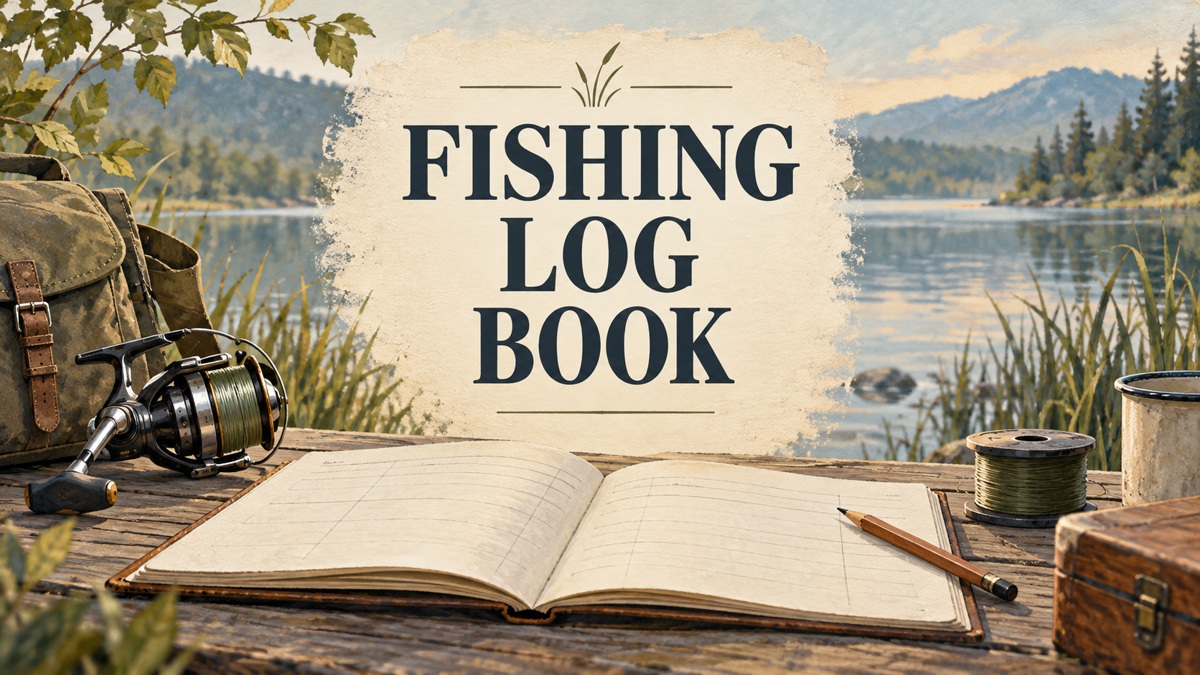
12 Fishing Log Book Templates for Trips, Catches and Field Notes
A fishing log book is useful when it preserves the details you would otherwise forget: the place, date, conditions, equipment and what happened during a trip. These twelve resources range from repeatable paired pages to larger printable interiors. The most useful comparison is the record layout and working format, rather than assuming the highest page count provides the most different tools.
Keep the wider outing in a camping trip planner, record the story in a travel journal, or plan future experiences in a bucket list journal. This collection focuses on fishing records. Most listings are downloadable publishing interiors that can also supply personal log pages; they are not physical books, fishing guides or automatic location-tracking apps.
In this guide
Choose a fishing log book by record layout
Look for a page that lets you record the details you actually want to revisit. A trip overview and a catch table can serve different purposes, so a two-page log may be more useful than a single crowded sheet. A large interior often repeats the same layout; its total page count does not establish an equal number of unique templates.
Compare paper size, bleed and source format separately. A 6 × 9-inch journal is different from a Letter-size binder page, and a publishing file with bleed may need different print settings from a no-bleed worksheet. PDF, PowerPoint and Illustrator sources offer different editing routes. Check the archive before expecting Canva access or a fillable form.
1. Two-Page Trip and Catch Log with PDF and PowerPoint Files
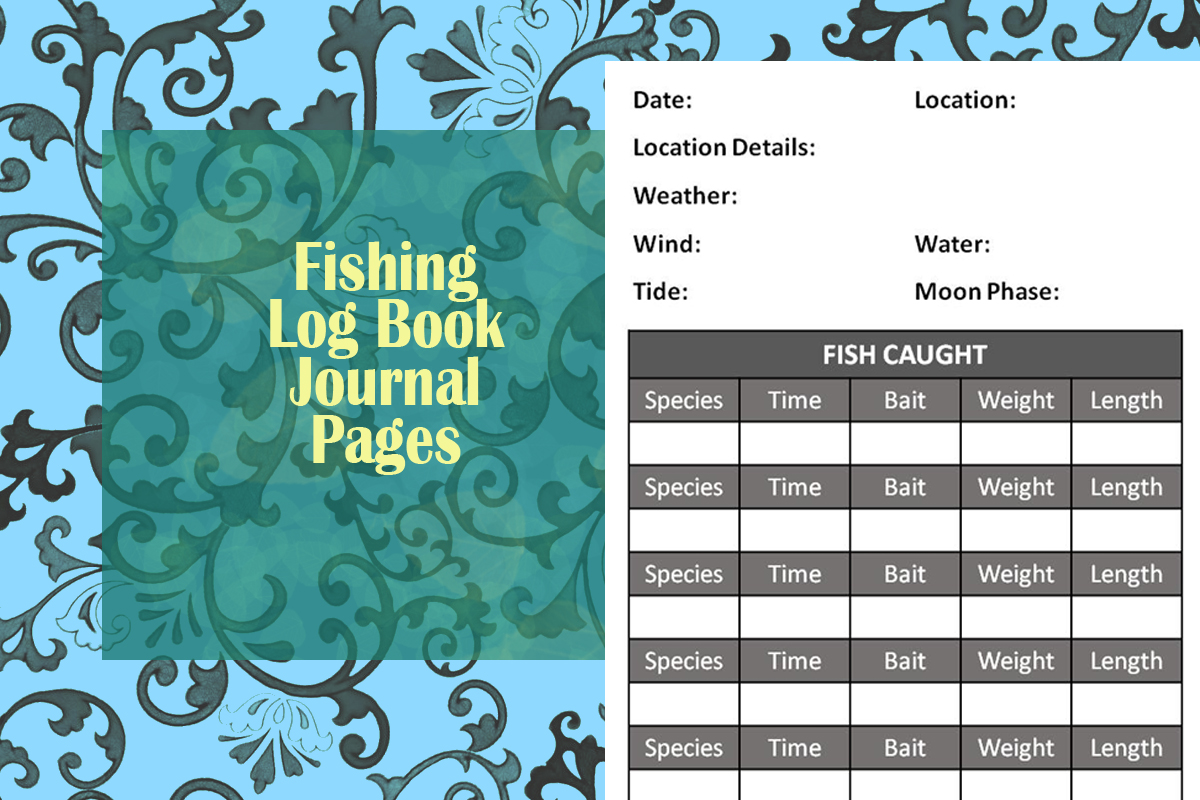
Designs_by_Shorty separates trip information from a catch table, which is useful when one outing needs several individual records. The preview shows space for location, conditions and fish details without forcing everything into one small box. This can suit a consistent trip-by-trip journal where you want the same paired structure throughout the season.
The package lists a two-page log and a 120-page version repeating that pair for sixty trips, in PDF and PPT formats. The stated size is 6 × 9 inches with bleed. That is sixty repeated trip records rather than 120 unique layouts. Check print settings and your PowerPoint workflow before editing or producing a personal notebook.
2. Compact Trip Log with Conditions, Equipment and Catch Fields
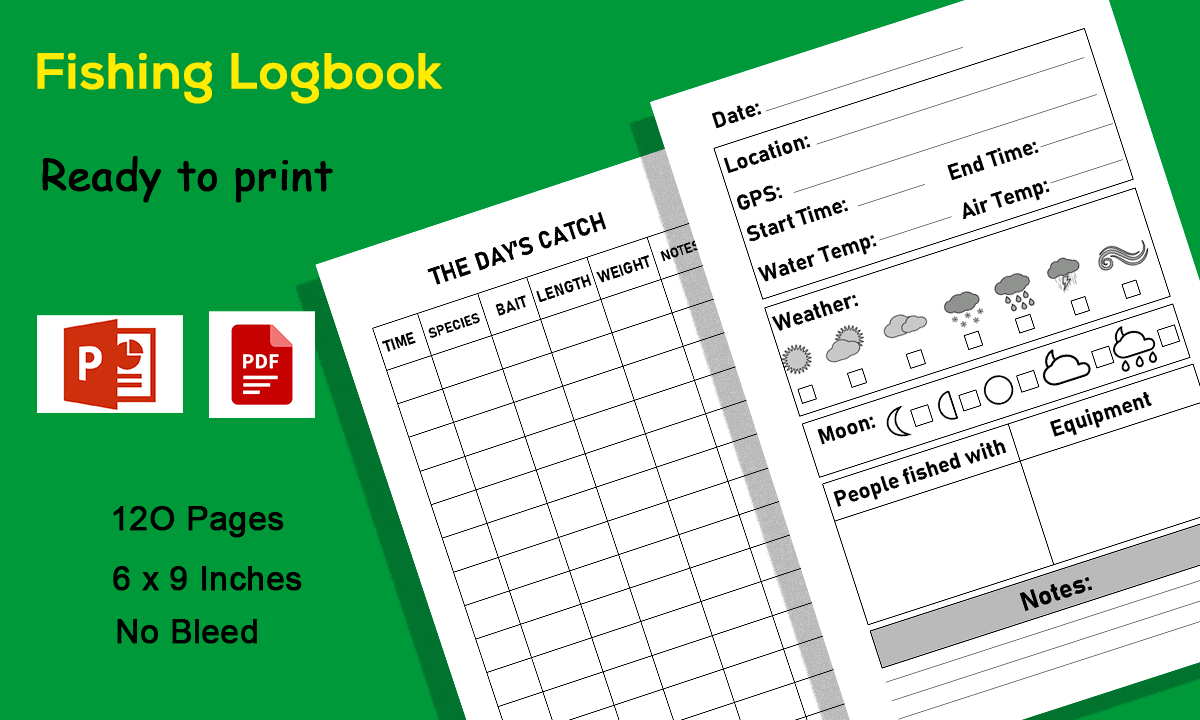
CreativeDesigns provides a straightforward record with space for trip details, weather and water observations, equipment and catches. The preview’s plain table structure is useful when you want to review entries quickly rather than decorate each page. It offers a practical balance between a written trip summary and fields that remain consistent across outings.
The seller specifies 120 pages at 6 × 9 inches without bleed, supplied as PDF and PPTX. The description names date, location, companions, conditions, species, length, weight and bait. The page total should not be read as 120 different forms. Use the editable file only in software that supports it, and test the layout before printing multiple records.
3. Fishing Log Interior in Two Sizes with Illustrator Source
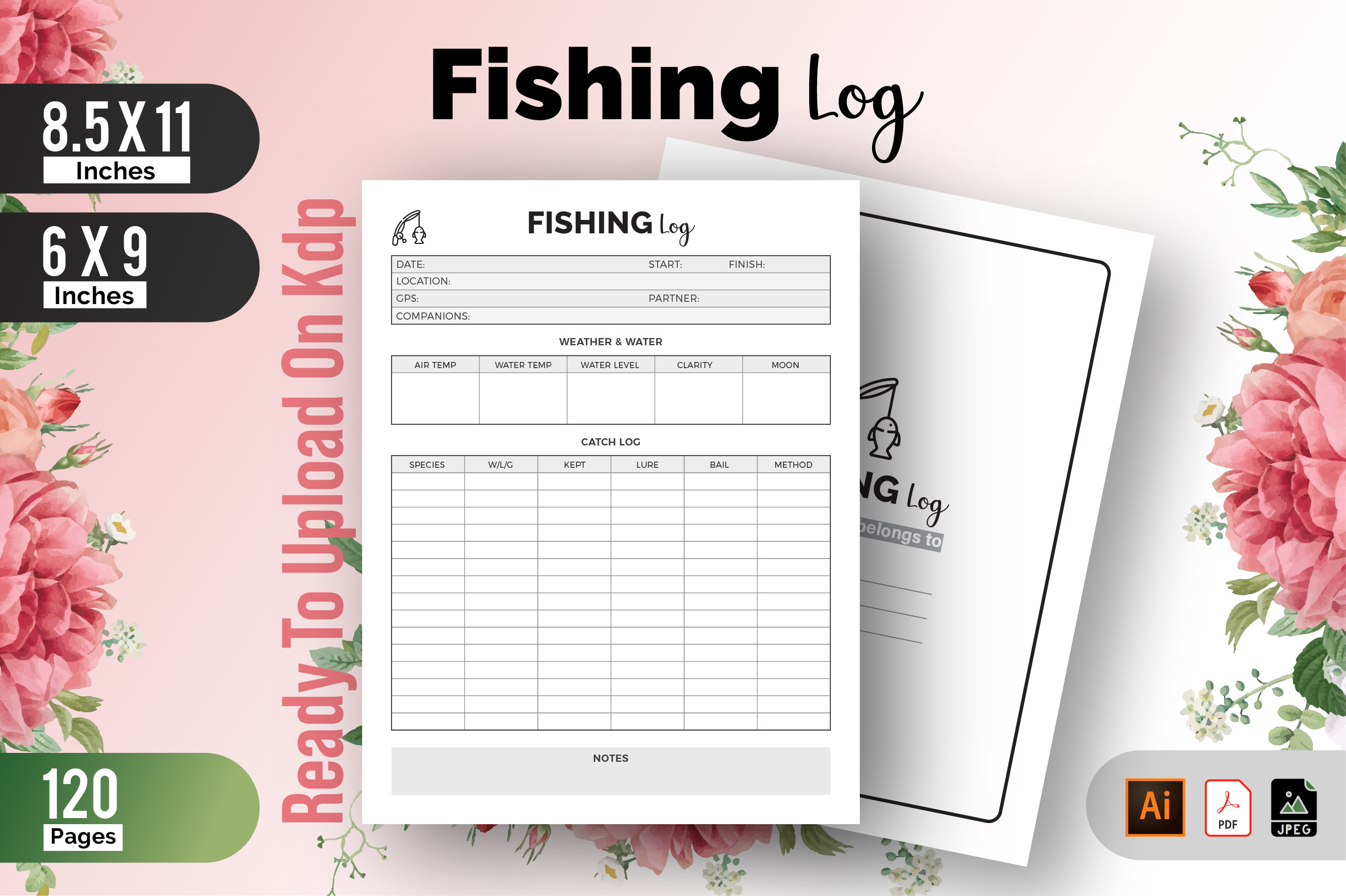
Raw Vector offers a clean log layout with a trip-information section and a table for individual catches. The choice of two sizes is useful if you are deciding between a smaller journal and a larger home record. Compare the visible field spacing with your normal handwriting before choosing a compact format solely for convenience.
The listing names 120 pages in 6 × 9-inch and US Letter formats without bleed, with PDF, AI and JPEG files. Illustrator provides a source-editing route, while the PDF is the simpler print option. No native planner-app file or Canva link is clearly promised. Check the separate size files in the archive before preparing a binder or notebook.
4. Landscape Fishing Journal with PowerPoint Editing
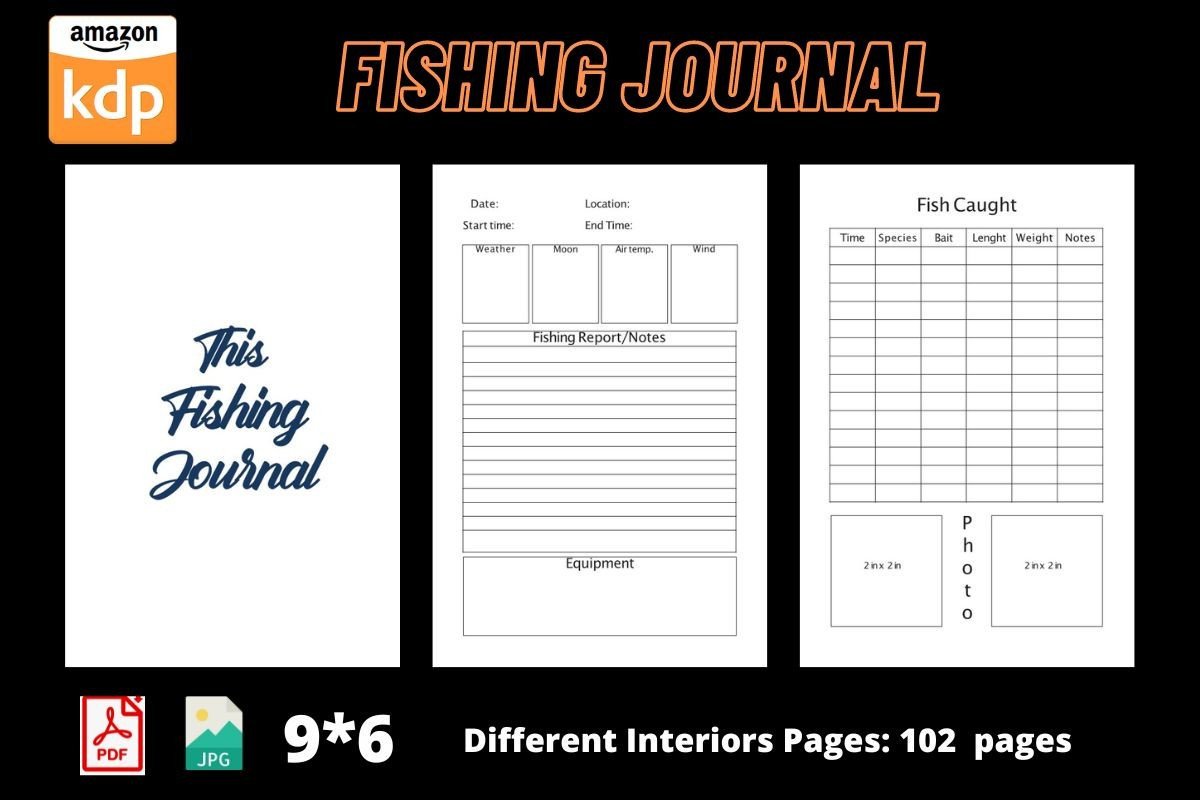
KDPRO’s preview uses a wider spread with distinct areas for trip details and fish records. That landscape direction may appeal when you want a compact notebook without a narrow writing column. It is worth comparing against the portrait logs, especially if your entries tend to include several catches or a longer note about the outing.
The written specifications state a 9 × 6-inch trim size, 102 pages, an editable PowerPoint source and two PDF interiors. The wording does not establish 102 different page designs. Inspect the supplied PDFs and orientation before printing, and choose the editable source when you genuinely need layout changes rather than assume a fillable digital form is included.
5. Three-Size Fishing Interior with PDF and Illustrator Files
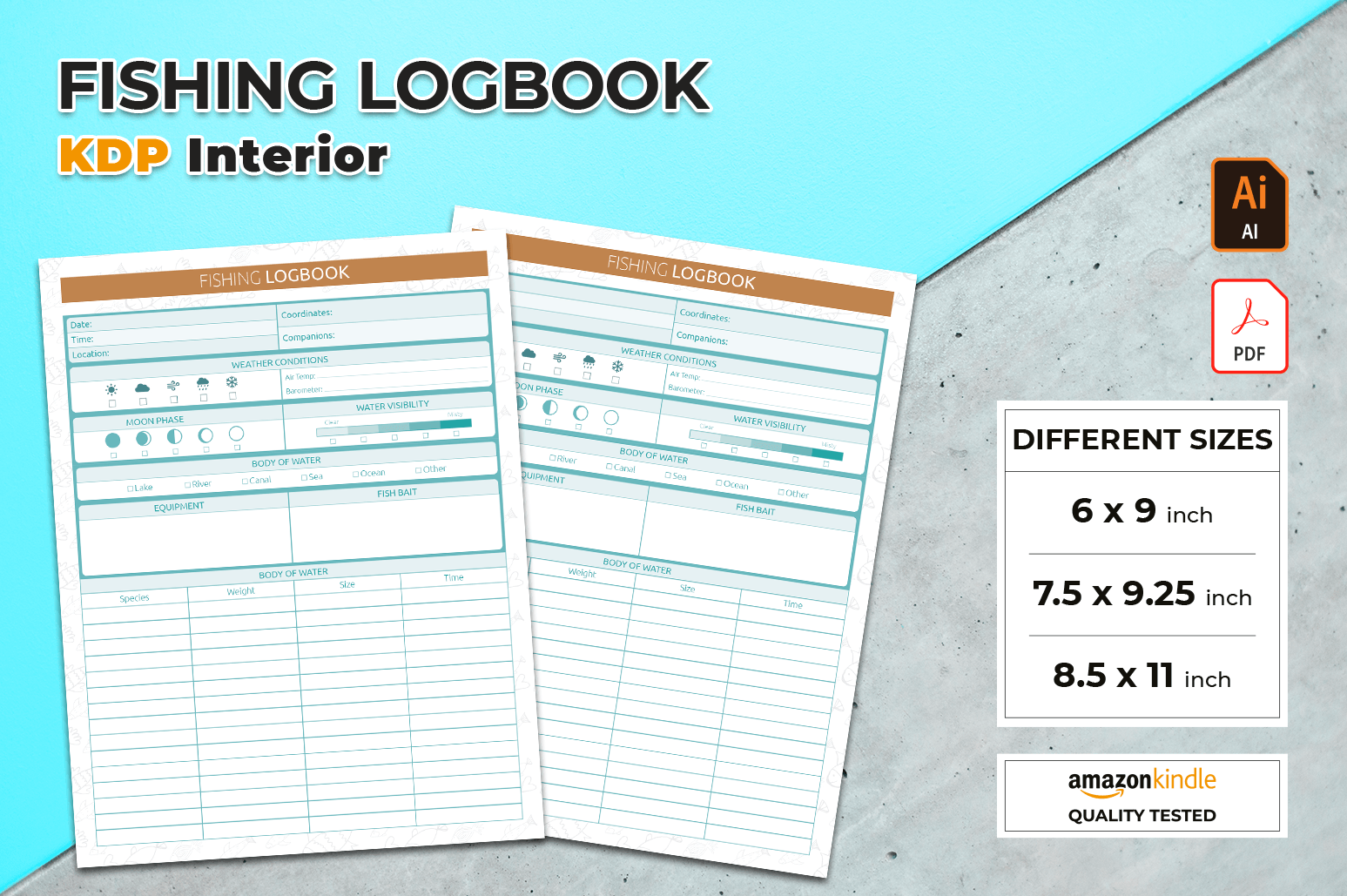
JUNDI gives this fishing log a structured page with separate trip fields and catch-record rows. The size options are useful when you want a similar layout in a small journal or a larger sheet. The restrained design keeps the record itself central, rather than using a decorative theme that takes away handwriting space.
The seller lists 110 pages with bleed in 6 × 9, 7.5 × 9.25 and 8.5 × 11-inch sizes, plus an Illustrator source, PDF and font-related files. Check how the archive separates the sizes and which fonts are required before editing. A publishing-ready description does not remove the need to test your own printing scale and margins.
6. 145-Page Fishing Interior with Multiple Editable Sources
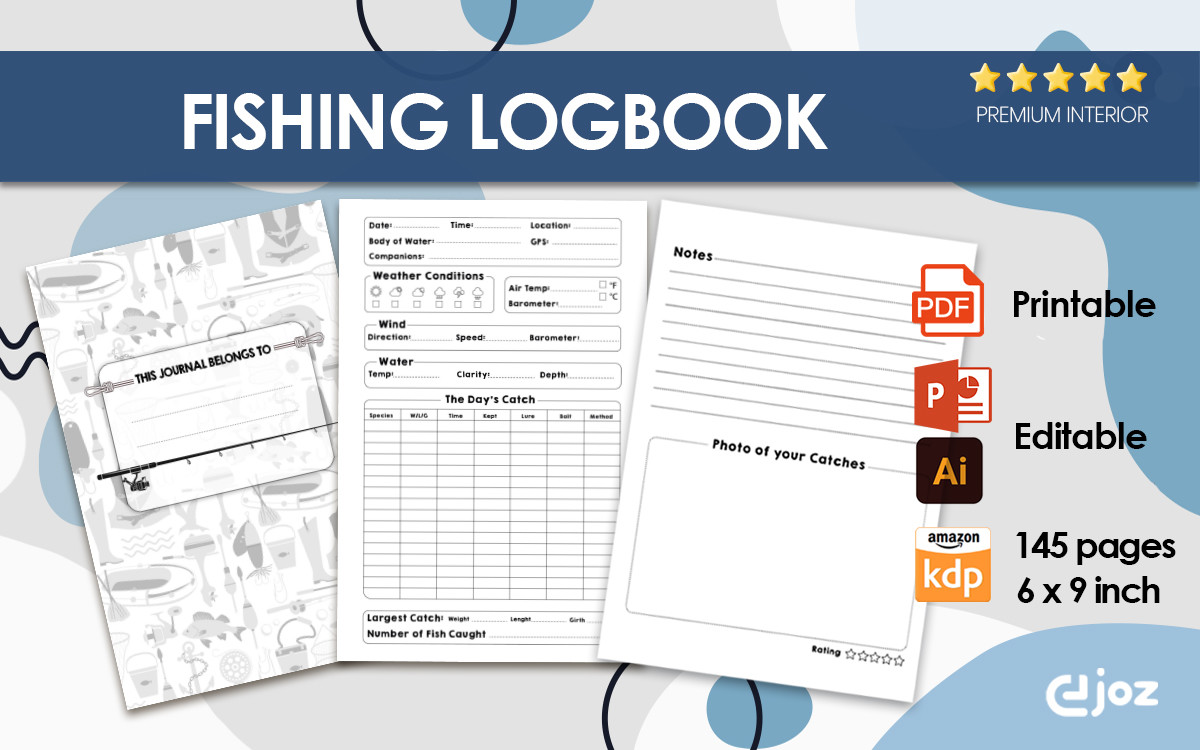
Djoz offers a more extensive interior with illustrated record pages and space for notes or a photograph visible in the preview. It can suit someone who wants both structured trip details and a small visual memory of the outing. The multiple source formats are its clearest practical distinction from the simpler PDF-only journals.
The package states 145 pages at 6 × 9 inches with bleed, plus PDF and editable Illustrator, Photoshop and PowerPoint sources. Check the actual files and available software before choosing on that basis. The larger page count does not mean every page is a new layout, and no automatic photo import or native journal app is established.
7. Compact Fishing Records with Three Page-Count Versions
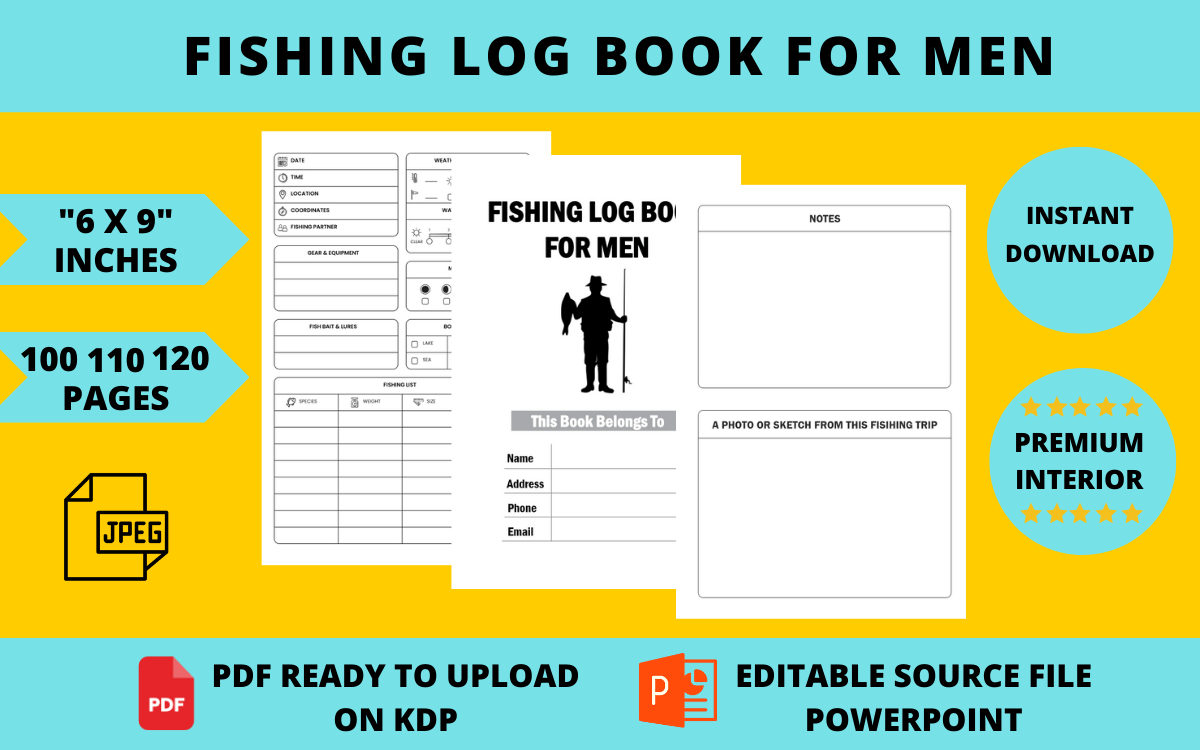
Digital Print Box presents a simple fishing journal interior with a clear introductory page and repeated record sheets. Although the product title says for men, the useful comparison is the actual layout and writing space. The restrained design can work for anyone who prefers a compact record without a large decorative theme around every entry.
The stated format is 6 × 9 inches without bleed, with 100-, 110- and 120-page versions and PDF, PPT and JPEG files. Those are length options rather than three fundamentally different planning methods. Check the archive organization and PowerPoint source before editing, and choose only the page count you need for your own record.
8. Letter-Size Fishing Journal with a 120-Page PDF
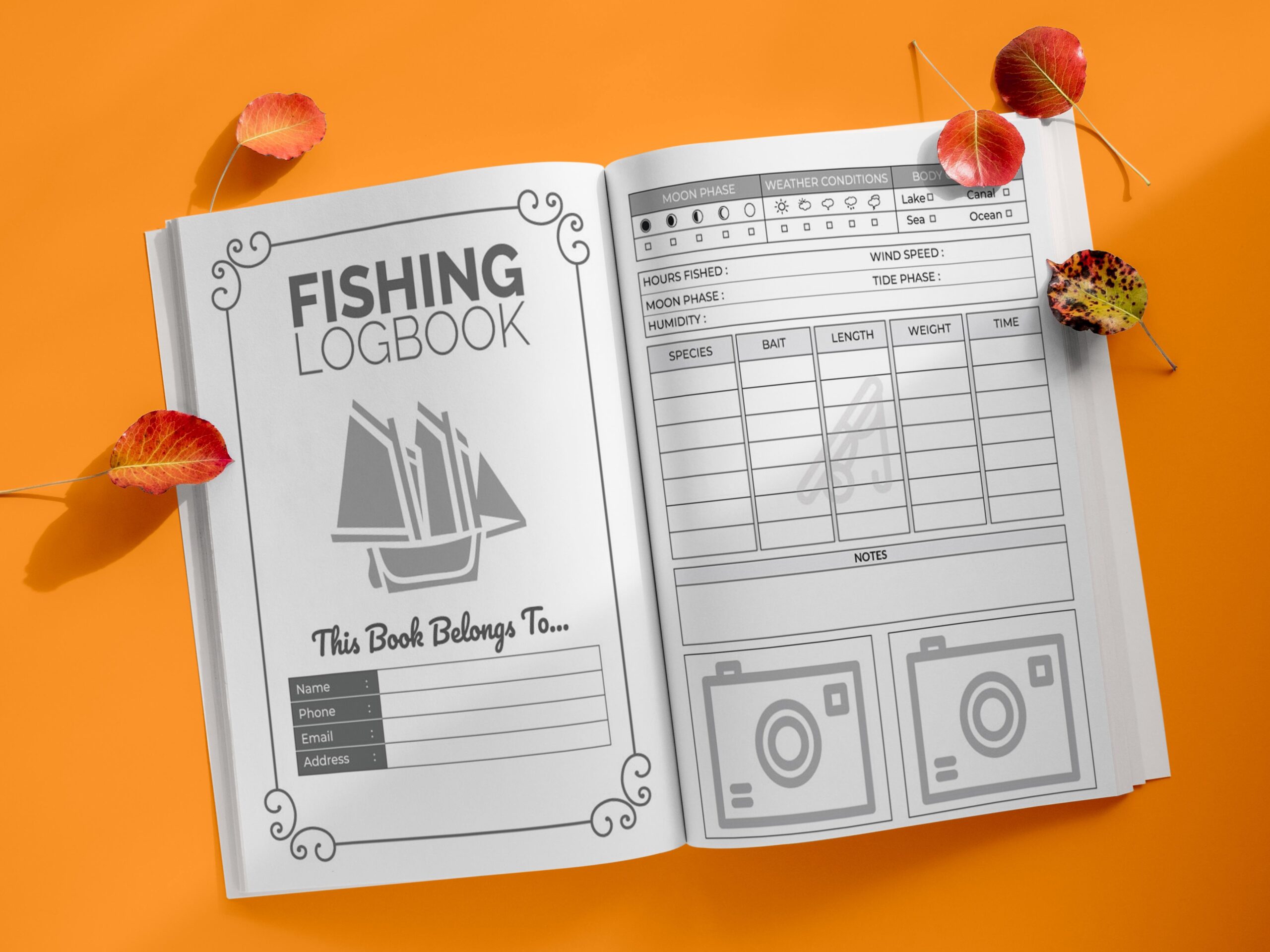
Designnuts Studio uses a straightforward journal layout with trip details and a structured catch record. The larger Letter-size specification can be useful when your notes need more room than a small portable journal provides. Compare the actual preview’s field spacing with the other large-page options instead of choosing only by the cover-style mockup.
The listing specifies 120 pages at 8.5 × 11 inches without bleed, supplied as a PDF at 300 DPI. A source file is mentioned, but its exact format is not clearly identified in the written details. Verify the archive before expecting PowerPoint, Illustrator or another editor. The PDF is the only explicitly named working file type.
9. Printable Letter-Size Fishing Record with Raster Files
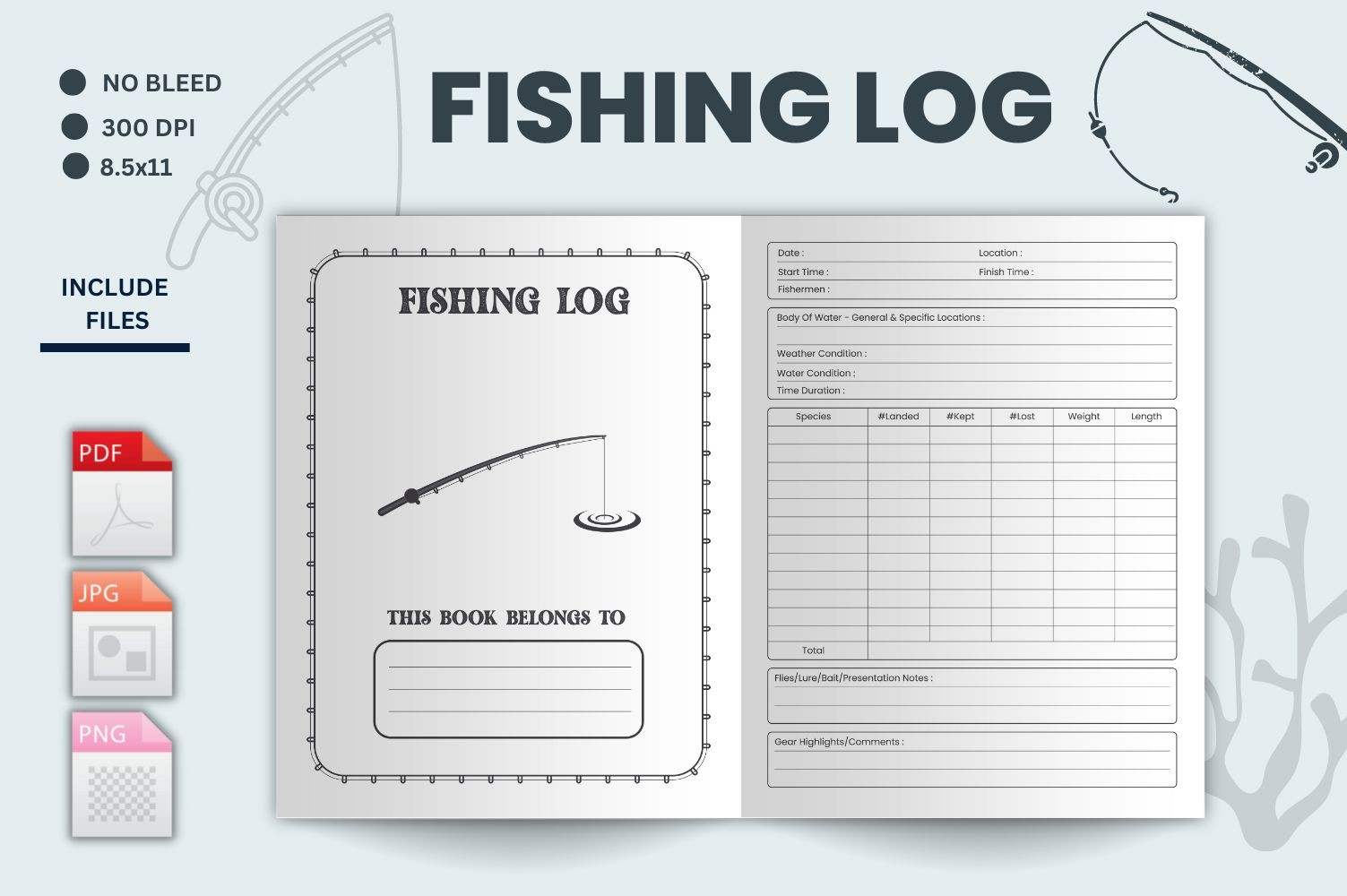
Armanmojumdar49 offers a clean Letter-size fishing log with a trip-information area and table-style catch records. It can suit a home binder or a larger notebook where compact portability is less important than writing room. The plain layout makes it easier to compare several entries without a different visual structure on every page.
The package lists a 120-page interior without bleed, one PDF, two JPGs and two PNGs at 300 DPI. A source-editing application is not clearly specified in that concrete file list. Use the PDF for a test print, and do not assume that the supplied raster images establish a fully editable workbook or an individual image for every page.
10. Compact 120-Page Fishing Journal as a Print PDF
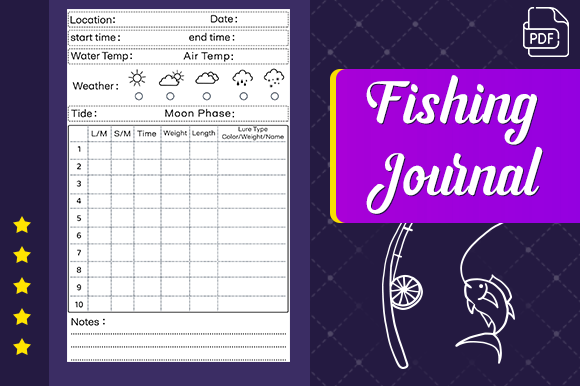
KDP Interiors supplies a compact record with a detailed trip header and a table for fish information. The visual structure is useful when you prefer a straightforward log rather than a broad travel diary. A five-star rating from four reviews was visible when checked, though the actual fields and file format remain the more useful basis for choosing.
The seller lists a 120-page PDF at 6 × 9 inches without bleed and 300 DPI, including a belongs-to page. No editable PowerPoint or Canva source is clearly promised. The original product preview is small, so inspect the archive before committing to precise field spacing. Do not interpret the page count as 120 different record templates.
11. Fishing Journal with Three Lengths and Vector Sources
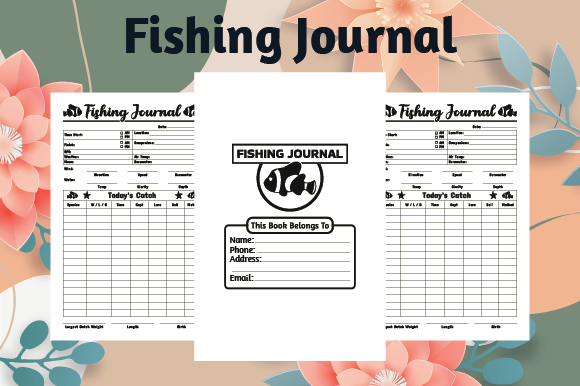
Sumon Chandra combines a personal-information page with repeated fishing records in a compact journal format. The source files can be useful if you want to change labels before printing, while the ready PDF provides a more direct route. Compare the visible record structure with your own notes rather than expect a separate feature for every advertised page.
The listing names 6 × 9 inches with bleed, 100-, 120- and 150-page versions, PDF and editable AI and EPS files. An Illustrator software version is mentioned as a compatibility detail, not a calendar year. Check your editor and the archive before making changes, and test the margins before using a publishing interior as personal print pages.
12. Fishing Log and Notes Layout with Preview-Based Size Details
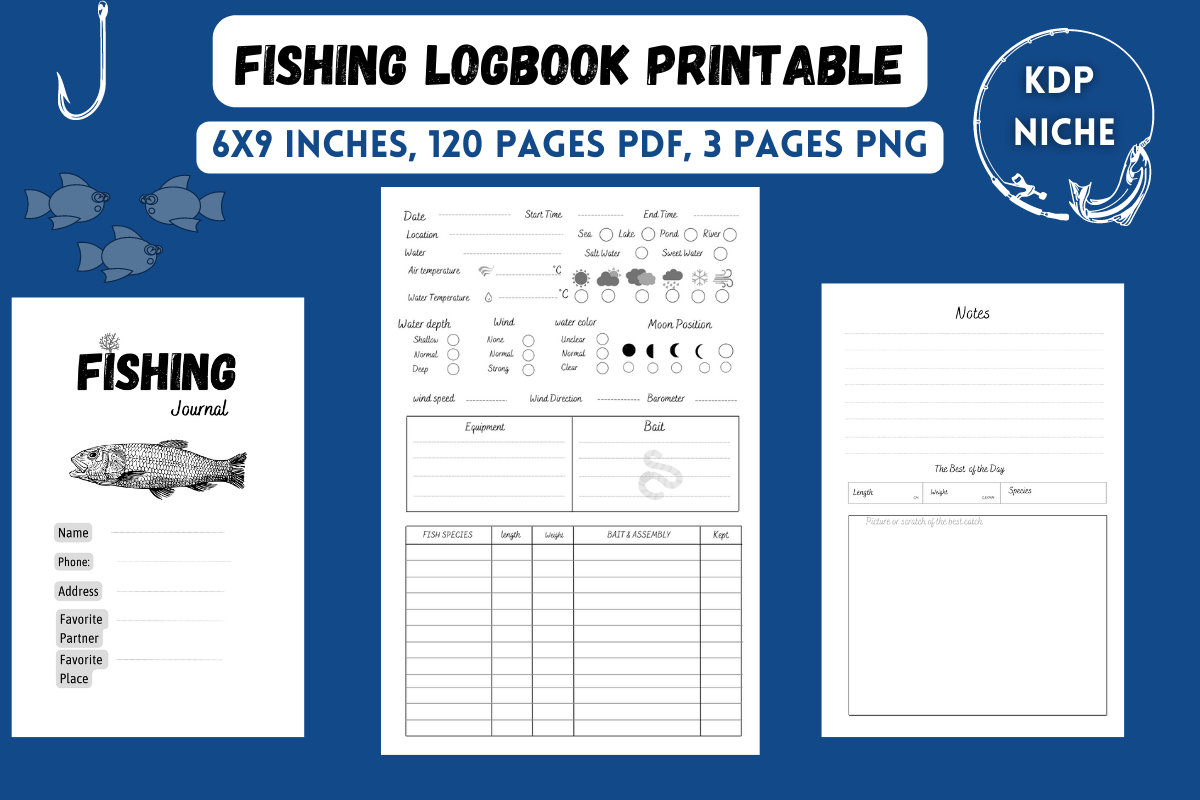
KDP Brain’s preview shows a fishing record alongside a separate notes page, which can be useful when a structured table does not capture the whole outing. The written description also mentions conditions and catch records. Choose it for that combination rather than expect a complete fishing guide or an automatic way to predict future results.
The description explicitly states no bleed, while the preview advertises a 6 × 9-inch, 120-page PDF and three PNG pages. Those details come from the preview rather than a full written delivery list. Check the actual archive before planning exact file handling, and confirm the field spacing with a sample print before preparing a larger journal.
Keep field notes that make sense later
Write the date and location clearly, then use the same labels for conditions, equipment and observations on each trip. Record a short note while the details are still fresh rather than rely on memory weeks later. If the template has more fields than you need, leave them blank or edit a working copy instead of inventing information to fill the page.
After a few outings, review which fields you actually use. A consistent record can make comparisons easier, but it does not prove that one condition caused a better result or guarantee the next trip. Keep practical notes separate from personal reflections if you want to scan the log quickly, and preserve an untouched copy of the original download.
Which fishing journal format fits your routine?
Choose a repeatable two-page log if you want clear trip and catch records, a larger Letter-size sheet for more handwriting room or a compact journal interior when portability matters. An editable source is useful if you need different labels, but a plain PDF may be simpler when the existing fields already fit your notes.
Compare the preview and written specifications before deciding. Where the file type or page count is not fully described, inspect the actual archive instead of treating the marketing image as a complete delivery list. Print one sample, test its writing space and download the layout that supports your real record-keeping routine rather than an unnecessarily large system.