12 Smart Personal Productivity Planner Templates for Better Focus
A personal productivity planner should do more than collect tasks. The most useful systems help you decide what deserves attention, connect goals with daily action, protect focused work time, and review whether your routines are actually working. I selected these planners to cover different productivity styles, from a single daily page to OneNote systems, project planning, SMART goals, deep-work exercises, ADHD-friendly workflows, and a complete 2027 planning structure.
If you mainly need a shorter planning horizon, compare these options with our daily productivity planner templates and weekly productivity planners. For habit-centered organization, our habit tracker ideas can complement a broader productivity system.
What Makes a Personal Productivity Planner Useful?
The right planner depends on where your current system fails. If you know what to do but struggle to make time for it, look for time blocking, priority planning, and distraction management. If large goals stay vague, SMART goal pages, milestones, and project breakdowns are more useful. Habit trackers work better for repeated behaviors, while daily review and reflection pages help you notice patterns and adjust the plan instead of copying unfinished tasks into tomorrow.
Format matters too. A printable planner can stay visible on a desk and create a clear boundary around planning time. Digital systems such as OneNote or tablet-friendly PDFs are easier to carry, duplicate, search, and combine with other notes. Editable Canva or source files are valuable when you want to remove unnecessary sections. I would rather use ten pages consistently than maintain a hundred-page system that creates more work than it saves.
1. Productivity Power Planner
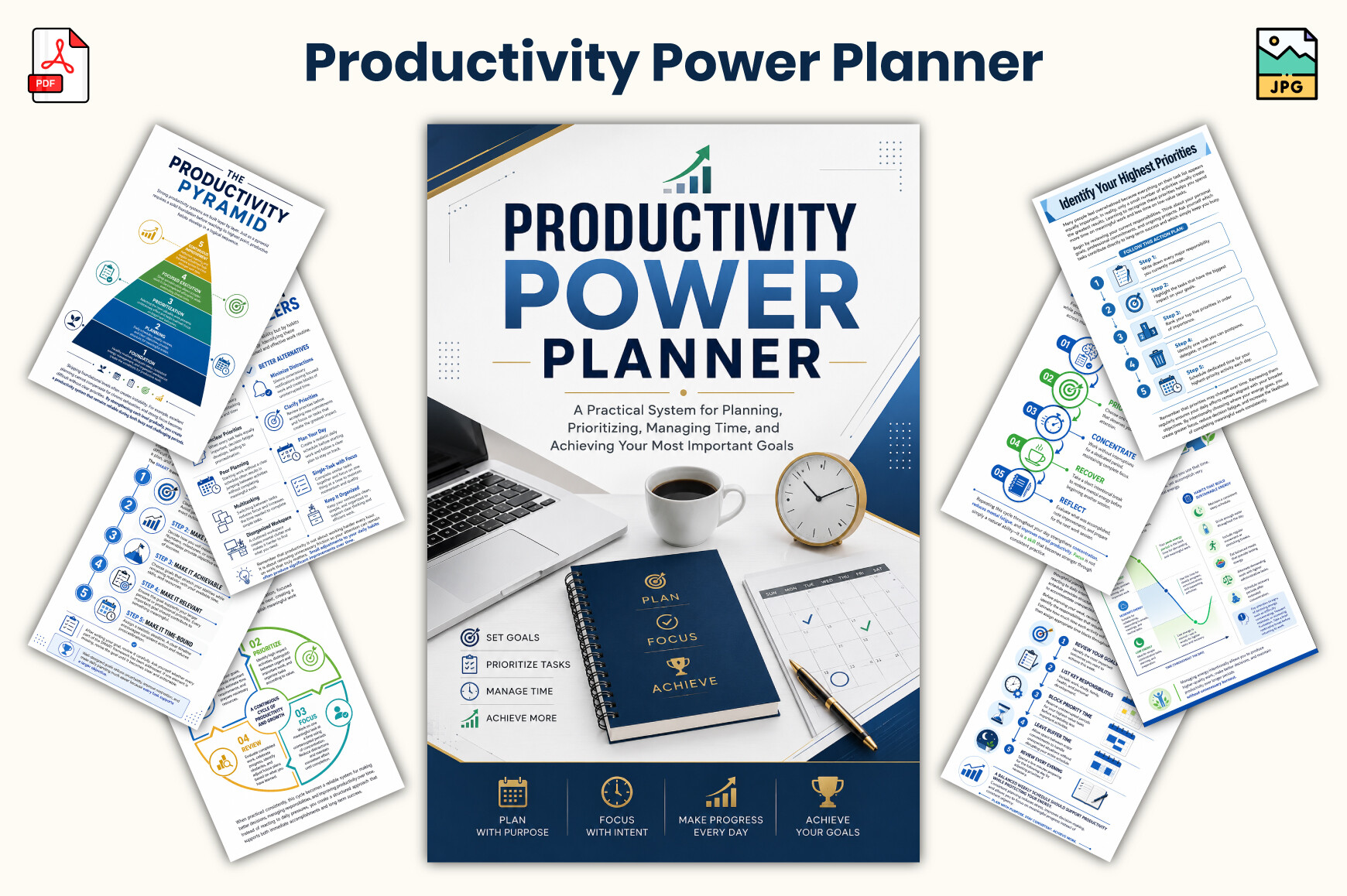
This 31-page planner is built around improving the way you work rather than simply giving you another calendar. It combines SMART goals, mindset exercises, time-management techniques, daily focus planning, weekly planning, prioritization, habit building, energy management, workspace organization, and strategies for dealing with distractions and procrastination. The 6 × 9 PDF and JPG format is compact enough for a personal workbook. I especially like that it includes assessments, weekly reviews, reflection exercises, and a personal productivity commitment, which turns planning into an ongoing improvement process.
2. Productivity & Life Planner for OneNote
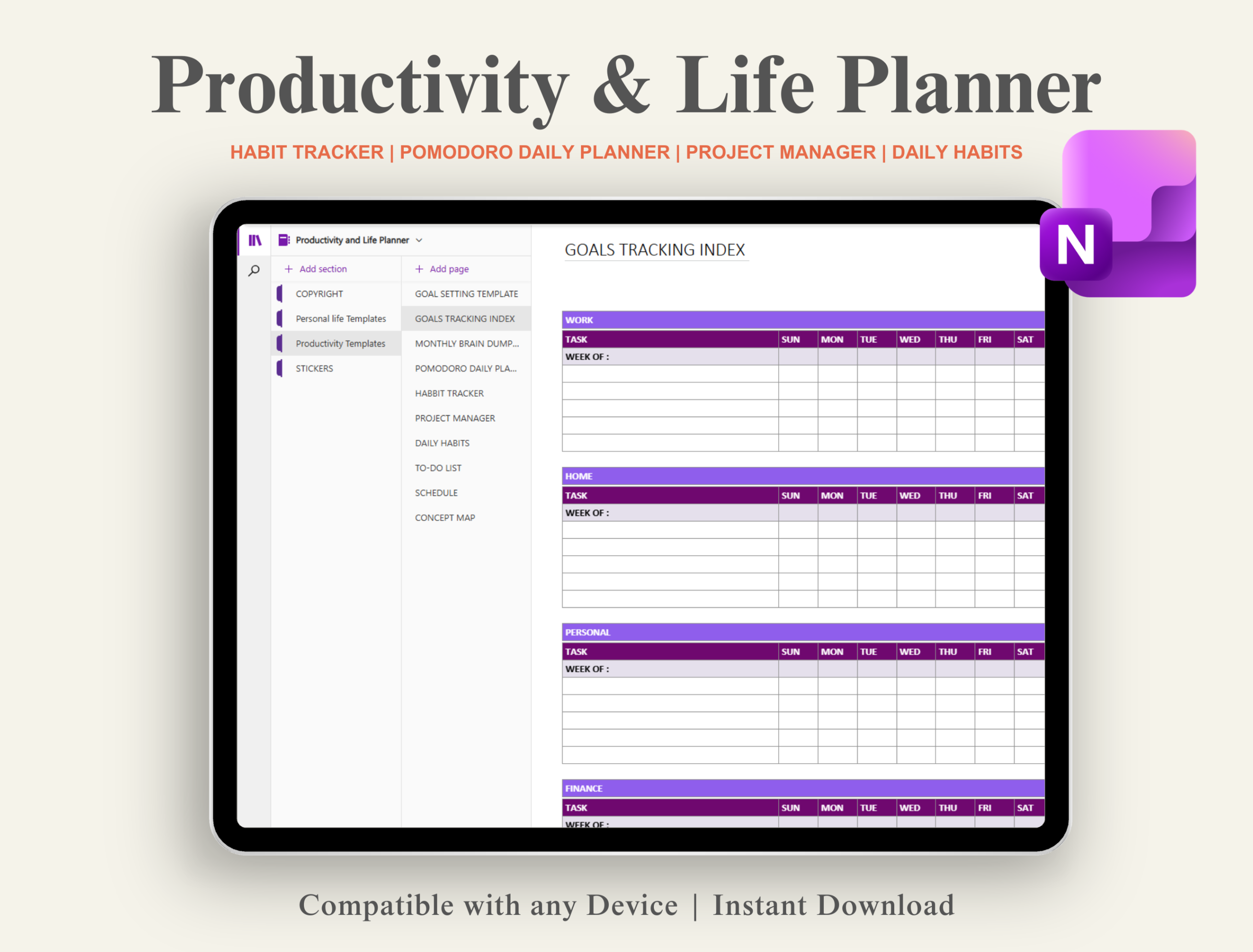
If OneNote is already part of your digital routine, this template can keep planning and reference information in the same environment. It combines goals, brain dumps, Pomodoro planning, habits, projects, to-do lists, schedules, daily reviews, weekly planning, chores, medication, reading, project risks, and file tracking. There are also OneNote stickers and visual elements for customizing pages. Because it works on Windows and Mac, this is a useful alternative to iPad-first digital planners and makes particular sense for someone who wants productivity, personal organization, and project management inside one notebook system.
3. Daily Schedule and Habit Tracker Planner
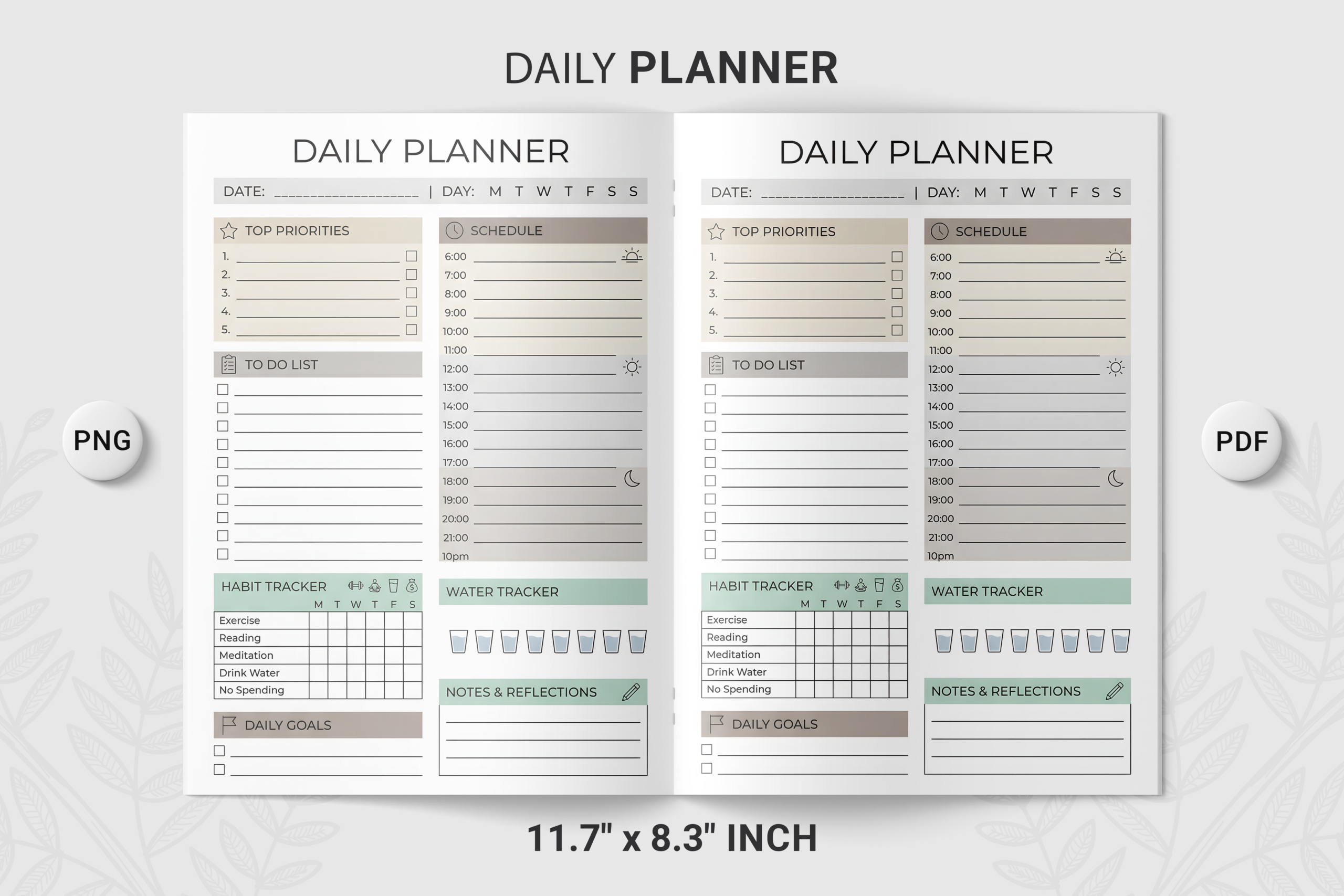
This streamlined daily page is for people who do not want a huge planning system. It puts priorities, a to-do list, an hourly schedule, habits, water tracking, and notes or reflections together on one layout. PDF and PNG files make it suitable for printable and digital use. A simple page like this can work particularly well when the goal is to establish a repeatable morning planning habit: choose the most important tasks, give them time on the schedule, and track a few routines without maintaining dozens of extra sections.
4. Project Planner – Printable & Digital
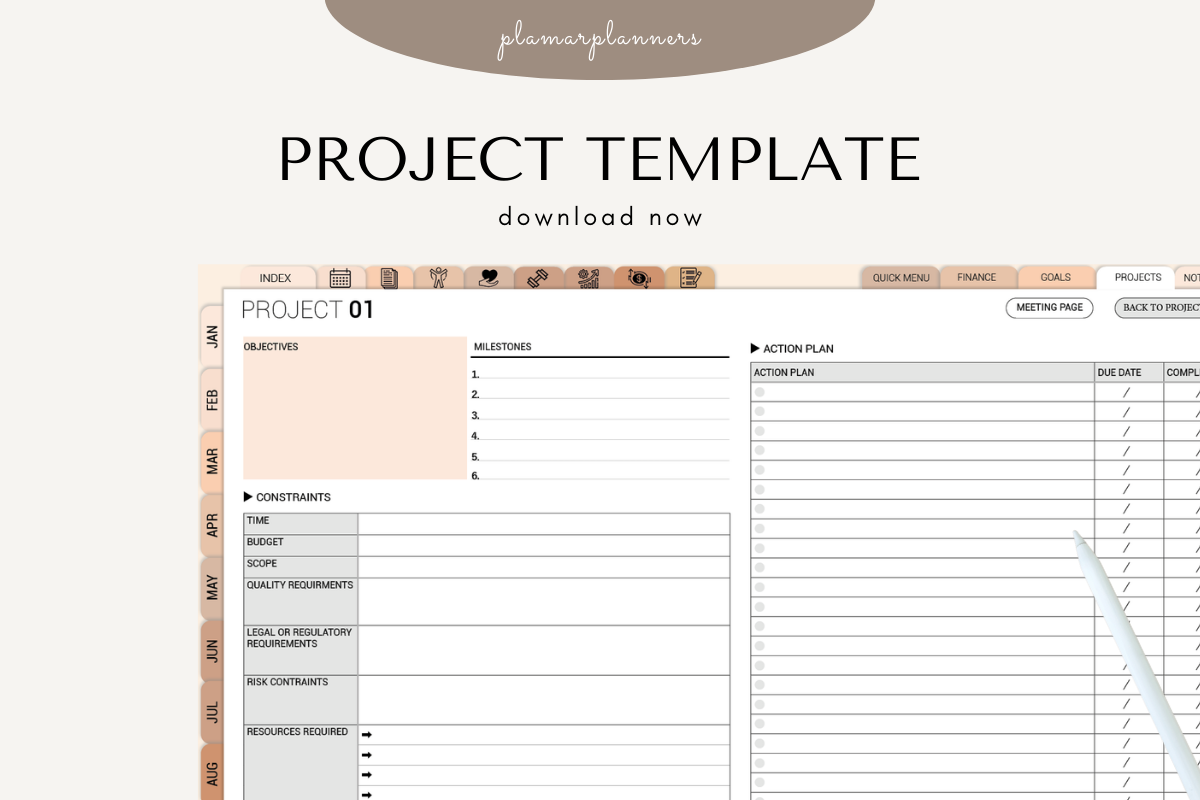
Personal productivity often breaks down when larger projects live on an ordinary task list. This seven-page project planner separates the work into a project overview, task breakdown, milestones and deadlines, resources and budget, brainstorming, progress tracking, and priority actions. It comes as printable A4 and US Letter PDFs as well as a tablet-friendly version compatible with GoodNotes, Notability, and Xodo. With 26 favorites, it also has a useful engagement signal. Choose this when your main challenge is moving multi-step personal or professional projects from idea to completion.
5. SMART Goals and Productivity Planner
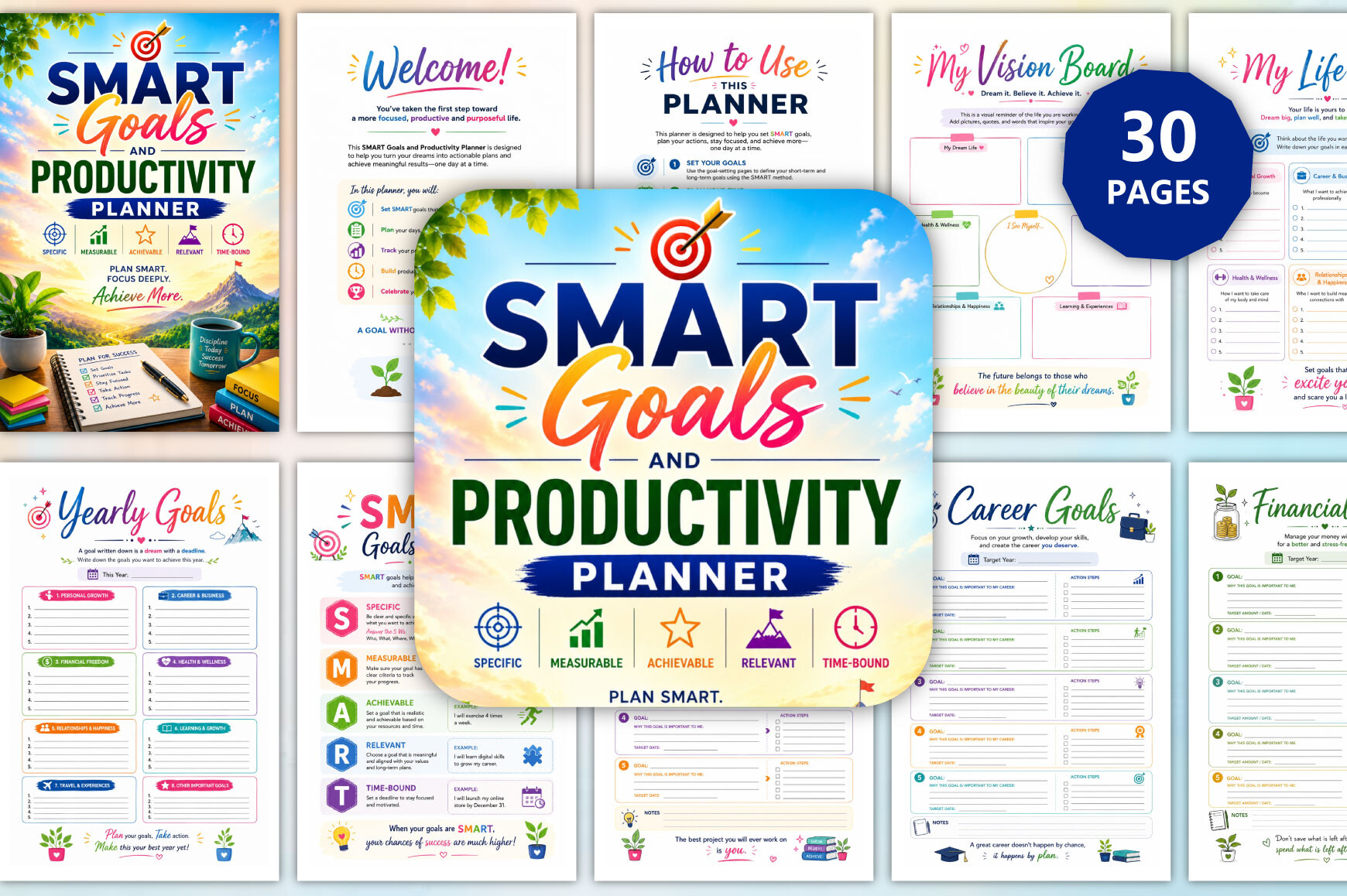
This 30-page 6 × 9 planner connects long-term goals with the smaller actions that need to happen each day. It includes a vision board, life goals, yearly goals, SMART goal pages, separate personal, career, financial, health, fitness, and learning goals, plus routines, habits, monthly and weekly planning, daily goals, top-three priorities, time blocking, progress tracking, gratitude, and monthly reviews. That structure makes it a good fit if you tend to set goals but lose the connection between the big objective and today’s schedule. PDF and JPG files are included for easy printing.
6. ADHD Mom Productivity Planner
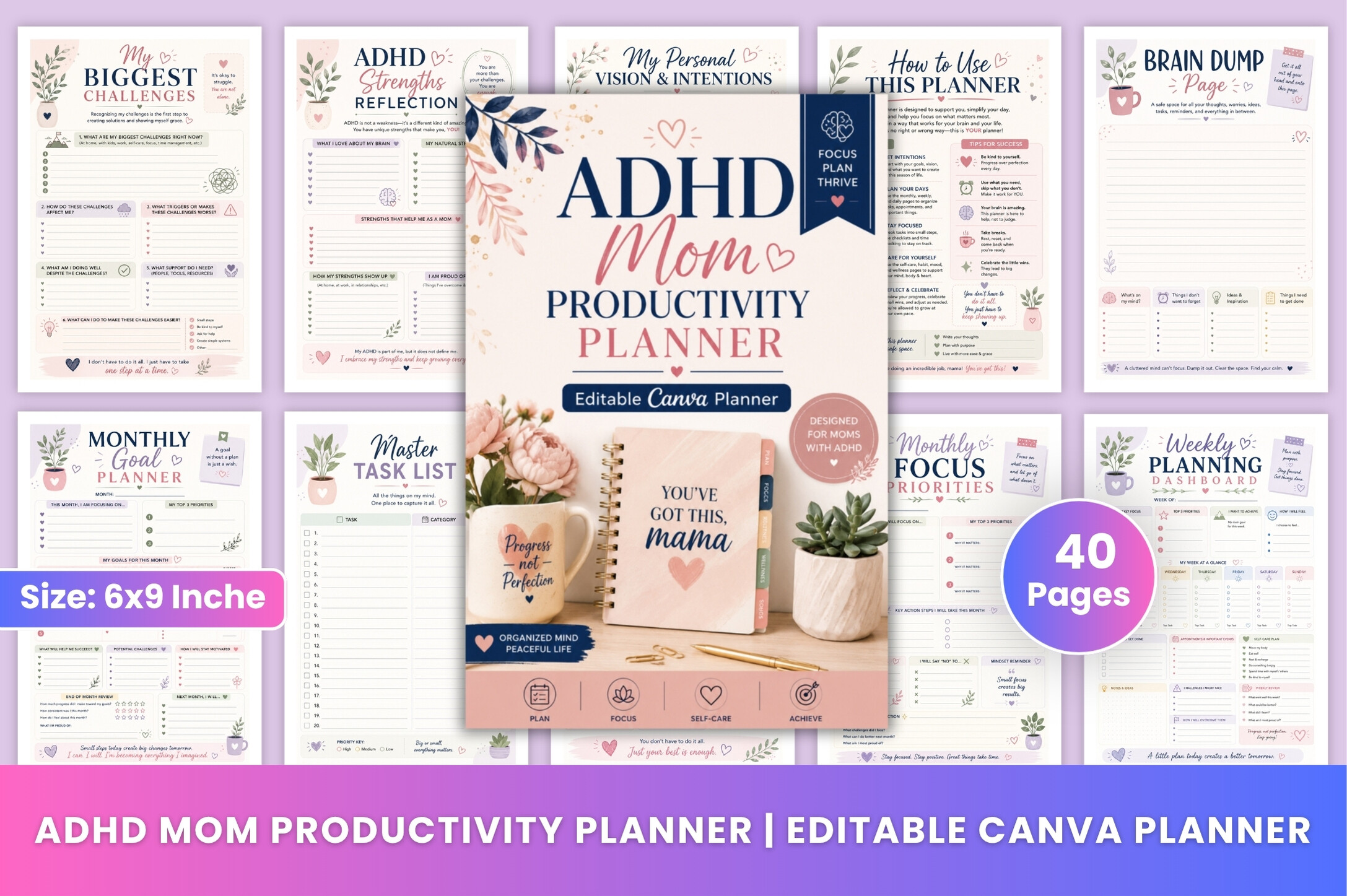
This 40-page planner takes a more specialized approach to personal productivity by combining organization with ADHD-friendly reflection and self-management. Pages include personal intentions, strengths and challenges, brain dumps, a master task list, monthly goals and calendars, weekly dashboards, daily productivity, morning and evening routines, time blocking, mood and energy tracking, hydration, habits, self-care, gratitude, and reflection. The 6 × 9 layout is available as an editable Canva template and printable PDF, so you can simplify or personalize sections before using them. It is a useful option when productivity needs to coexist with family life and self-care.
7. 2027 Vision & Productivity Planner
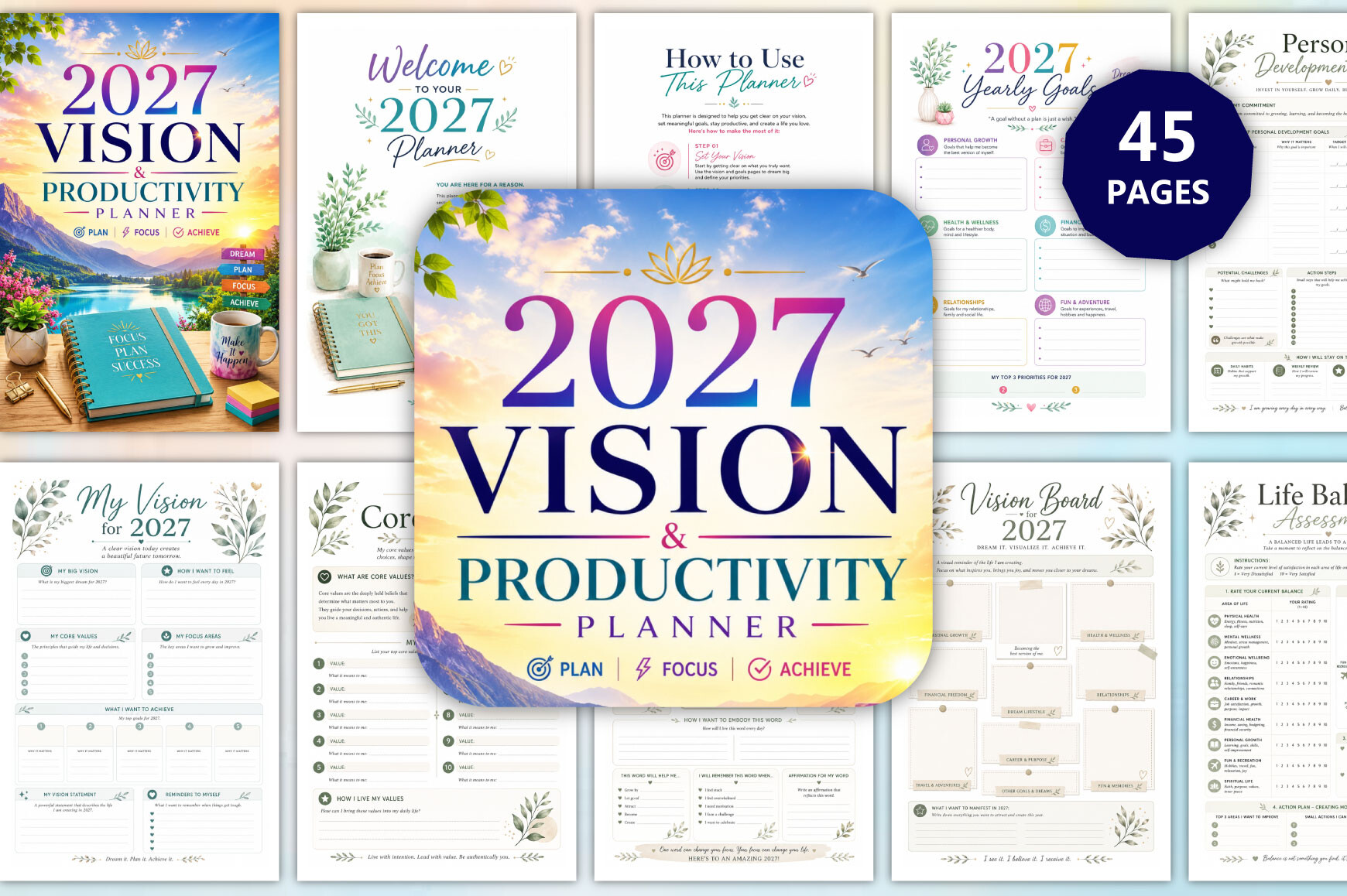
For anyone who wants a dated system for the coming year, this 45-page 2027 planner connects annual direction with monthly, weekly, and daily execution. It starts with yearly goals and a year-at-a-glance calendar, then moves into monthly calendars, priorities, to-do lists, habits, weekly planning, and daily productivity pages. Monthly reflection and a year-end review create checkpoints for adjusting the system instead of blindly following an old plan. There is even a 2028 vision section for carrying unfinished ideas forward. The compact 6 × 9 PDF and JPG format is designed for straightforward printing.
8. ADHD Productivity Master Planner
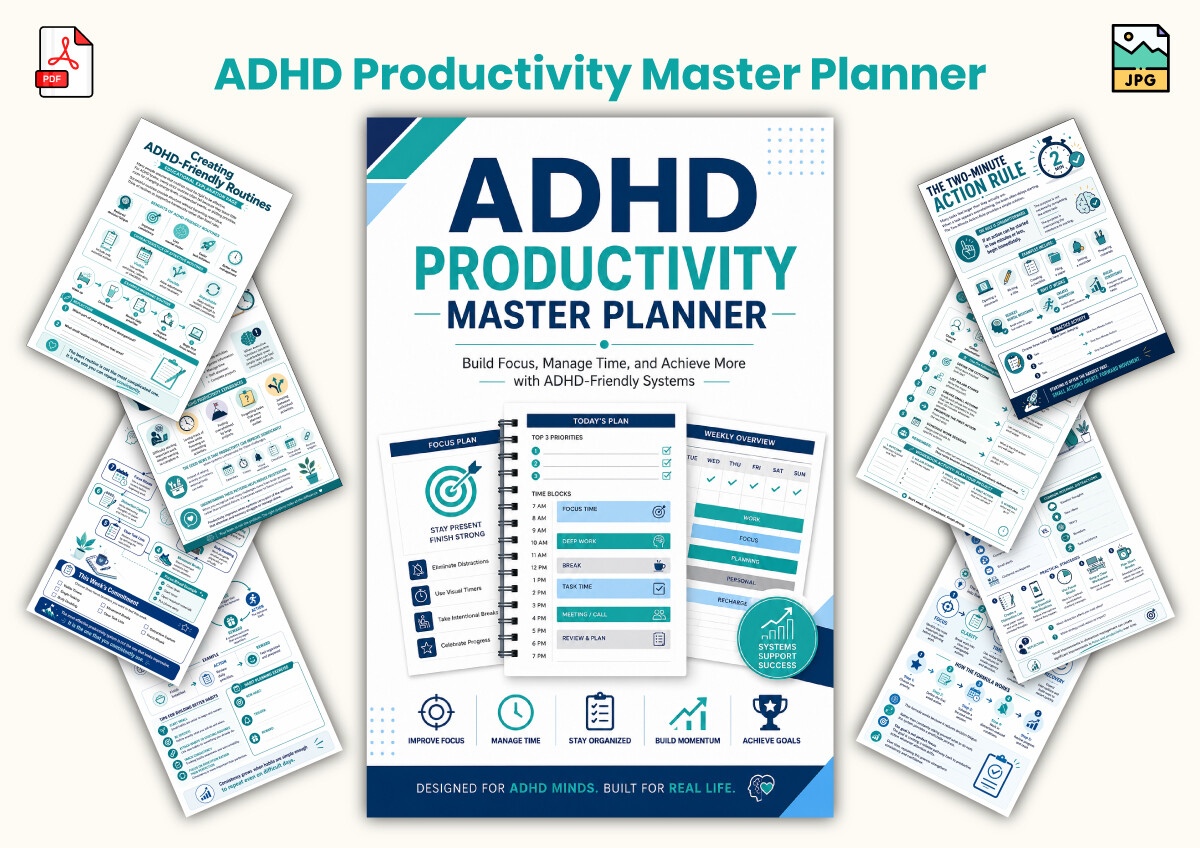
This 31-page workbook is more strategy-focused than a typical calendar planner. It begins with an ADHD productivity self-assessment and executive-function challenges, then works through vision, goals, focus management, time awareness, priorities, focus recovery, environment design, project breakdowns, weekly planning, habits, distractions, reviews, and a long-term productivity roadmap. The result is closer to a guided productivity workbook than a collection of scheduling pages. PDF and high-resolution JPG files come in a 6 × 9 format. It is a useful choice if understanding and improving your planning process matters more than decorative layouts.
9. Focus & Flow Productivity Planner
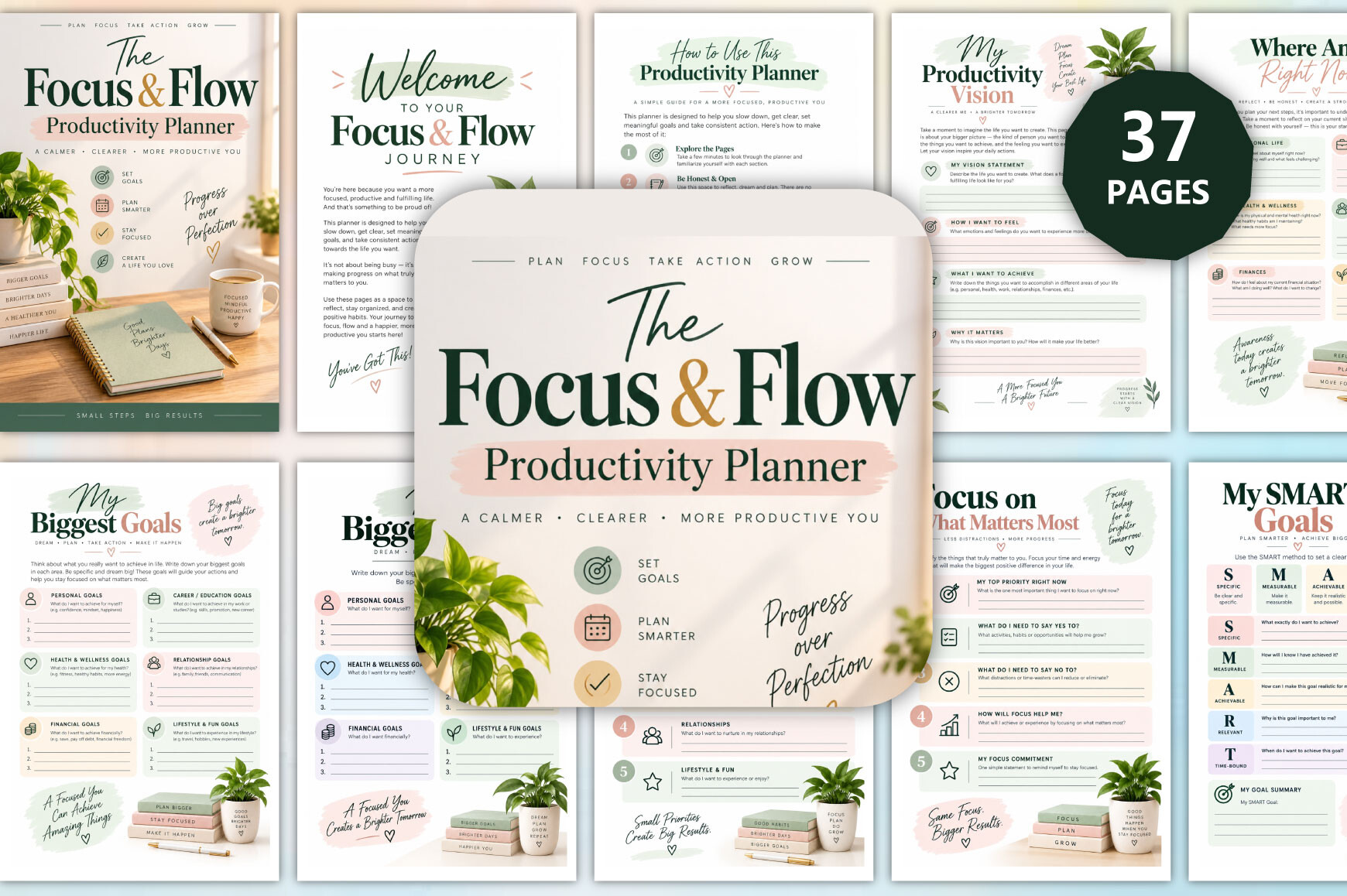
This 37-page planner centers the system around focus: deciding what matters, protecting attention, and reviewing what actually worked. It covers productivity vision, goals, priorities, SMART goals, weekly and daily focus, top-three priorities, action plans, time blocking, schedules, procrastination, distraction audits, habits, morning and evening routines, energy tracking, weekly reviews, and reset pages. I like the distinction between focus time and busy time because a packed schedule is not necessarily a productive one. The 6 × 9 PDF and JPG files are print-friendly and work well as a focused personal workbook.
10. 2027 Focus Formula Workbook
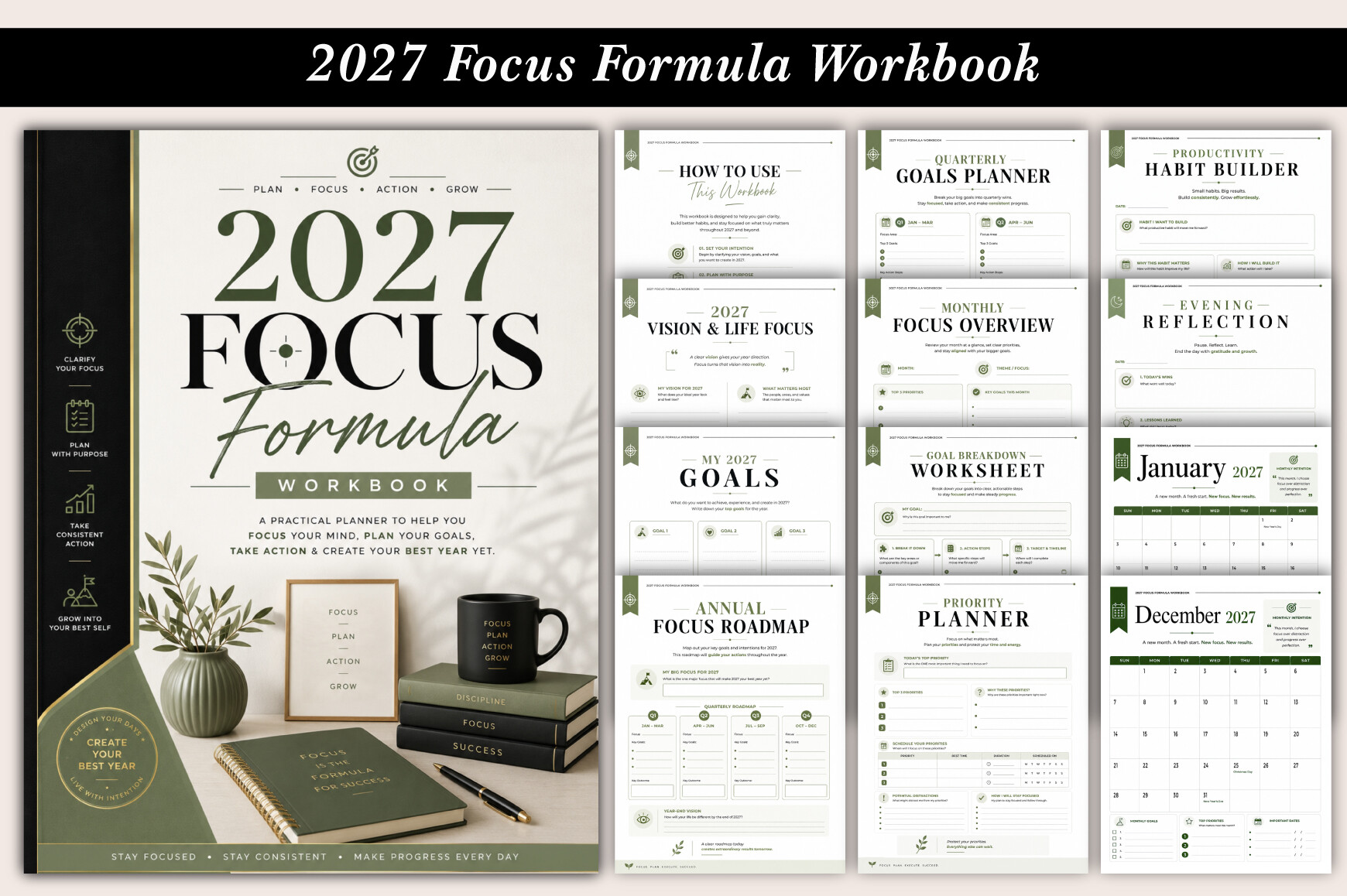
This 42-page US Letter workbook is one of the strongest choices for someone who wants a structured 2027 productivity reset. It starts with vision, yearly goals, and an annual roadmap, then adds quarterly and monthly goals, priority planning, focus assessments, distraction and time audits, time blocking, deep work, daily and weekly focus pages, progress reviews, habits, routines, energy and mood tracking, and Pomodoro sessions. Unlike a simple dated calendar, it actively asks you to examine where time and attention are going. The print-ready PDF format also gives the exercises plenty of writing space.
11. Productivity Planner Template Pages
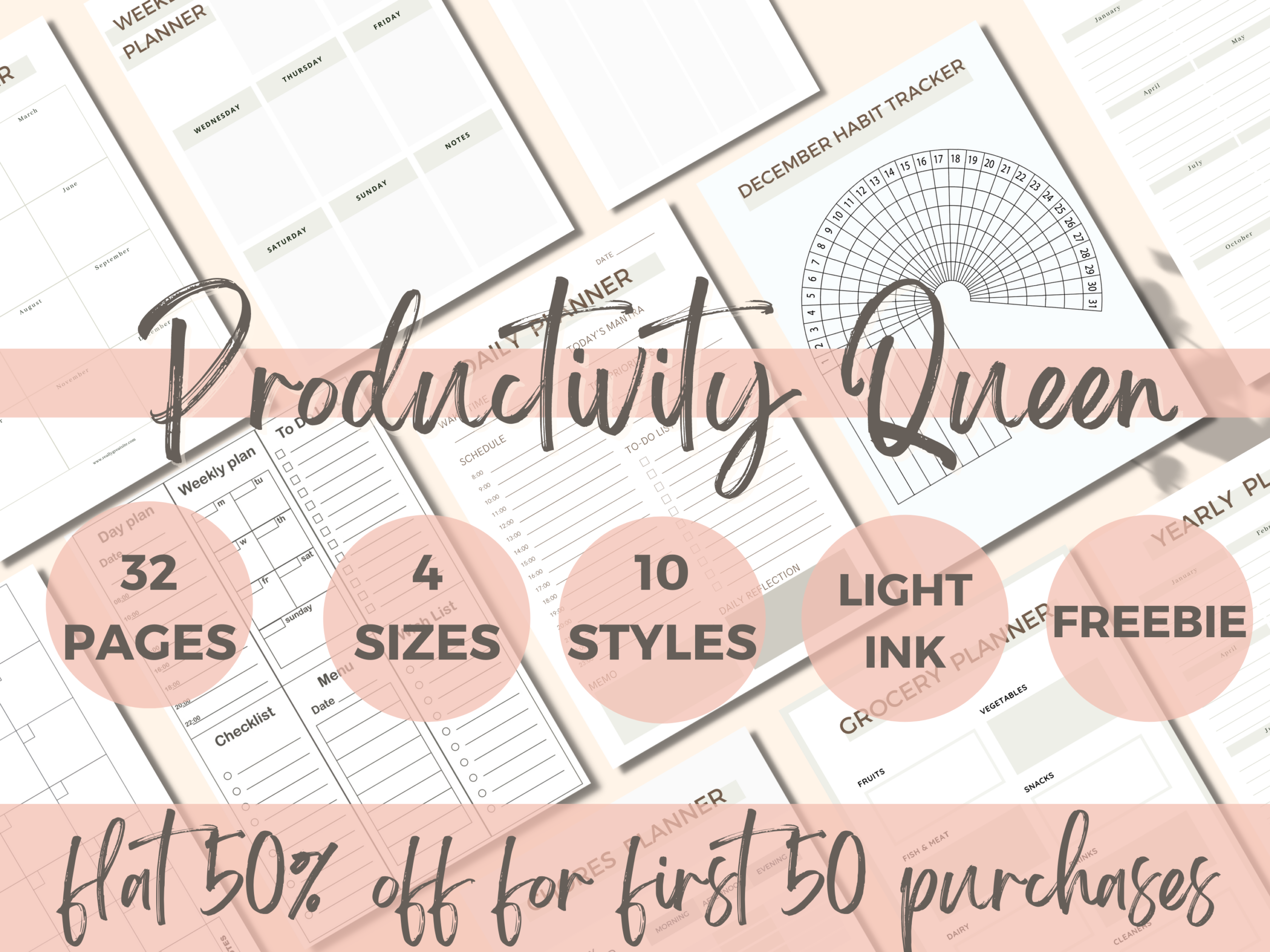
This established printable set stands out because it has a 5.0 rating from four reviews and around 576 favorites. The 32-page PDF includes daily planning, a multi-task daily layout, twelve undated monthly habit trackers, twelve undated monthly planners, two yearly layouts, chores, groceries, weekly planning, and progress pages. It is also unusually flexible for printing, with A4, A5, Letter, and Half Letter sizes. That makes it a strong general-purpose choice if you want to build a physical productivity binder and prefer selecting individual page types rather than following one fixed sequence.
12. Work From Home Planner Template
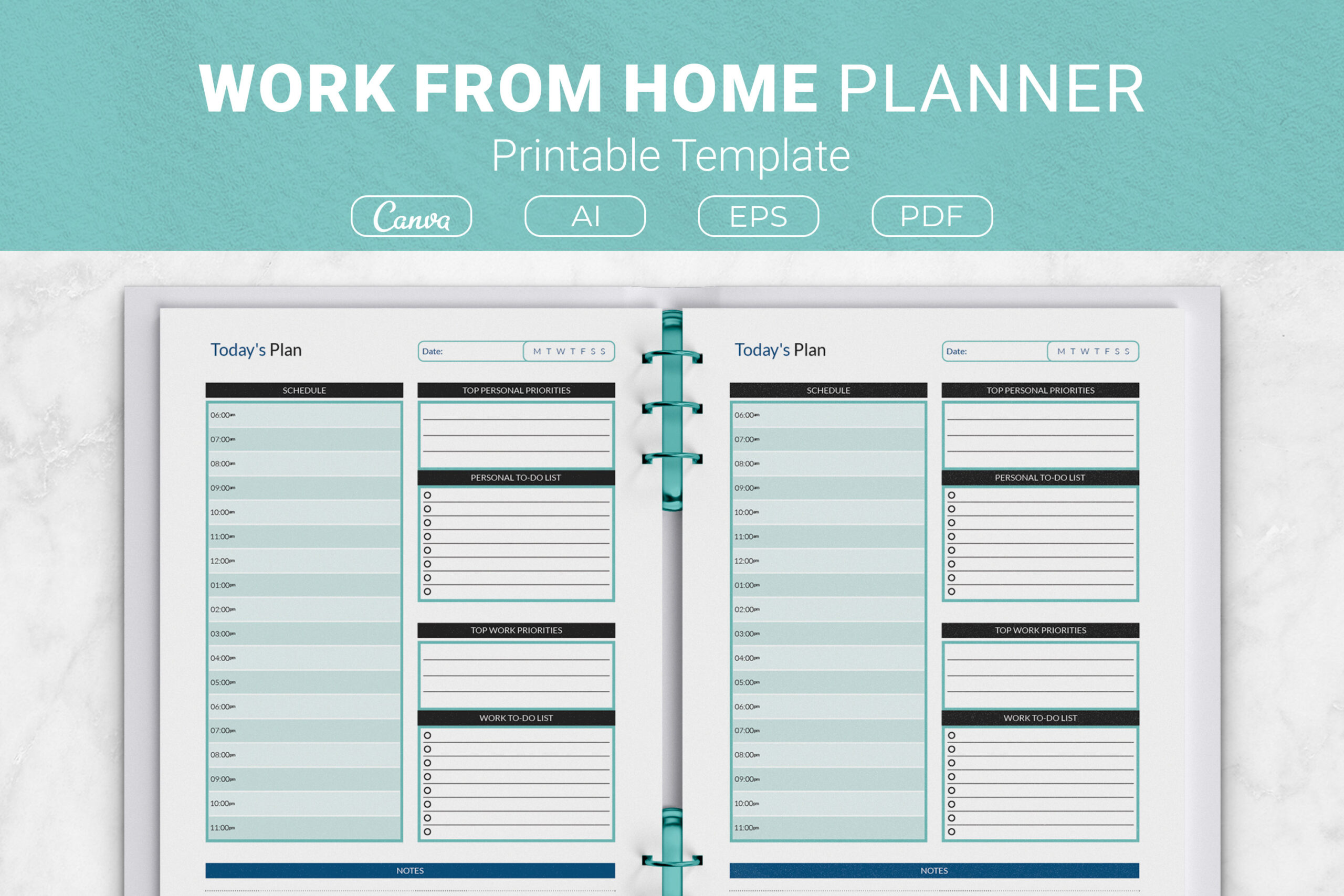
Working from home often blurs personal and professional priorities, so this planner deliberately separates them. The page includes top personal priorities and a personal to-do list alongside top work priorities, a work to-do list, schedule, and notes. It comes in AI, EPS, and PDF formats and several sizes, including US Letter, A4, 7.5 × 9.25, and 6 × 9 inches. With 21 favorites, it has a reasonable engagement signal as well. This is the most targeted option here for freelancers, remote employees, or anyone trying to keep household tasks from swallowing the workday.
How to Choose the Right Personal Productivity Planner
For a lightweight daily routine, start with the daily schedule and habit tracker rather than a large workbook. If you manage several multi-step goals, the project planner or SMART Goals planner gives those goals more structure. OneNote users will get more value from the digital life planner because it can sit beside existing notes and projects, while the highly rated multi-size Productivity Planner Template Pages are an excellent foundation for a custom printable binder.
The 2027 Vision planner is the clearest choice if you specifically want a dated annual system. The Focus Formula and Focus & Flow workbooks are better when attention, deep work, procrastination, or time use are the real problems. And if conventional productivity advice feels difficult to maintain, the two ADHD-oriented planners provide more explicit tools for brain dumps, executive-function challenges, energy, routines, and recovery.
Whichever option you choose, begin with a small core: one place for priorities, one calendar or schedule, and one review habit. Add project pages, trackers, or goal worksheets only when they solve a real planning problem. A personal productivity planner is most valuable when it reduces the number of decisions you have to remake every day and gives important work a clear next action.




4 Comments