9 Study Planner Printable: 9 Smart Options for More Organized Study Sessions
Studying gets much easier when you can see what needs to be done instead of keeping every assignment, exam, reading task, and study session in your head. A study planner printable gives you a simple physical system for turning a busy academic schedule into something you can actually work through.
But not every study planner serves the same purpose. Some are designed around daily tasks, while others focus on weekly timetables, study methods, concentration, or broader academic planning. There are also options that work more like journals and workbooks, giving you space to reflect on your progress rather than simply checking off assignments.
I looked through these nine printable study planners with one question in mind: what kind of student would actually benefit from each format? Below, you’ll find options for daily planning, weekly scheduling, focused study sessions, long-term organization, and more comprehensive academic planning.
1. Study Planner Printable — A Straightforward Starting Point
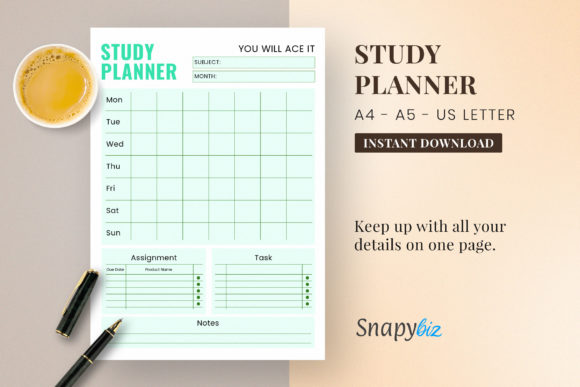
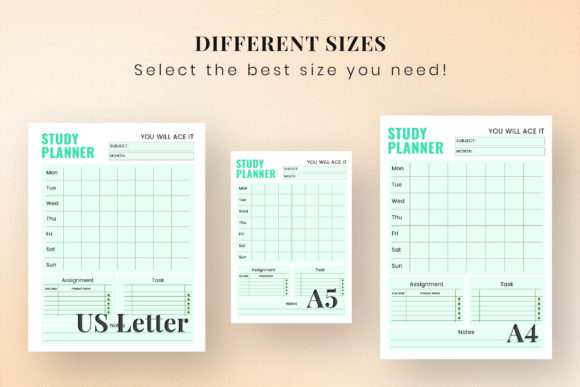
When you don’t yet have a planning system that works, keeping things straightforward is often the best place to start.
This study planner printable is a natural option for students who want a dedicated place to organize their academic workload without necessarily turning planning into a complicated project.
I think that’s an important distinction. A planner should help you study, not become another assignment to maintain. If your current system consists of scattered notes, screenshots, reminders, and half-finished lists, having a dedicated printable planner can make your workload much easier to see.
I’d start with an option like this if you’re mainly looking for a general-purpose study organization tool. Print the pages you need, keep them beside your textbooks or laptop, and use them to give your study routine some structure.
It’s particularly appealing if you prefer writing by hand and don’t want your academic planning tied to another app.
2. Daily Study Planner Printable Template — Plan One Day at a Time
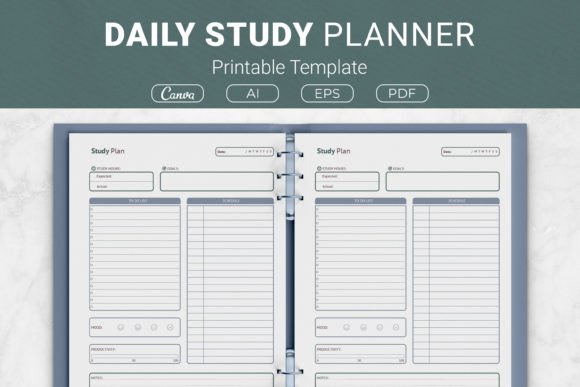
Some students don’t need to plan an entire semester every time they sit down to study. They need to know what today’s study session should accomplish.
That’s where a daily study planner can be particularly useful.
This printable template is built around the daily side of studying, making it a good match for students who prefer breaking a large workload into smaller, manageable pieces.
I like this approach when you’re preparing for exams or dealing with several subjects simultaneously. Instead of writing something vague like “study biology,” you can turn today’s page into a concrete plan for the session ahead.
There’s also a psychological benefit to working with a daily page: your workload becomes smaller and more immediate. You don’t have to solve the entire semester today. You just need to know what deserves your attention now.
For students who tend to feel overwhelmed by large academic to-do lists, that can make a meaningful difference.
3. 2027 Smart Study Journal Printable — Combine Planning With Reflection
A planner doesn’t always have to be purely about scheduling.
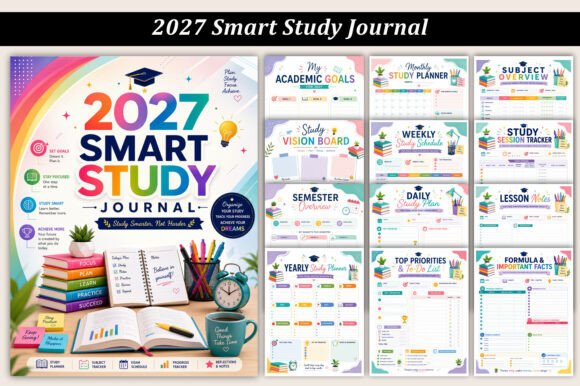
The 2027 Smart Study Journal Printable takes a more journal-oriented approach, making it interesting for students who want their planning system to include some reflection alongside organization.
The dated 2027 format also makes this a better fit for someone who likes having their academic year mapped onto a specific calendar rather than working with completely undated pages.
I’d consider a journal-style planner when simply listing assignments isn’t enough. Looking back at what worked, where you struggled, and how your study habits are developing can help you make better decisions about future study sessions.
The dated format can also create a stronger sense of continuity. Instead of isolated study sheets, you’re building a record of your academic routine throughout the year.
If you like the idea of combining planning and personal study tracking, this is one of the more distinctive options in the collection.
4. Study Focus Journal — For Students Who Need to Protect Their Attention
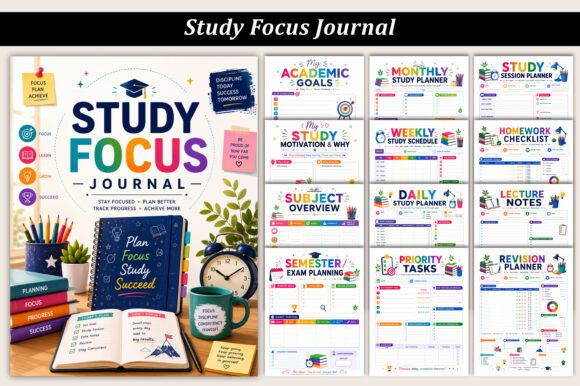
Sometimes the problem isn’t knowing what to study.
It’s actually staying focused long enough to study it.
That’s the niche this study focus journal speaks to. Rather than thinking only about schedules and deadlines, a focus-oriented journal puts attention and concentration closer to the center of the planning experience.
I’d choose this type of planner if your biggest academic challenge is sitting down with good intentions and then losing your attention to your phone, notifications, or unrelated tasks.
A useful study planner should create a bridge between intention and action. Writing down a subject is easy; actually completing a focused session is the difficult part.
That’s why I like having a focus-oriented option in this collection. It approaches studying from a different angle than a traditional timetable.
If you’re already organized but still struggle to get meaningful work done during the time you’ve allocated, this may be more relevant than simply adding another schedule.
5. Weekly Study Timetable Planner Printable — See the Whole Week at Once
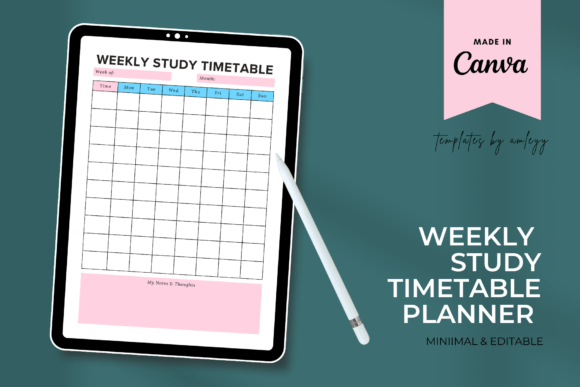
Daily planning answers the question, “What am I doing today?”
A weekly timetable answers a different question: “How am I going to fit everything into this week?”
This printable weekly study timetable is a useful option for students balancing several subjects, recurring classes, homework, revision, and other commitments.
I particularly like weekly planning when your workload is predictable. You can look at the entire week and decide where study sessions realistically fit instead of repeatedly reacting to whatever deadline happens to be closest.
It can also make competing priorities more obvious. If one subject is receiving almost all of your attention while another keeps getting pushed back, a weekly view makes that imbalance easier to spot.
I’d choose this format over a daily planner if you prefer seeing the bigger picture before deciding what to work on each day.
6. Printable Study Planner KDP Interior — A More Traditional Planner Format
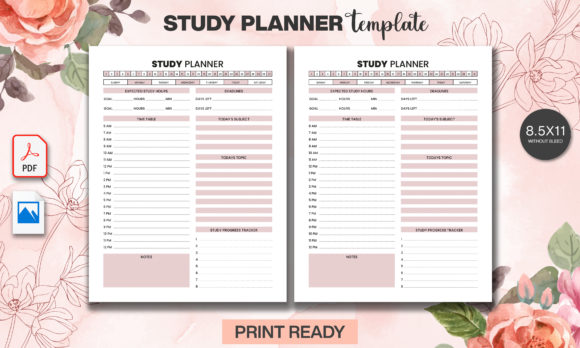
This option is particularly interesting if you like the feel of a traditional study planner rather than individual loose worksheets.
The KDP interior format suggests a book-style approach to study organization, which can be appealing if you prefer keeping your planning pages together in one physical place.
For me, the main attraction of a bound planner is continuity. Loose printable pages are convenient, but they can quickly become scattered across a desk, backpack, or folder. A book-style format gives your study planning a more permanent home.
That can also make it easier to look backward. Instead of throwing away completed daily pages, you have a physical record of what you planned and worked through.
I’d consider this approach if you enjoy handwriting and want your study planner to feel more like a dedicated academic journal than a stack of worksheets.
7. Printable Ultimate Study Planner Vol. 37 — For Students Who Want More Structure
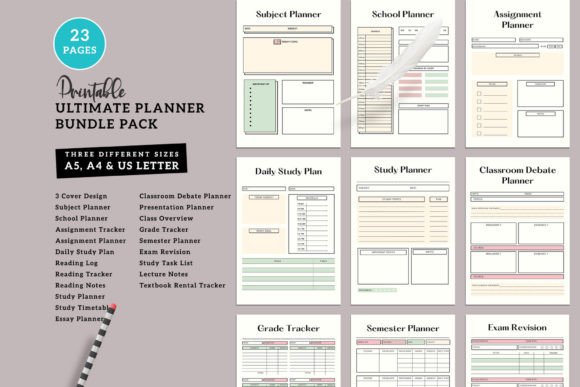
The word “ultimate” can mean very different things in planner design, but the important question is whether you actually need a more comprehensive system.
This printable study planner is aimed at students who want more than a single daily page. A broader study-planning format can be useful when you’re managing multiple subjects, assignments, deadlines, revision sessions, and long-term academic goals at the same time.
I’d look at this kind of planner if your academic workload has become too complicated for a simple daily checklist.
The trade-off is that more structure isn’t automatically better. If you only need to remember two assignments and one upcoming test, an extensive planner could create unnecessary work.
But for students with a busy academic schedule, having multiple planning components in one system can be much easier than piecing everything together from separate notebooks and lists.
The key is to use the sections that genuinely help you and ignore the temptation to fill in every page just because it’s there.
8. Education Planning Workbook Printable — For Broader Academic Organization
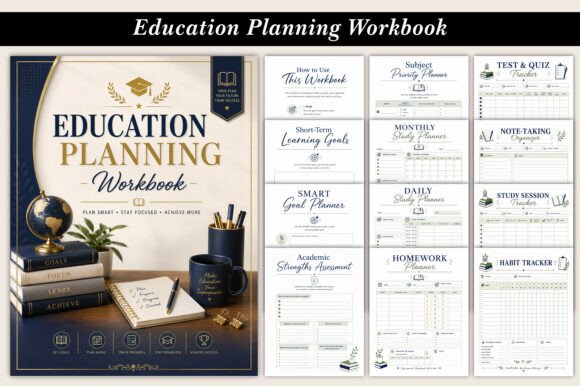
This option takes the idea of academic planning beyond the standard “what do I have to study today?” question.
An education planning workbook is better suited to students who want to think about their studies as a broader process rather than simply manage individual tasks.
That’s useful when you’re dealing with longer-term academic goals, different subjects, or a more complicated education schedule.
I would put this in a different category from the daily planners above. It’s less about giving you a quick list for today’s study session and more about creating a larger framework around your education.
For older students, university students, or anyone managing several academic responsibilities, that broader perspective can be valuable.
It can also work well alongside a simpler daily planner: one tool handles the big picture, while another helps you execute today’s work.
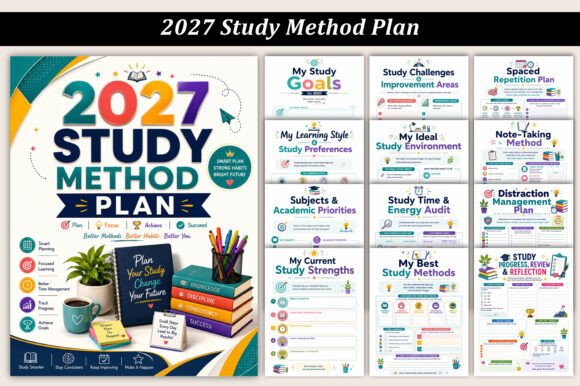
9. 2027 Study Method Plan Printable — Add a Strategy to Your Schedule
Planning when you’ll study is only part of the equation.
You also need to think about how you’ll study.
The 2027 Study Method Plan Printable is therefore an interesting option for students who want to give their academic routine a more intentional structure. Its focus on study methods distinguishes it from a basic assignment checklist or timetable.
I’d consider this format if you’ve already realized that simply spending more hours with a textbook doesn’t necessarily produce better results.
Different subjects can require different approaches. Reading, reviewing, practicing problems, writing, memorizing, and preparing for an exam aren’t identical tasks, so a planner that encourages you to think about your study method can add another useful layer.
The dated 2027 format also makes it relevant for students who want to establish a structured study routine around a specific academic year.
Why Use a Printable Study Planner?
Digital planning is convenient, but printable planners have one major advantage: they create a physical boundary around your study routine.
When your schedule lives on the same device as social media, entertainment, messages, and dozens of browser tabs, distraction is always close by. A printed page sitting next to your books gives you a different kind of visual cue.
There’s also something satisfying about physically checking off completed work.
A printable planner can be especially useful if you already spend most of your academic day looking at a screen. Writing down your priorities on paper gives you a break from another digital interface while still keeping your study routine organized.
And because these are printable formats, you can decide how much planning you actually want. You don’t necessarily need to print an entire planner. Use the pages that fit your current routine.
Final Thoughts
The right study planner printable should solve a specific problem rather than simply give you more pages to fill in.
For straightforward everyday organization, I’d start with the Study Planner Printable or Daily Study Planner Printable Template. If your schedule is the bigger challenge, the Weekly Study Timetable Planner Printable gives you a much more useful view of the week. Students who struggle with concentration may get more value from the Study Focus Journal, while those with a heavier academic workload can look toward the more comprehensive planner and workbook formats.
I also like the 2027 Study Method Plan Printable because it recognizes something easy to overlook: good studying isn’t only about finding enough time. The way you use that time matters too.
Ultimately, don’t choose the planner with the most impressive list of sections. Choose the format that matches the way you study now — and ideally makes that process a little easier to manage.
You may also like:
7 Efficient School Planner Ideas to Keep Students Organized and On Track
One Comment