8 Sewing Planner Templates for Fabric, Patterns and Project Notes
A sewing planner gives the decisions behind a finished piece a place to live. Fabric choice, pattern changes, measurements and a note about the next step can be surprisingly difficult to reconstruct after a break. These eight templates cover quick project worksheets, repeatable logbooks and broader planning collections, so you can choose how much record keeping your sewing actually needs.
Keep broader creative goals in a craft project planner, use a project planner for deadlines, and turn to a craft business planner if orders are part of your work. This collection focuses on sewing-specific records. It also separates confirmed file formats from less precise editing claims, because a useful preview does not always explain the full download.
In this guide
Choose a sewing planner by the records you need
Start with the information you regularly forget: fabric quantities, pattern versions, alterations or the sequence of unfinished steps. A single project page can solve that problem without a large planning book. Choose a broader collection when you also want an inventory, a budget or a way to organize several ideas before cutting into fabric.
Check the physical page size and bleed settings before printing. A PDF is not automatically a fillable form, and an editable source file requires compatible software. Page totals may include repeated project records rather than different layouts. For a Canva resource, inspect the access document and work from a copy saved to your own account.
1. Broad Sewing Planner with Canva Editing and Inventory Pages
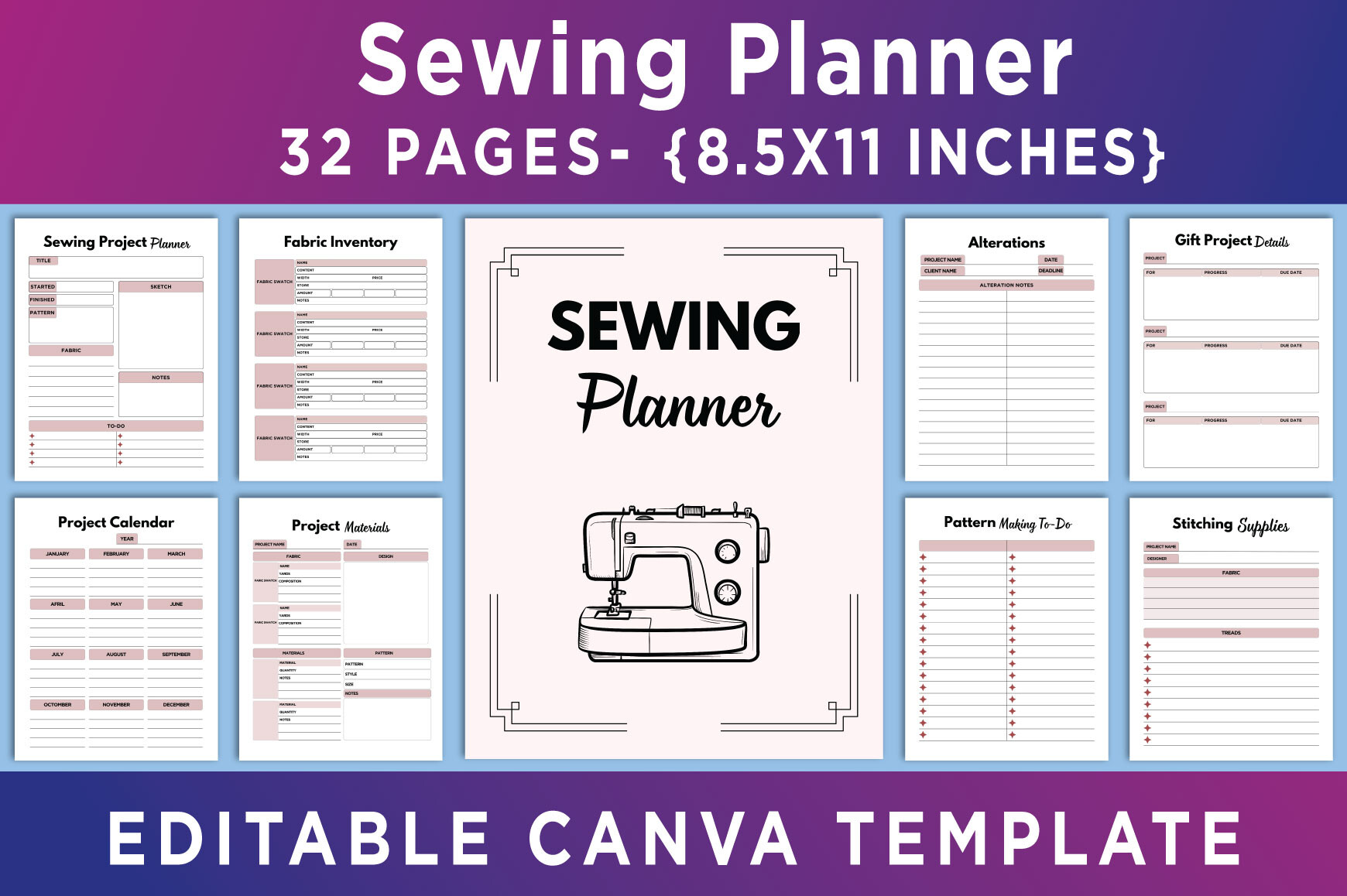
KDP GRAVITY’s collection brings fabric inventory, measurements, alterations, pattern lists and project records into one planning system. It also includes supplies, expenses, shopping and gift-project pages, making it useful when your sewing involves both creative ideas and practical preparation. The sample layouts show clear boxes and tables that can keep several projects from becoming a single undifferentiated list.
The seller lists thirty-two Canva templates at 8.5 × 11 inches without bleed, together with PDF, JPEG and PNG files, 300 DPI and CMYK specifications. A free Canva account is described as sufficient. Make a copy of the linked document before editing, as the seller requests. Choose the pages that answer a real need rather than feel obliged to maintain every section in the collection.
2. Compact Sewing Worksheet in Four Paper Sizes
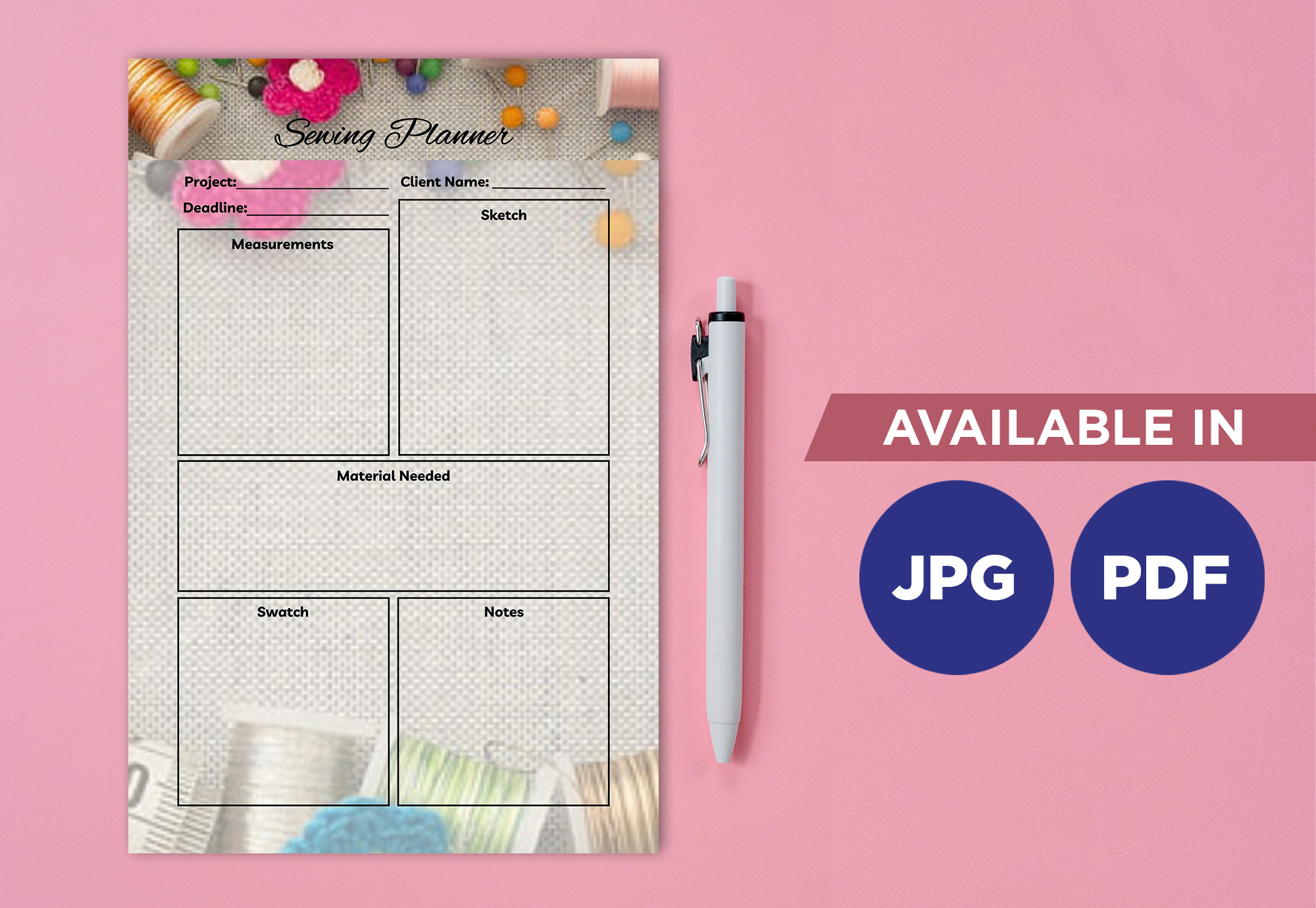
TiveCreate’s worksheet gives one project a compact home, with areas for the pattern, measurements, materials and a visual plan. This is a useful approach when you prefer to work from one page beside the sewing machine rather than keep a full journal. A repeated worksheet can also travel with the fabric and pattern in a project folder.
The package lists four JPG and four PDF files across A4, A5, 6 × 9 inches and 8.5 × 11 inches. Those are size options, not evidence of eight different planning layouts. The description mentions note-taking apps, but does not promise a native app file, hyperlinks or interactive fields. For digital notes, check whether your own annotation app imports the supplied PDF comfortably.
3. Portable Sewing Project Logbook with Materials Tables
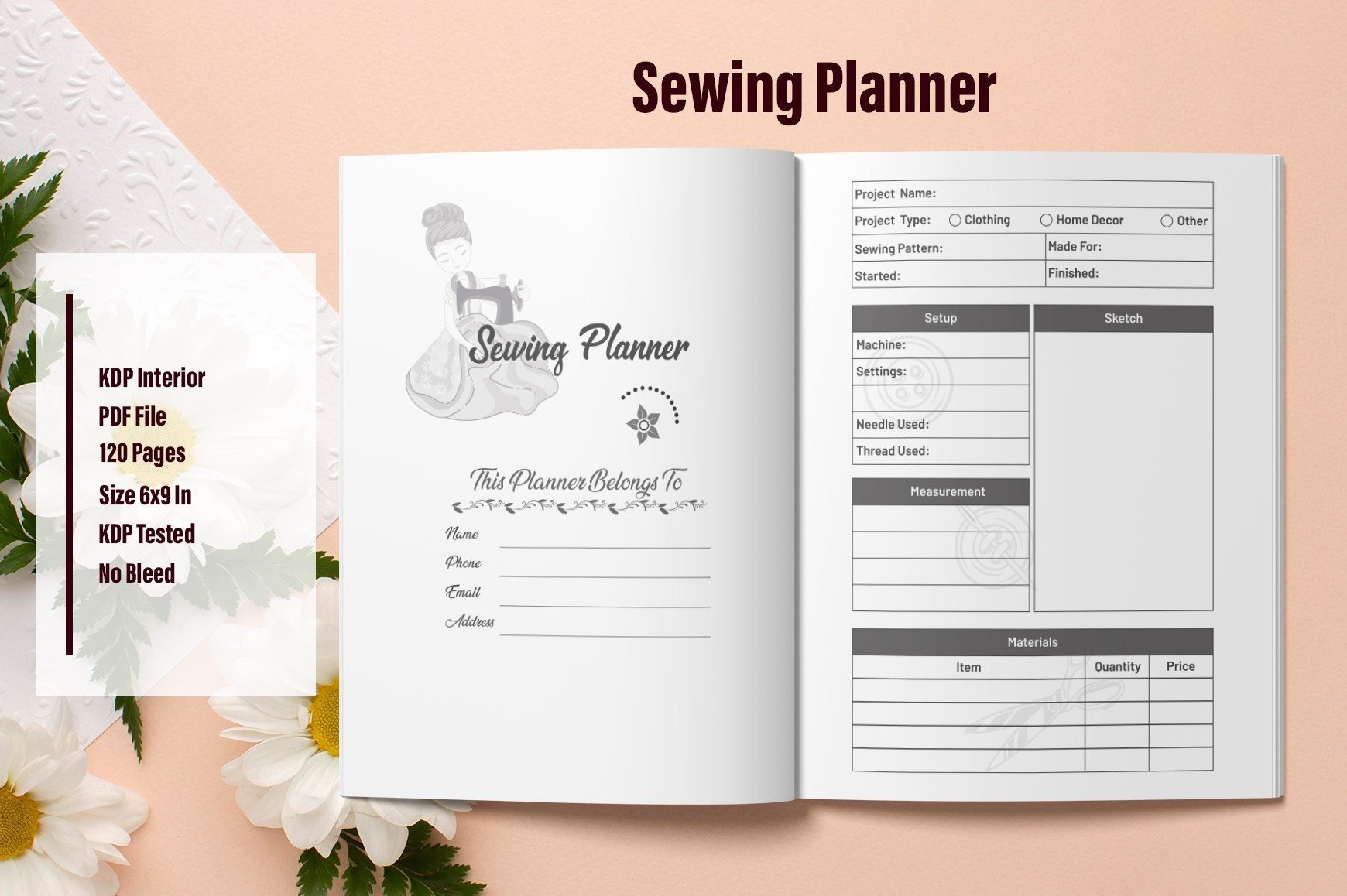
Toffee Studio’s planner uses a small-book format for repeatable sewing records. The preview shows project information and a structured materials table, which can help you keep the supplies for one piece together. It suits someone who wants a dedicated notebook for ongoing work and prefers the same familiar fields each time rather than a large assortment of planning sections.
The listing describes 120 pages, including an introductory page, in a 6 × 9-inch format without bleed. PDF and high-resolution JPG files are included. Treat the page count as the extent of the book, not a promise of 120 unique worksheets. Print a sample to decide whether the compact writing space suits your notes before preparing a whole personal logbook.
4. Sewing Interior with Vector and Raster Source Options
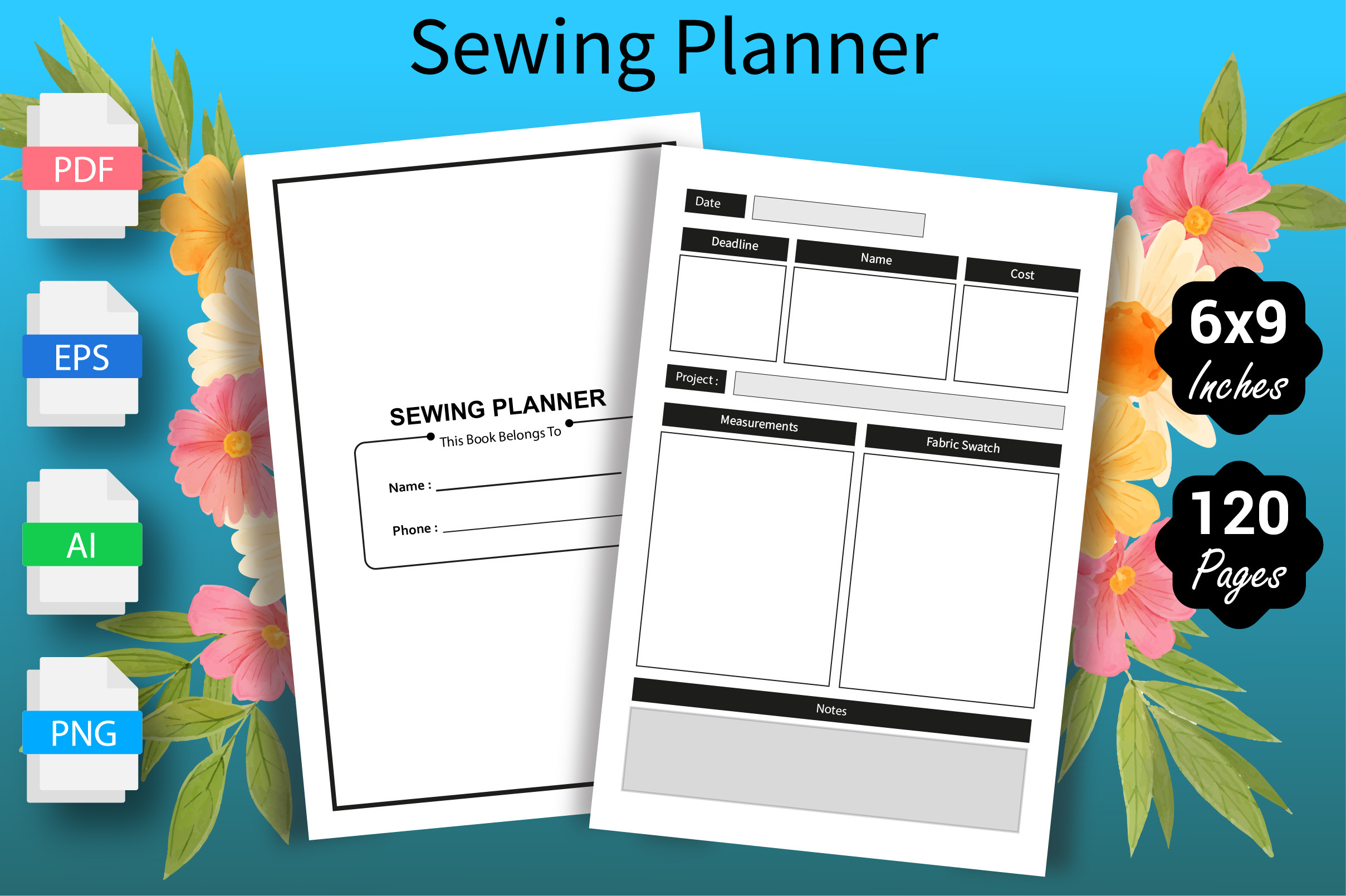
KDP Unique’s interior uses a simple project-record layout with space to organize the details of a sewing piece. The preview’s restrained tables make it a practical option when you want the notes and materials to stay central. It is particularly useful for repeated project records where consistent fields make past work easier to compare later.
The seller lists 120 pages at 6 × 9 inches without bleed and supplies EPS, PDF, AI and PNG formats. That provides more editing routes than a PDF-only book, provided you use compatible software. The product is an interior; a finished cover is not included. Check the archive for layout repetition and edit a clean copy if you want different field labels or more room for alterations.
5. Letter-Size Sewing Journal with Several Page-Count Versions
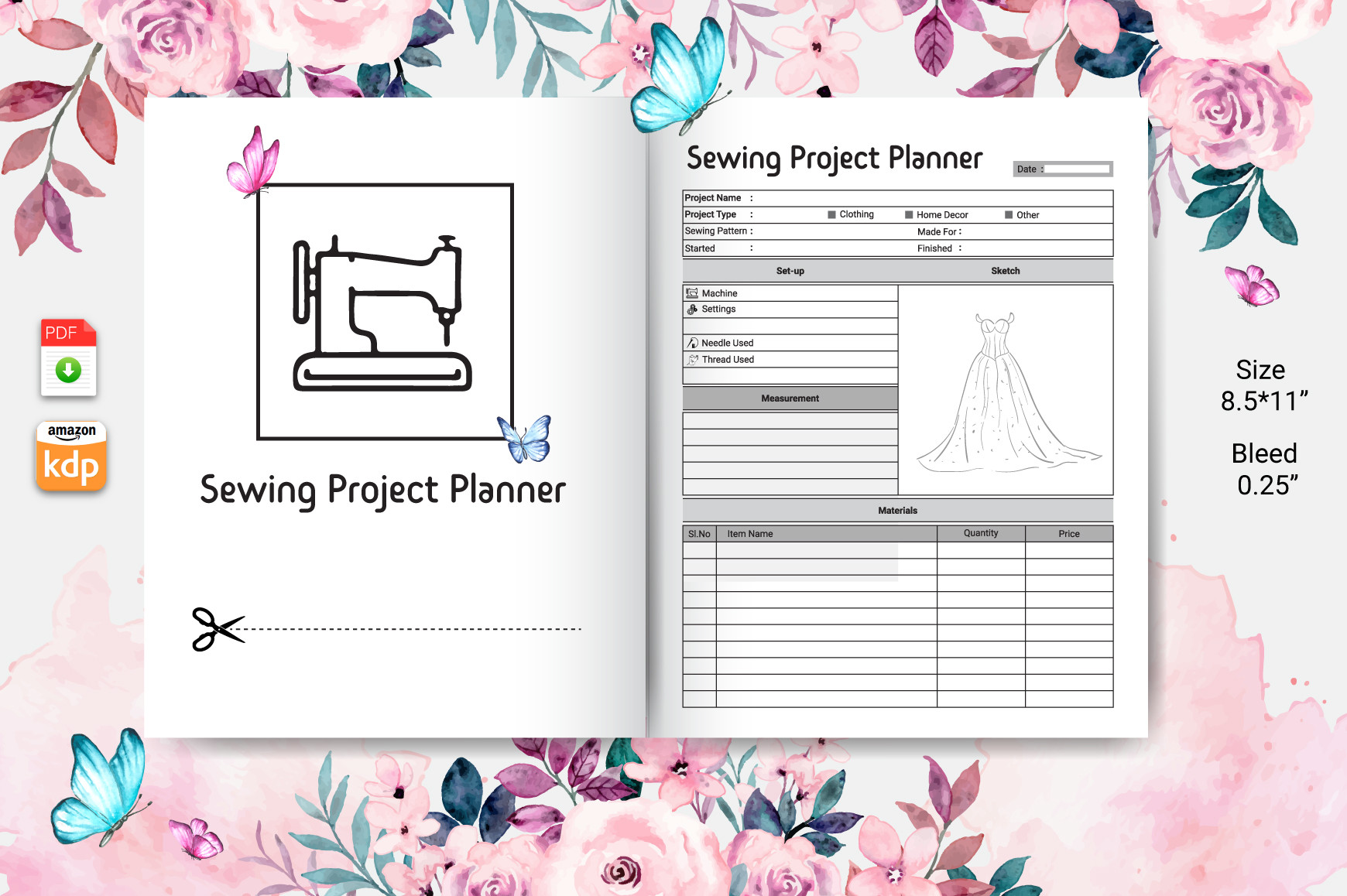
Designmela01’s journal offers a larger sewing project page with areas for practical notes and a sketch. The extra Letter-size space can suit a garment record where measurements, materials and a small visual reference need to remain together. Choose it when compact notebook pages would make your handwriting or fitting observations too cramped to revisit comfortably.
The description lists PDF and JPEG files at 300 DPI in CMYK, with 100-, 110- and 120-page versions and a quarter-inch bleed specification. Those numbers describe alternative book extents rather than three different paper sizes. Inspect the supplied pages and print settings before preparing a complete copy. The floral mockup frame helps present the product, but it should not be assumed to decorate every interior page.
6. Sewing Hobby Logbook in Two Sizes
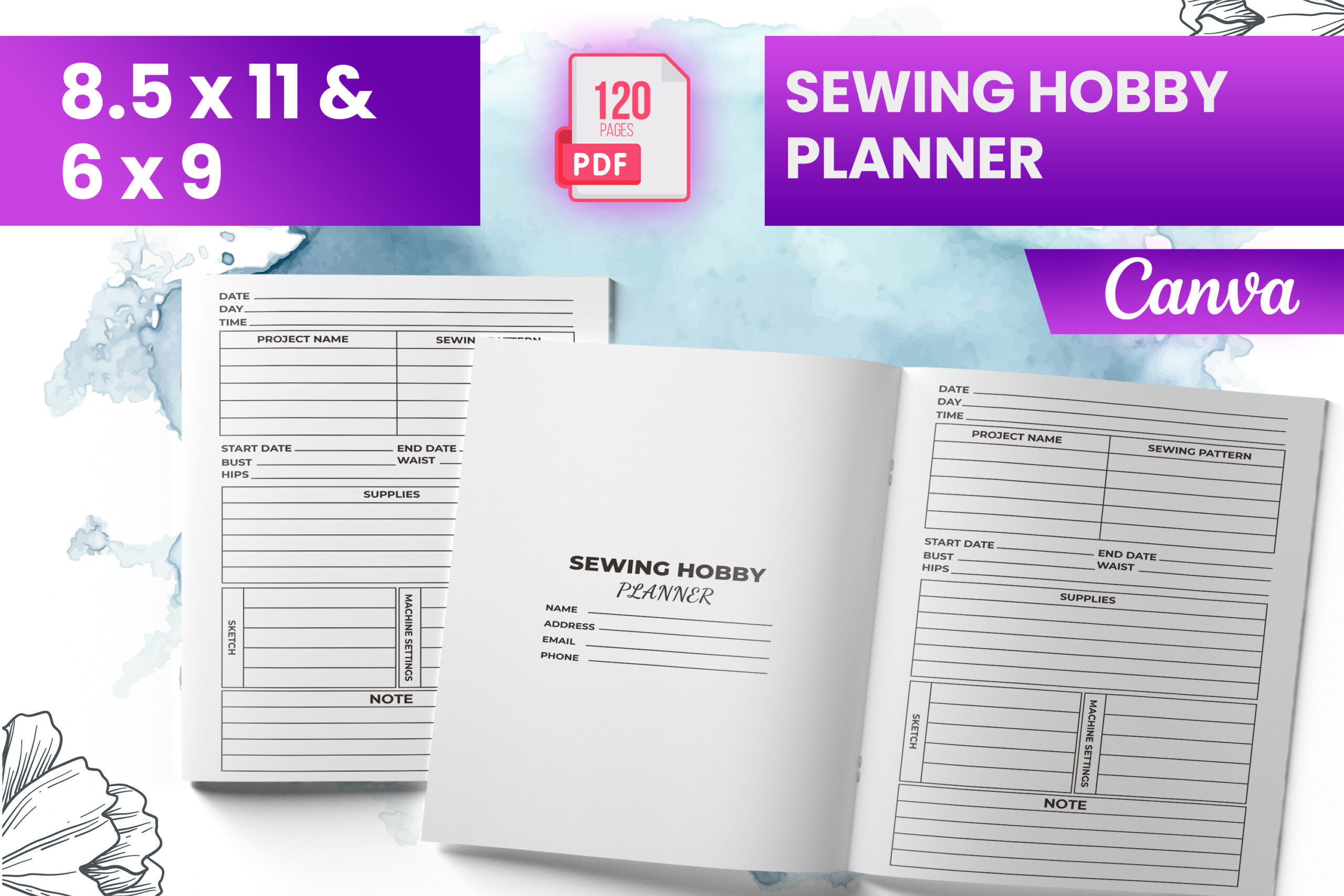
Boss Designer’s undated hobby planner centers on a repeatable sewing record, with sample pages showing project and supply details. It offers a straightforward notebook approach for someone who wants to record work as it happens instead of maintaining a calendar-based system. Keeping a project’s decisions together can make an unfinished piece easier to restart after other creative work interrupts it.
The listing describes 120 pages with an introduction, supplied in 6 × 9-inch and 8.5 × 11-inch formats with bleed. PDF, PNG and JPG are itemized, while the title and description advertise Canva editing. Check the download for the actual editing access before relying on that feature. This undated listing is distinct from the seller’s explicitly year-specific sewing planners, which need separate date checks.
7. Compact Sewing Planner with Measurements and Sketch Space
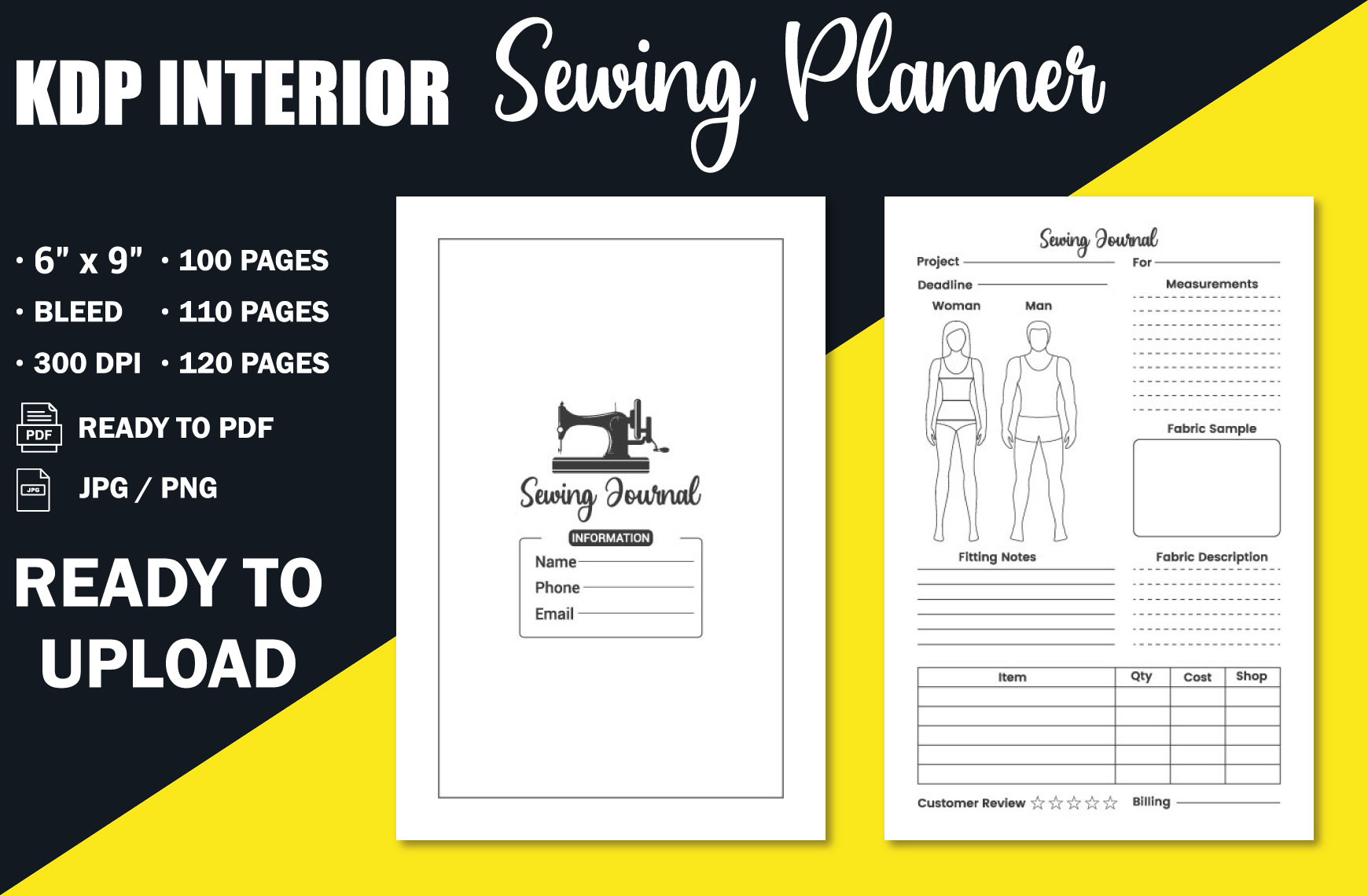
Design-infinity’s sewing interior brings a compact project record together with measurements and sketch areas visible in the preview. That combination is useful when the important part of your record is the relationship between an idea and the changes made to fit it. A repeated layout can support a series of garments without needing a different planning method for every piece.
The written specification lists a 6 × 9-inch PDF with bleed and 100-, 110- and 120-page versions. It mentions editable files without clearly itemizing their exact format, so verify the archive if source editing is essential. The preview names image formats too, but the clearest written promise is the PDF. Check the compact field sizes with a test page before committing to a full print.
8. Sewing Project and Measurement Sheets with Fashion Sketch Pages
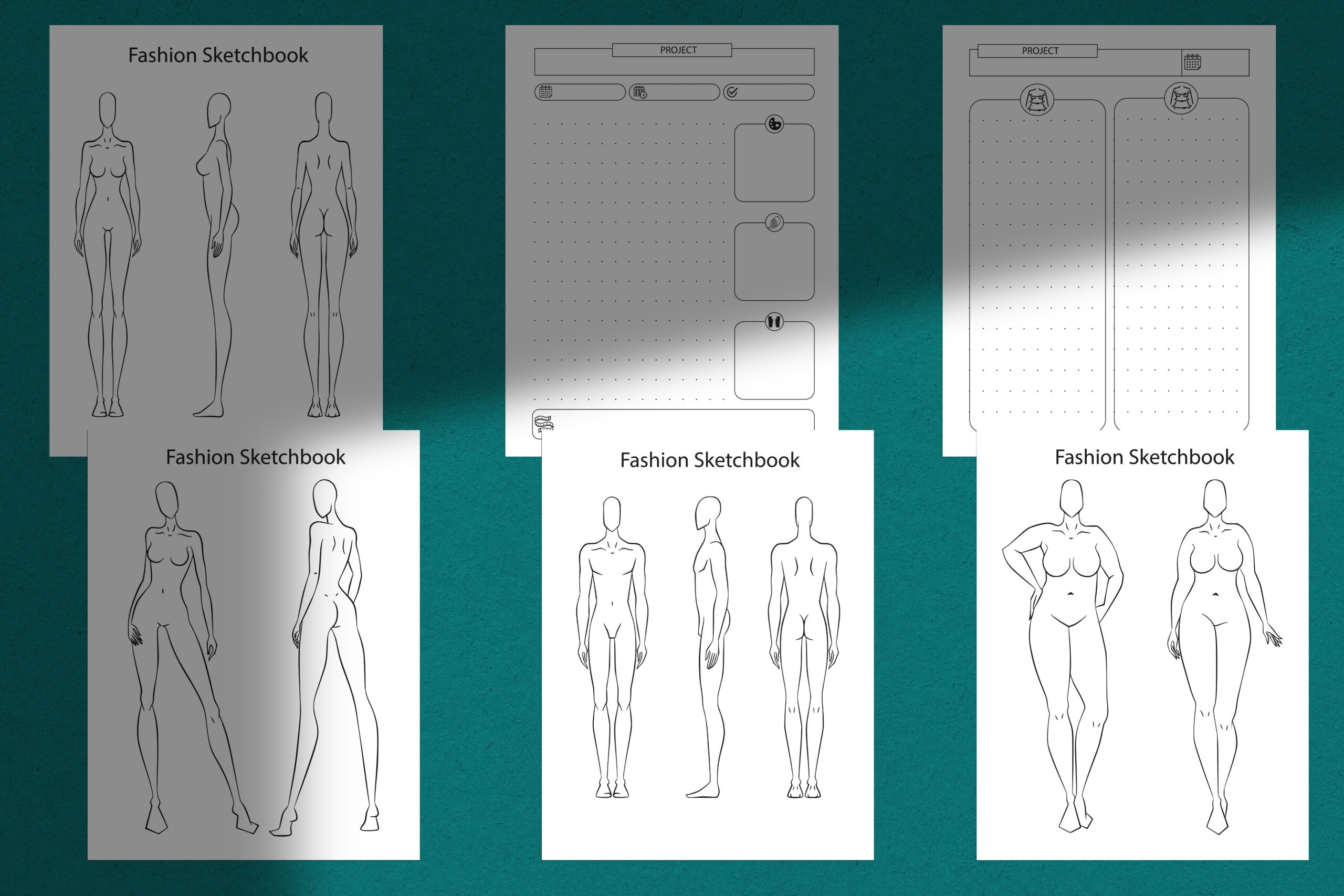
Premiere Planners offers a focused set of single-page tools rather than a long repeated logbook. The listing includes a project planner, a measurements list and fashion sketch pages showing several body views and poses. This suits a sewer who wants a small working packet for designing and recording a piece, with a visual reference alongside the written project details.
The six listed sheets are 8.5 × 11-inch PDFs described as editable in Adobe Illustrator, with black artwork. That editing route does not establish interactive form fields in an ordinary PDF reader. Use the relevant sketch sheet for your project and keep the measurements record separate enough to update clearly. The collection supports planning and drawing; it is not a set of garment patterns or construction instructions.
Make project notes useful at the sewing table
Write down the pattern name and version, the intended size and any changes before you begin. Add fabric and notions information, then record fitting observations while they are still fresh. A sketch or a small swatch can help distinguish similar projects, but keep the written measurements clear enough to understand when you return months later.
Use the progress area for a concrete next action, such as checking a seam allowance or preparing a particular piece. After finishing, note the changes that worked and what you would adjust next time. Print a clean record for each new project instead of overwriting the history of an earlier garment or gift.
Which sewing planner should you choose?
Choose TiveCreate or Premiere Planners for a compact starting point, the Canva collection for a broader inventory-and-project system, or a repeatable logbook when consistency matters most. Larger totals are useful only if you will use the repeated records. Leave enough writing room for the fitting and construction notes that make your own projects distinctive.
Keep the original archive intact and edit a working copy when source files are available. If a download is marketed as a publishing interior, assess it as a personal planning tool rather than assume it includes a finished cover or sewing instructions. The best template makes your next sewing session easier to restart.